


Key Points
- Balochistan authorities say development work is being advanced across all districts of the province.
- The provincial development programme reflects a wide spread of schemes in water supply, roads, agriculture, health and education.
- Gwadar remains a major focus with projects linked to water, healthcare, skills training and air connectivity.
- A newly announced long-term development plan aims to align public investment with jobs and sustainable growth.
ISLAMABAD: Balochistan is gearing up a renewed development drive as provincial and federal authorities move ahead with schemes spanning infrastructure, water supply, health, education, agriculture and urban services, with Gwadar and district-level public works emerging as central pillars of the effort.
The latest official statements and unveiling of projects have stressed province-wide coverage rather than a narrow focus on a few flagship sites.
As Balochistan Chief Minister Mir Sarfraz Bugti has already said, the provincial government was working on several development projects in all districts of the province. He has also pledged to accelerate the implementation of plans to extend public services and relief measures to local communities at the grassroots.
Development spread across districts
The last implemented provincial Public Sector Development Programme for 2025-26 gives the clearest picture of the spread of current and upcoming schemes.
The programme contains hundreds of entries across districts and sectors, including drinking water systems, solar-powered bore schemes, pipelines, roads, school buildings, healthcare facilities, agricultural support and small civic works.
The breadth of the portfolio suggests that the ongoing development programme is not limited to large urban centres. But it aims to address basic service gaps in remote and underserved areas.
Water access at the core
Water-related works stand out across the provincial development portfolio. The development programme includes repeated allocations for boreholes, water storage tanks, solar systems and pipeline installation in districts. Mastung, Loralai and other remote districts are already served through the programme.
The provincial and federal governments are jointly reaching out to communities across the largest area province, underscoring the continuing importance of basic water access in public investment planning.
In a province defined by scattered settlements and arid conditions, such schemes carry direct significance for households, farming activity and local living conditions.
Roads and connectivity
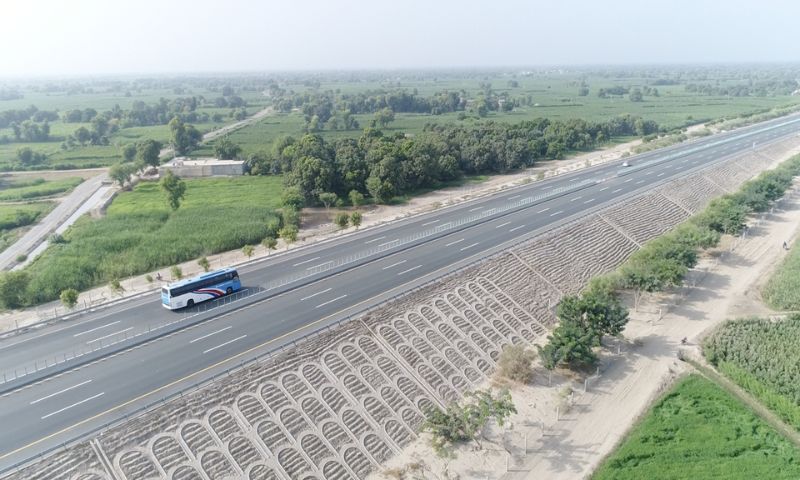
Road and connectivity projects also remain central to the province’s development planning, fully backed and aided by the federal government in Islamabad. For a geographically vast province where distance and terrain shape access to markets, schools, hospitals and administrative services, road-building and improvement works are an essential element of public spending.
The emphasis on connectivity is also tied to efforts to link local areas effectively with economic centres and strategic corridors. Phase II of the China-Pakistan Economic Corridor includes new road linkages such as Awaran-Naal Road, Nokundi–Mashkhel Road, Hoshab–Awaran section of M-8, and Zhob–Quetta Road, expanding transport networks across the province.
Gwadar; flagship focus
Gwadar continues to occupy a prominent place in the development agenda. The China-Pakistan Economic Corridor project update lists several Gwadar-focused schemes. The prominent ones include the Pak-China Friendship Hospital, a desalination plant, the Gwadar Vocational and Technical Institute, drinking water equipment projects and the New Gwadar International Airport.
Phase II also emphasises the Gwadar Free Zone Development, aiming to strengthen trade and industrial links in and around the port city.
Health, education and skills
The social sector prominently features in ongoing development in Balochistan. Beyond the flagship hospital project in Gwadar, the provincial development portfolio includes schemes for school infrastructure, public health facilities and service delivery improvements in different districts.
Skills development has also become part of the development programme, particularly through technical and vocational initiatives that aim to connect younger populations with employment opportunities in emerging sectors.
Agriculture and rural livelihoods
Agriculture-related schemes form another important layer of the programme. Official development documents show support for farm water management, agricultural productivity and solar-based irrigation or bore systems in different districts.
In a province where livelihoods in many areas remain closely tied to land and water availability, these projects are significant for both rural incomes and local food systems.
Solarisation of tube wells
The solarisation of agricultural tube wells has emerged as a separate major intervention aimed at easing the burden of farm electricity costs and improving energy reliability in Balochistan’s agriculture sector. The initiative covers 27,000 agricultural tube wells, with compensation of Rs 2 million for each tubewell, subject to disconnection from the grid under the scheme.
Mega mining projects
Large mineral projects are also part of Balochistan’s development landscape and are increasingly presented as anchors for long-term growth, infrastructure expansion and job creation. Among the most prominent are the Saindak Copper-Gold Project and the Reko Diq Copper-Gold Project in the Chagai district, providing investment and employment opportunities.
CPEC Phase II: strategic development
The second phase of the China-Pakistan Economic Corridor (CPEC) in Balochistan focuses on energy, industrial zones and mineral export corridors.
Key initiatives include the 300MW Gwadar Coal Power Project, Hub coal-fired power integration, Bostan Special Economic Zone, and the mineral corridor linking the province’s resources to Gwadar Port for export.
Long-term planning frame
The government is also attempting to place these schemes within a broader planning framework. Reports this month said Balochistan had unveiled a 10-year development plan estimated at around Rs 4 trillion. The decade-long plan emphasises employment, sustainable progress and better alignment of public investment with long-term provincial needs.
That gives the current round of projects a wider policy setting, linking immediate uplift work with longer-range development goals.
Execution remains the final test
Even so, the lasting impact of the current development drive will depend on timely execution, continuity of funding and the ability to translate approved schemes into completed facilities and functioning public services. For Balochistan, the real test of success will be whether roads, water systems, schools, hospitals and livelihood-linked projects reach people across the province visibly and durably.