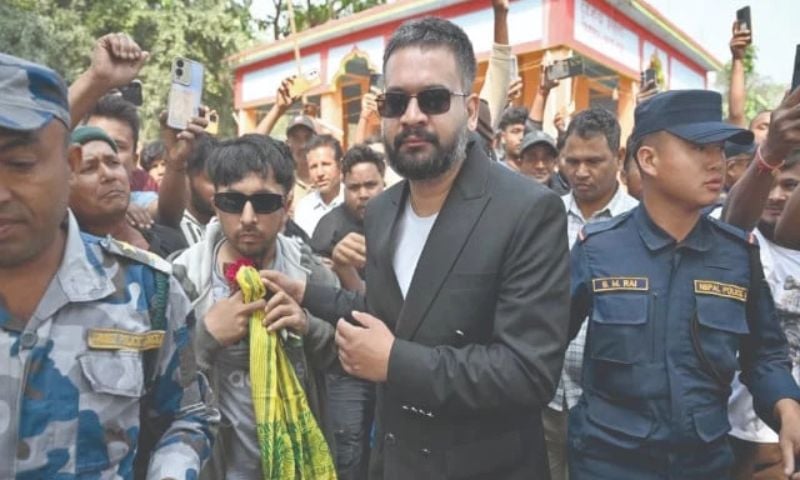



KATHMANDU: Nepal’s political landscape has undergone a dramatic shift after the centrist Rastriya Swatantra Party (RSP), led by rapper-turned-politician Balendra Shah, secured a commanding majority in the country’s parliament following the March 5 general election.
According to the Election Commission, the RSP won 182 seats in the 275-member House of Representatives, positioning the party as the dominant force in the lower house and just two seats short of achieving a two-thirds supermajority.
The election results were formally confirmed on Thursday after the final vote count was completed.
Election Commission spokesperson Narayan Prasad Bhattarai announced that the counting process for all parliamentary seats had concluded and the next step would involve parties submitting final candidate names for proportional representation seats.
According to Reuters, Nepal’s parliamentary elections consist of two systems: 165 seats are filled through direct elections, while 110 seats are allocated through proportional representation (PR).
The RSP performed strongly in both categories, securing 125 seats through direct contests and 57 seats via the proportional vote.
Meanwhile, traditional political parties suffered significant setbacks. The Nepali Congress, which previously held the largest share of seats in parliament, managed to secure only 38 seats, while the Communist Party of Nepal (UML) led by former prime minister KP Sharma Oli won 25 seats.
The Maoist Centre finished with just seven seats, highlighting the scale of the political shift.
The election marks the first nationwide vote since the intense youth-led anti-corruption protests of September 2025, which forced the collapse of the previous government.
The protests initially erupted after a temporary ban on social media platforms but rapidly evolved into a broader movement demanding accountability, economic reforms, and an end to entrenched corruption.
Much of that momentum appeared to translate into support for Shah and his party.
Shah, who previously served as the mayor of Kathmandu, defeated veteran politician KP Sharma Oli, a four-time prime minister, in a high-profile electoral contest in Oli’s own constituency.
Shah’s rise from musician to city mayor and now the country’s likely prime minister represents one of the most unexpected political trajectories in Nepal’s recent history.
Analysts say his victory reflects a growing appetite among younger voters for new leadership and a break from established political elites.
With the RSP now holding a decisive parliamentary majority, Shah is widely expected to lead the formation of Nepal’s next government, ushering in a new phase in the country’s politics shaped heavily by reformist and anti-corruption agendas.