


Key Points:
- Young baboons display jealousy by interrupting maternal grooming, similar to human children.
- Mothers show favoritism, grooming some offspring more than others, influencing sibling rivalry.
- Jealous behavior offers limited benefits: only 20% of maternal interruptions favor the jealous sibling.
PARIS: Sibling rivalry is not unique to humans — young baboons also show signs of jealousy when competing for their mother’s attention, scientists reported on Wednesday, highlighting surprising parallels between human and primate social behavior.
The scenario is familiar to many parents: just when one child has a special moment with a parent, a sibling intervenes, seeking attention.
Axelle Delaunay, an evolutionary biologist at Finland’s University of Turku and lead author of a new study, described jealousy as a “very striking” emotion in humans, yet noted it has been little studied among primates because it is “very complicated to measure.”
Typically, female primates have only one offspring at a time, leading researchers to believe there was little competition between siblings, as children of different ages do not necessarily rely on maternal resources simultaneously, Delaunay explained.
To investigate, the research team observed two troops of wild chacma baboons in Tsaobis Nature Park, central Namibia, between August and December 2021. The study focused on 16 families comprising 49 young siblings.
Baboons live in female-led societies, with maternal status often passed from mother to daughter. Male baboons, by contrast, leave their natal groups after puberty, according to AFP.
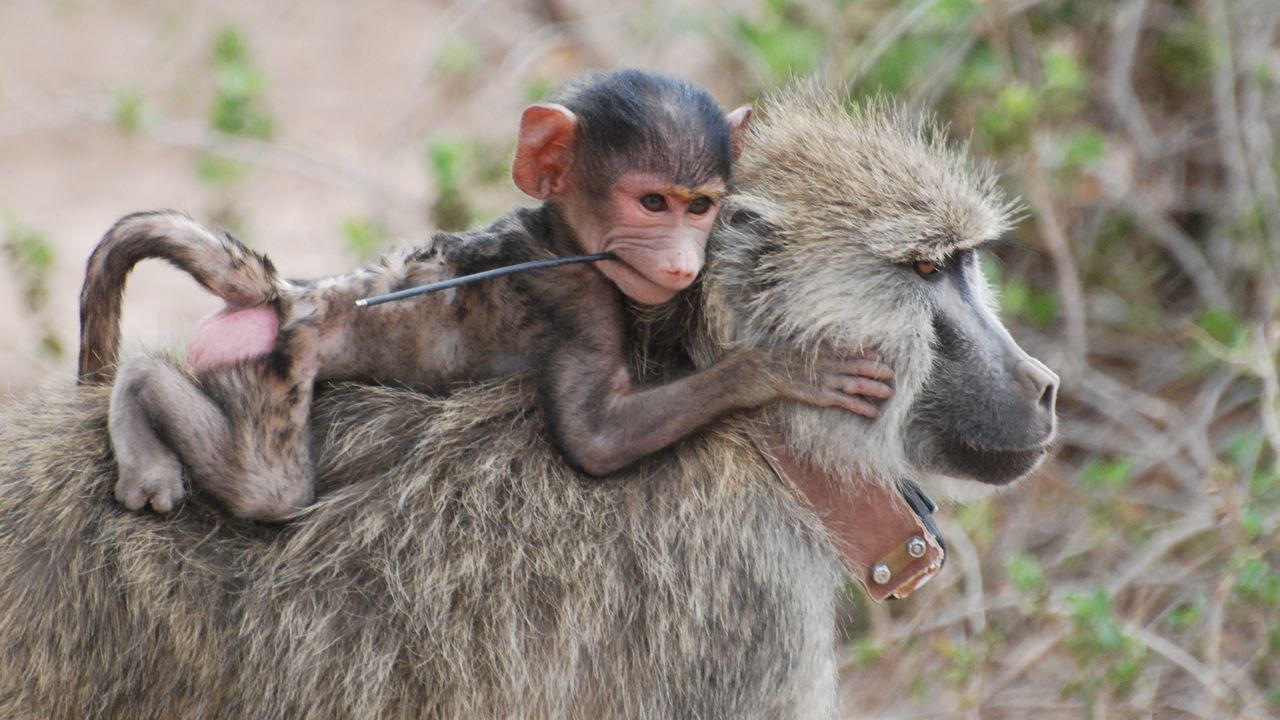
Like humans, baboon infants undergo a long developmental period during which they maintain strong bonds with their mother. Mothers frequently groom their young, and can display preferences among them.
The scientists spent extensive time observing mothers resting or grooming their offspring, meticulously recording instances when another infant interfered — whether by biting, slapping, crying out, or gently soliciting attention.
The findings, published in Proceedings of the Royal Society B: Biological Sciences, reveal that young baboons mirror human patterns of sibling jealousy. Infants were significantly more likely to interrupt maternal grooming of a sibling than when the mother was simply resting.
Researchers also developed an index to measure maternal favoritism, noting that some mothers groomed certain offspring more frequently than others.
However, Delaunay pointed out that jealous behavior offered limited immediate benefits.
The study found that mothers stopped grooming one child due to a sibling’s outburst only about 20% of the time, and only 9% of the time did the jealous infant then receive attention from the mother.
The study provides important insight into the evolutionary roots of complex emotions such as jealousy, showing that even in species with relatively small families, competition for parental attention can emerge and influence social interactions.