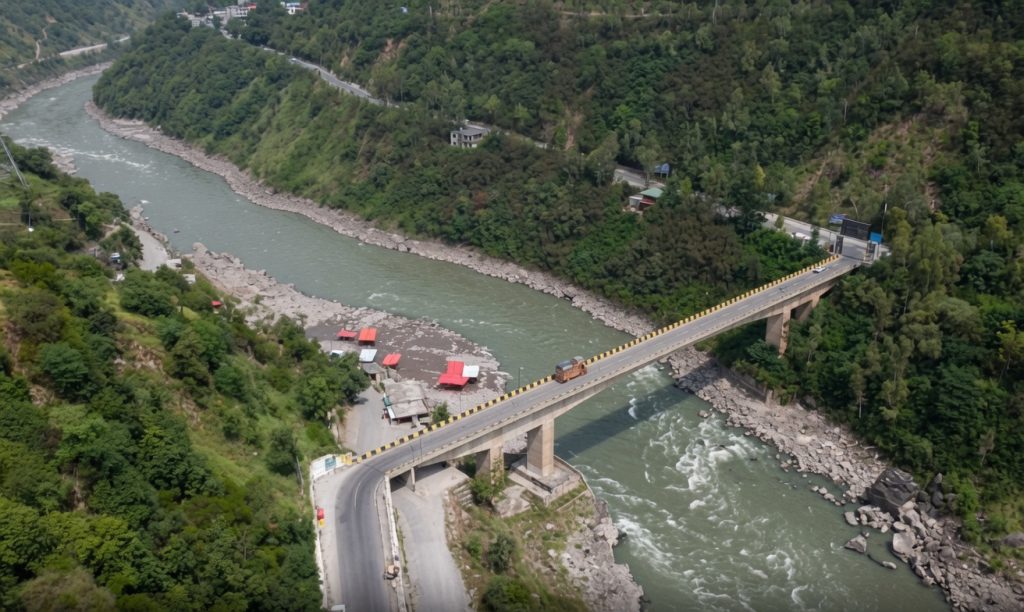



ISLAMABAD: The Azad Jammu and Kashmir Police has dismissed reports circulating on social media regarding the closure of roads and a major bridge linking Islamabad and Muzaffarabad, adding that the traffic is flowing normally across the region.
In a statement on Monday, the Spokesperson of the police said the Kohala Bridge is open for traffic.
The clarification comes following the announcement by the proscribed Joint Awami Action Committee (JAAC), Bagh chapter, regarding the closure of the Kohala Road from June 22, 2026, raising concerns among the public.
Kohala Road is one of the most important routes connecting Azad Jammu and Kashmir with other parts of the country.
The Azad Jammu and Kashmir Police, in its press release, clarified that Kohala Road, along with all major highways across the region, remains fully open and traffic is flowing normally.
Citizens have been urged not to believe rumours or unverified reports and to contact relevant authorities for accurate information.
Police also provided contact numbers for the central control room in Muzaffarabad—05822-930418 and 05822-930419—for verified updates regarding road and traffic conditions.
Public circles have expressed concern that any continuation of road closures, strikes, or protest activities could severely affect transportation, trade, tourism, the supply of essential goods, and access to medical services, directly impacting ordinary citizens.
The announcement by the banned JAAC regarding the Kohala Road blockade has created uneasiness among commuters, business communities, and the general public, as the route is considered a vital artery linking Azad Kashmir with the rest of the country.
Authorities warned that in case of any disruption to transport networks, the supply of food, medicines, fuel, and other essential commodities could be affected, placing an additional burden on the general public.
It was further noted that prolonged strikes and road blockades could negatively impact employment, business activity, tourism, and the local economy, with daily wage earners likely to be the most affected.
Concerns were also raised that patients, elderly citizens, students, and residents of remote areas could face difficulties in accessing hospitals, educational institutions, and other essential services.
Public voices have stressed that differences and demands should be addressed through peaceful means that do not disrupt public life, economic activity, or the continuity of basic services.
Meanwhile, public concern has increased following the JAAC announcement, while police have reiterated that all major roads, including Kohala Road, remain open for traffic.
Officials emphasised that the uninterrupted flow of essential goods such as food, medicines, and fuel is critical, and any disruption could directly impact the general population.
They added that the continuity of business, tourism, and employment is vital for the region’s economy, urging all parties to avoid actions that may create hardship for the public.
Azad Kashmir government declares JAAC proscribed organisation
The Azad Jammu and Kashmir government declared the Joint Awami Action Committee a proscribed organisation under anti-terrorism laws on June 5, saying the group was “engaged in terrorism, acting in a manner prejudicial to the peace and security of the State”.
Authorities argue that concerns regarding the committee’s intentions intensified after a series of statements and actions that they say went beyond peaceful political activism.
Officials said that rhetoric directed against state institutions, calls for the withdrawal of security forces, disruption of educational activities and inflammatory narratives contributed to growing suspicions about the organisation’s real objectives.
Government officials further contend that support expressed by hostile foreign media outlets, anti-state social media accounts and Indian media platforms for the committee’s activities raised serious questions about the forces seeking to exploit unrest in the region.
According to security analysts supporting the government’s position, these developments gradually exposed an organised effort to challenge state authority under the cover of a public rights movement.