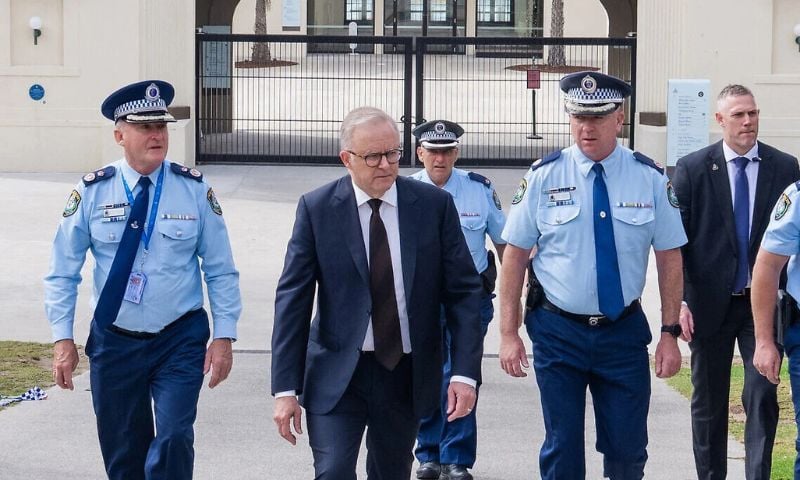



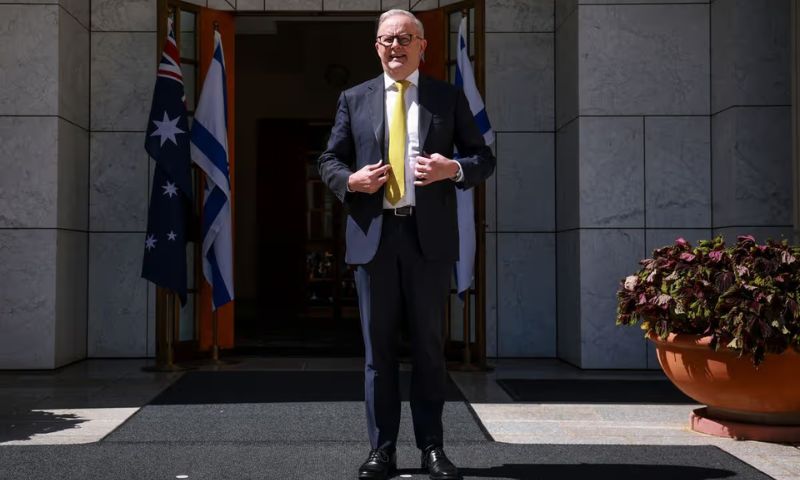
SYDNEY, Australia: Australian Prime Minister Anthony Albanese was evacuated from his official residence in Canberra on Tuesday evening after a security threat, police said, before returning several hours later when a search found nothing suspicious.
The Australian Federal Police (AFP) said it responded to an “alleged security incident” at about 6pm local time (0700 GMT) at The Lodge, the prime minister’s official residence in the capital.
“A thorough search of a protection establishment was undertaken and nothing suspicious was located,” the AFP said in a statement. “There is no current threat to the community or public safety.”
The AFP said further details would be provided at an appropriate time.
#BREAKING: A security incident at Prime Minister Anthony Albanese's residence in Canberra has sparked a significant police operation. https://t.co/YvEpucpAfV
— ABC News (@abcnews) February 24, 2026
National broadcaster ABC reported that the threat prompted a significant police operation and that Albanese was taken to another location for several hours before returning after the search was completed.
Guardian Australia reported that the incident involved a bomb threat, citing sources familiar with the matter.
A spokesperson for the prime minister’s office told ABC: “We trust the AFP to do their jobs and thank them for their work.”
Heightened security concerns
The AFP is responsible for protecting federal parliamentarians and certain Commonwealth buildings, including The Lodge and Parliament House.
Albanese and other federal lawmakers have faced a series of threats in recent months.
In mid-2024, the AFP reported that threats to federal politicians’ safety had doubled over the preceding two years.
Earlier this month, a Melbourne man was charged with allegedly making death threats and antisemitic comments towards a federal lawmaker in New South Wales.
Police alleged the 33-year-old contacted the MP several times in January via social media and email.
In a separate case, a man was convicted on February 10 of using social media to menace, harass and offend Albanese.
The court heard that a death threat and a graphic slur were directed at the prime minister and his wife.
Albanese has previously said that security arrangements for federal politicians are constantly monitored.
“We do live in circumstances where the number of threats that have been made towards elected representatives has increased substantially,” he said earlier this month.
“We also need to look at why some of this is happening.”
National security investigations
In October 2025, AFP Commissioner Krissy Barrett announced the establishment of national security investigations teams aimed at targeting groups and individuals causing high levels of harm to Australia’s social cohesion, including threats against federal parliamentarians.
Barrett told a Senate estimates hearing in February that 21 people had been charged nationwide since the teams were created.
Barrett added that she receives a daily report outlining threats and “offensive, vile communication to parliamentarians”.
“You can imagine how long that report is some days,” she told the hearing.
Rising tensions in Australia
The evacuation comes amid broader concerns about rising threats and hate incidents across Australia.
Last week, police launched an investigation after threatening letters were sent to Lakemba Mosque in Sydney ahead of the Muslim holy month of Ramadan.
ALSO READ: Australian PM Calls for Tougher Gun Laws after Deadly Bondi Beach Shooting
ABC reported that one letter included a drawing of a pig and a threat against Muslims, as well as a reference to the Christchurch mosque attacker.
New South Wales Police Commissioner Mal Lanyon confirmed authorities were investigating the letter. “We’ve taken possession of and are investigating,” he told reporters.
Community leaders said the incidents had caused unease among worshippers. “We’ve had so many inquiries about whether it’s safe to go to prayer,” Gamel Kheir, secretary of the Lebanese Muslim Association, which operates the mosque, told ABC.
“That’s not a question any Australian should ask.”
AFP Commissioner Barrett told lawmakers that Australia was witnessing a rise in individual grievances, including people willing to make threats online and carry them out in the real world.