
ISLAMABAD: Pakistan has welcomed the latest ruling issued by the Court of Arbitration under the Indus Waters Treaty (IWT) dispute resolution mechanism in its dispute with India, calling it a significant affirmation of its treaty-based water rights and a reinforcement of legal oversight on hydropower projects on the western rivers.
Officials in Islamabad said the award reinforces the binding nature of the Indus Waters dispute settlement system and confirms that technical and design-related disagreements over hydropower projects cannot be unilaterally interpreted by either party.
According to Pakistan’s initial response, the ruling adds clarity to long-standing questions regarding permissible design parameters for run-of-river hydropower projects on western rivers, particularly those concerning water storage limits, spillway design, and operational transparency.
Officials described the decision as a “notable reinforcement of procedural integrity” under the treaty’s dispute resolution framework, arguing that it reaffirms confidence in international arbitration as a stabilizing mechanism.
Experts say ruling reaffirms strength of legal mechanism
Legal experts say the rulings collectively add significant international weight to Pakistan’s interpretation of the treaty and reinforce the principle that bilateral water-sharing agreements cannot be unilaterally suspended.
A noted environmental and water expert Sadia Khalid termed any Indian move to suspend the Indus Waters Treaty unlawful and unacceptable, saying India cannot unilaterally withdraw from the accord.
She said Pakistan has consistently upheld a firm stance on the treaty at international forums and will continue to highlight the issue globally. She warned that rising water tensions could cause serious economic losses and threaten regional stability, stressing that water remains a lifeline for Pakistan’s agriculture-dependent economy.
Water law experts and South Asia policy analysts say the arbitration outcome is being widely interpreted as strengthening Pakistan’s legal standing in ongoing disputes over upstream hydropower development.
They argue that the ruling underscores a key principle of international water law: downstream states are entitled to ensure strict compliance with agreed technical design criteria in shared river systems governed by binding treaties.
A senior international water governance analyst noted that the decision “signals the continued validity of arbitration mechanisms under the treaty structure, particularly in resolving technical disputes where unilateral interpretations can create asymmetry in water control.”
Experts further suggest that the ruling reinforces the principle that hydropower development on shared rivers must remain within clearly defined engineering limits to avoid adverse downstream impacts.
Legal experts highlight jurisdictional clarity
International legal experts specializing in transboundary water agreements say the ruling is significant because it reinforces the authority of arbitration forums in interpreting treaty provisions in technically complex disputes.
They note that the Indus Waters Treaty—widely regarded as one of the most durable water-sharing agreements globally—was designed with a multi-tier dispute resolution mechanism to prevent escalation into political confrontation.
According to analysts, the latest award strengthens the position that arbitration remains a valid and independent avenue for resolving engineering-related disputes, particularly those involving reservoir operation, sediment management, and dam safety compliance.
Some experts argue that this reinforces Pakistan’s reliance on structured legal recourse rather than bilateral escalation to address concerns over upstream infrastructure.
Pakistan, which depends heavily on the Indus river system for irrigation and hydropower, views strict enforcement of design constraints as essential for ensuring predictable river flows and minimizing downstream uncertainty.
Environmental analysts also note that cumulative impacts of multiple upstream projects can alter seasonal flow patterns, making treaty compliance not only a legal issue but also an ecological and economic necessity.
In this context, experts say the ruling reinforces safeguards aimed at ensuring the long-term sustainability of shared river systems. For Pakistan, it is being viewed as a legal validation of its longstanding position on strict compliance with treaty design parameters.
Court verdict
A Court of Arbitration constituted under the 1960 Indus Waters Treaty issued a significant ruling affirming the continued validity of the agreement and its authority to adjudicate Pakistan’s concerns regarding hydropower projects on the western rivers. The court’s decision addressed Pakistan’s objections related to water flow management, treaty interpretation, and downstream rights under the agreement.
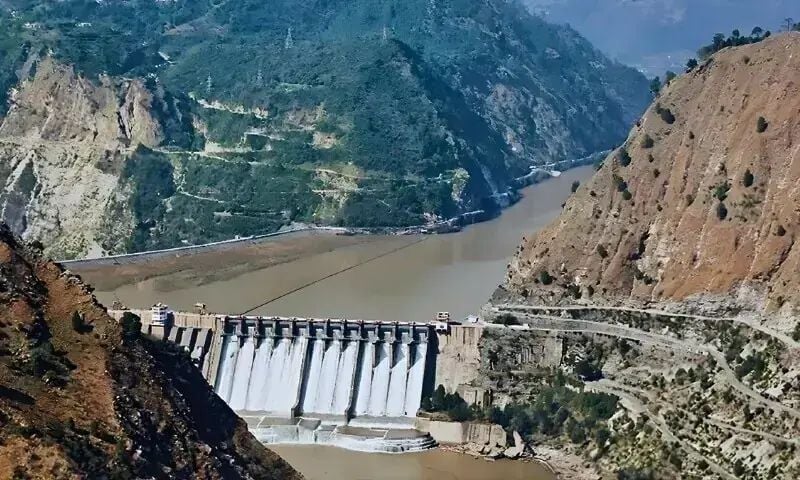
The dispute centers on the design and operation of India’s Kishenganga and Ratle hydropower projects on rivers allocated to Pakistan under the treaty framework.
Pakistan has argued that certain technical features of these projects violate treaty provisions and could allow undue control over downstream flows. It has welcomed the supplemental award as a vindication of international law and the treaty’s continued validity.
The Indus Waters Treaty, brokered by the World Bank in 1960, is regarded as one of the world’s most durable water-sharing agreements. It allocates the eastern rivers—Ravi, Beas, and Sutlej—to India, while granting Pakistan rights over the western rivers—Indus, Jhelum, and Chenab.
Origins of the arbitration case
Pakistan initiated arbitration proceedings in 2016 under Article IX and Annexure G of the treaty after raising objections to the design specifications of the Kishenganga and Ratle hydropower projects in Indian-administered Jammu and Kashmir.
Islamabad argued that certain structural features, particularly gated spillways and low-level outlets, could enable excessive control over downstream water flows. It maintained that the issues involved treaty interpretation rather than purely technical disagreements.
In July 2023, the Court of Arbitration issued an Award on Competence affirming its jurisdiction. Proceedings later moved to hearings on the merits at The Hague in July 2024.
The dispute escalated in April 2025 after India announced it was placing the Indus Waters Treaty “in abeyance” following heightened regional tensions. Pakistan rejected the move, stating that no party can unilaterally suspend or terminate the treaty.
Pakistan’s core concerns
Pakistan’s objections focus on concerns that India’s hydropower infrastructure could alter natural river flows entering its territory, particularly during critical agricultural seasons.
Pakistani officials and experts argued before the tribunal that specific design features in the Kishenganga and Ratle projects exceed the limited rights granted under the treaty for run-of-river hydropower generation.
Islamabad maintained that the treaty allows hydropower generation on western rivers only under strict technical constraints that prevent water storage or flow manipulation.
Pakistan also warned that weakening treaty mechanisms could threaten regional water security and undermine one of the few enduring agreements between the two countries.
Given that the Indus River system underpins Pakistan’s agriculture, food security, and energy production, the issue carries major strategic importance. International assessments indicate Pakistan’s heavy reliance on waters flowing from the western rivers governed by the treaty.
Islamabad further argued that India’s unilateral decision to place the treaty in abeyance has no legal standing under international law or the treaty itself, which contains no provision for unilateral suspension.
What the arbitration court decided
In its Supplemental Award issued on June 27, 2025, the Court of Arbitration ruled unanimously that India’s decision to place the treaty “in abeyance” did not affect the tribunal’s jurisdiction or ability to continue proceedings.
The court held that unilateral action by one party cannot invalidate or suspend proceedings once arbitration has begun. It further affirmed that the treaty remains operational and legally binding.
Pakistan described the ruling as a major legal and diplomatic victory. The Foreign Office said the award “vindicates Pakistan’s position that the Indus Waters Treaty remains valid and operational.”
In a subsequent interpretative award in August 2025, the court addressed technical questions related to design criteria for run-of-river projects on western rivers and sided with Pakistan on several points.
The tribunal emphasized that India must ensure unrestricted downstream flow to Pakistan except within narrowly defined treaty exceptions for hydropower generation.
The ruling also examined disputed engineering features such as gated spillways, low-level outlets, and turbine intake structures, where Pakistan argued India’s interpretation could allow excessive operational control.
According to the supplemental award issued on May 15, 2026, the court further clarified matters related to maximum pondage and treaty interpretation following hearings held in April.