



NEW YORK: Artificial intelligence took center stage this Black Friday, helping propel U.S. Online spending to an all-time high as shoppers leaned on digital assistants to navigate deals in a year marked by inflation concerns and tariff-induced price pressures.
U.S. consumers spent a record $11.8 billion online, according to Adobe Analytics—a 9.1% jump from 2024. The surge came as shoppers increasingly relied on AI-driven tools to compare prices, uncover discounts, and avoid crowded brick-and-mortar stores, according to Reuters.
AI-powered traffic to retail sites skyrocketed 805% year-over-year, driven by new tools such as Walmart’s Sparky and Amazon’s Rufus. “Consumers are using new tools to get to what they need faster,” said eMarketer analyst Suzy Davidkhanian, noting that AI is making the typically stressful gift-finding process “quicker and more guided.”
Mastercard SpendingPulse data showed e-commerce sales rising 10.4%, compared to just 1.7% growth in in-store shopping, reflecting shifting consumer habits amid economic anxiety. With unemployment nearing a four-year high and confidence levels slipping, shoppers turned to the internet for better value and convenience.
Global Impact: AI Influences $14.2 Billion in Sales
AI’s impact wasn’t confined to the U.S. Salesforce reported that AI agents influenced $14.2 billion in online sales globally, including $3 billion in the U.S. alone.
Salesforce estimated that Americans spent $18 billion online overall on Black Friday—up 3%—with luxury apparel and accessories emerging as standout categories. However, the cost pressures of inflation and tariffs meant consumers bought fewer items per transaction, even as average selling prices rose 7%.
Higher-income shoppers played a notable role in driving spending upward, Salesforce said, particularly in higher-priced discretionary categories.
Deals Felt “Less Sharp” Amid Higher Prices
Despite the strong headline numbers, analysts noted that the real value of deals faded this year. Discount rates remained flat compared to 2024, and rising product costs made deeper markdowns difficult for retailers.
“Promotions and discounts may not feel as sharp as last year,” said Davidkhanian, while Running Point CIO Michael Ashley Schulman pointed out that inflation has eroded the perceived value of Black Friday bargains.
Order volumes dipped 1%, while units per transaction fell 2%, Salesforce reported.
Cyber Monday Set to Break Records
The momentum is expected to carry into Cyber Monday, which Adobe projects will generate $14.2 billion in spending—making it the biggest online shopping day of the year. Electronics are set for the steepest markdowns, with discounts reaching 30%, alongside strong deals in apparel and computers.
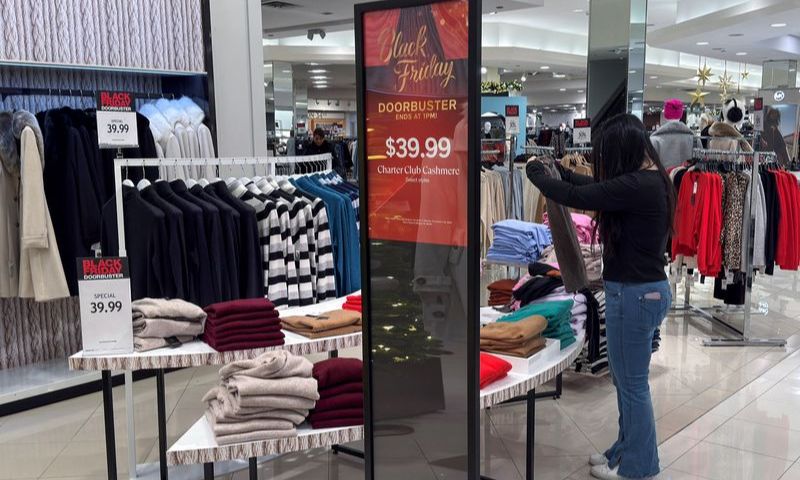
On the ground, retailers reported relatively subdued foot traffic. Bargain hunters cited fears of overspending amid persistent inflation, uncertain trade policy, and a soft labor market. While stores saw activity, the real frenzy clearly shifted online—powered by AI, aggressive digital outreach, and a consumer base increasingly comfortable with algorithm-assisted shopping.