Key points
- Children protest unsafe and poorly equipped government schools
- Gen Alpha follows Gen Z in challenging education authorities
- School crisis could become a political test for Modi
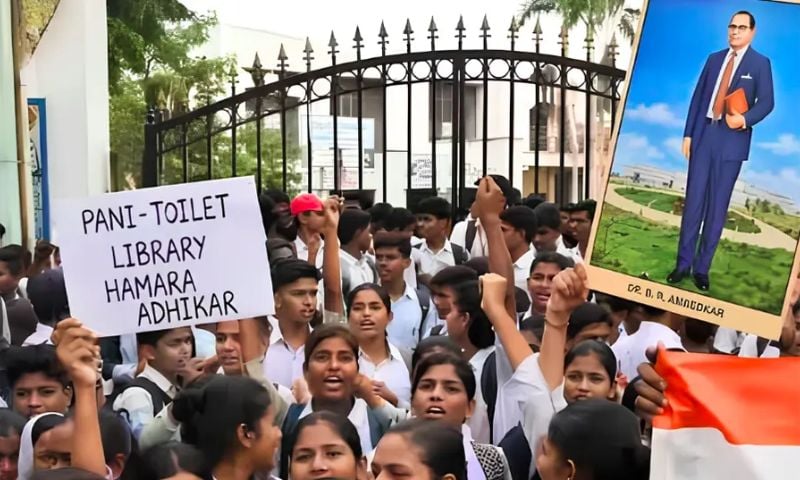
ISLAMABAD: Children as young as six have begun taking to the streets across India to demand basic school facilities, exposing deep gaps in the country’s vast government education system and raising the prospect of a new generation challenging those in authority.
In one recent protest, pupils at a government school in Samuhi Bhatpurwa refused to enter their classrooms on August 22, demanding a new building after years of concerns over the safety of their dilapidated school.
Part of the building remains in rubble after a wall collapsed on a girl in 2023, severely injuring her. The children had repeatedly asked authorities for a replacement building but said their concerns were ignored.
The protest ended only after Block Education Officer Deepak Awasthi visited the school and assured the pupils that a new building would be constructed.
Eight-year-old Priya, whose name has been changed, said the condition of the school had left children fearful that the building could collapse.
“I am happy. We will get a new building,” she told Al Jazeera, saying the fear had also made it difficult for students to concentrate on their studies.
A wave across India
The protest was not an isolated incident. Similar demonstrations have been reported since late July in at least 10 Indian states, including Maharashtra, Bihar, Rajasthan, Jharkhand and Madhya Pradesh, particularly in rural areas where government schools face shortages of teachers, basic facilities and adequate buildings.
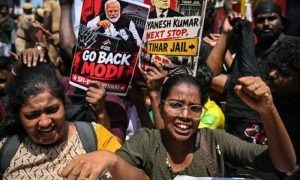
The protests have emerged soon after a larger youth movement led by members of Generation Z, turning attention from university and examination-related grievances to the everyday conditions faced by younger schoolchildren.
Thousands of Gen Z protesters had gathered in New Delhi from early June, demanding accountability over examination paper leaks and broader education reforms.
The movement also highlighted India’s unemployment and underemployment crisis.
The youth campaign was led by the satirical Cockroach Janata Party, formed in May to protest unemployment and systemic weaknesses in education.
After security forces cracked down on protesters marching towards parliament, the movement gained wider support, and the government eventually saw Education Minister Dharmendra Pradhan resign.
The movement has since expanded its focus to schools.
On August 15, the group launched a grassroots campaign called “School Thik Karo” — or “Fix the Schools” — backing schoolchildren protesting against inadequate infrastructure, teacher shortages and other deficiencies.
READ ALSO: India’s Student Protests Expose Growing Restrictions on Journalists: Reporters Without Borders
Ratna Singh, the group’s legal affairs head, said the campaign was a natural extension of the earlier youth movement, after members encountered children and parents from rural areas complaining about the condition of schools.
Basic facilities remain a problem
India runs one of the world’s largest education systems, with 247 million students attending about 1.5 million schools. Around 70 per cent of those schools are operated by federal, state or local governments.
Official data for 2025-26 indicated improvements in access to education, a declining dropout rate and an average teacher-pupil ratio of 1:24.
But national averages mask serious deficiencies at individual schools.
Education rights activist Nagasimha Rao said children were demanding teachers, benches, school buildings, drinking water, electricity and toilets. She argued that basic infrastructure and manpower were absent from many government schools.
At Sarvodaya Inter College in Uttar Pradesh, students protested on July 28 over the absence of drinking water and electricity and a shortage of benches.
Students said the lack of electricity meant they had no fans during the hot and humid summer, forcing many to sit on the floor.
In Maharashtra, students at Parli’s Vaidyanath Vidyalaya protested against a shortage of teachers. The school was established in 1941.
Official figures cited in the report show that India has more than 100,000 schools with only one teacher for all grades, serving about 2.9 million children. At the same time, 5,663 schools are classified as “ghost schools” with no enrolment.
Food quality is another flashpoint.
In Bihar’s Simuara village, about 50 students walked 4km on July 28 to complain to a senior bureaucrat about the quality of meals provided under the government’s midday meal programme.
Students said their school lacked piped water, meaning raw ingredients could not be properly cleaned. They complained that rice, lentils and vegetables were often of poor quality, with some vegetables allegedly almost rotten.
A greater political challenge
India’s youth protests are also emerging as a potential political challenge for Prime Minister Narendra Modi’s government.
More than 30 per cent of India’s population is under 18, meaning many of the children now protesting over school conditions will become eligible to vote by the 2029 national elections.
The emergence of Gen Alpha protests immediately after the Gen Z movement may therefore signal more than isolated dissatisfaction.
Students at schools and universities increasingly appear willing to question authorities over education, infrastructure and examination standards.