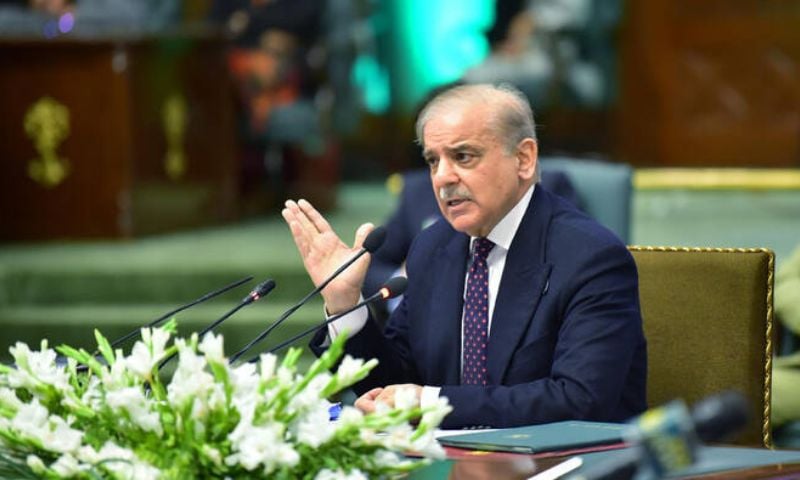



ISLAMABAD: Prime Minister Shehbaz Sharif said on Tuesday that Pakistan was “forced” to suspend all trade with Afghanistan, accusing the interim Afghan authorities of failing to act against armed groups operating from their territory.
The Pak-Afghan border has remained closed for trade since mid-October 2025 after clashes erupted along the frontier. Several rounds of talks aimed at establishing counterterrorism mechanisms ended without agreement, despite mediation efforts by Turkiye and Qatar.
“The blockade of petroleum trade should not have happened, but they forced us into it,” . the prime minister said while addressing a national workshop in Islamabad.
“Now, it must be decided whether Afghanistan wants to live in peace or not. We pray that our Afghan brothers and sisters, and if not the entire Afghan government, will at least show mercy to their people and not oppress them. Rest assured, we will continue to make every effort. The rest is in the hands of Allah Almighty,” he added.
“We had only one demand: that all terrorist outfits and proxies operating from Afghanistan — whether the TTP, the BLA, or groups receiving support from India — must be stopped. Unfortunately, no serious commitment was made,” said Shehbaz Sharif.
“افغانستان ہمارا ہمسایہ ملک ہے۔ ہمیں دل بڑا کرنا چاہیے، لیکن بدقسمتی سے، چاہے ماضی کی حکومتیں ہوں یا آج کی حکومت، ہماری میزبانی کی قدر نہیں کی گئی۔ چالیس لاکھ افغانوں پر پاکستان نے اپنے وسائل بھی نچھاور کیے۔ انہوں نے یہاں کاروبار کیے، شادیاں کیں، ان کے بچے اسکولوں اور کالجوں میں… pic.twitter.com/tH56CIMS3e
— Government of Pakistan (@GovtofPakistan) January 20, 2026
Afghanistan is Pakistan’s neighbour and, as the prime minister stressed, the two countries “have to live together forever,” adding that he has consistently maintained that “what is good for Afghanistan is good for Pakistan, and vice versa.”
However, he said successive Afghan governments failed to appreciate Pakistan’s hospitality. Hundreds of thousands of Afghans were hosted in Pakistan, he noted, with international assistance supplemented by Pakistan’s own resources.
Afghans were able to run businesses, marry, educate their children, find employment and open shops across major cities, including Peshawar, Lahore and Karachi, without objection from the state.
“A brother should behave like a brother,” he said, arguing that mutual relations require recognition of “love and affection.” Pakistan, he added, “never claimed to have done any favour” to Afghans, calling it a responsibility rather than charity, but said “the way we are being repaid is deeply saddening.”
Referring to the 2020 Doha Agreement, the prime minister said it was “very clear” that Afghan soil must not be used for terrorism and that no armed group should be allowed to operate from Afghan territory.
He said Pakistan’s defence and deputy prime ministers had visited Kabul repeatedly and held talks in China and other locations, but “they did not listen to us.”
As violence escalated, he said Pakistan was left with “no choice but to respond” when its people were being “martyred day and night.” Subsequent meetings, he added, failed to deliver any results.
Pakistan’s sole demand, he said, was that all militant outfits and proxies operating from Afghanistan — including the TTP, the BLA and groups allegedly backed by India — be stopped. “Unfortunately, no serious commitment was made,” he said.
The suspension of petroleum trade, he added, “should not have happened,” but Pakistan was “forced” into the decision, while still allowing essential goods to pass under a United Nations framework.
He said the moment had arrived for a clear choice on whether Afghanistan “wants to live in peace or not,” urging Afghan authorities to at least “show mercy to their people” and not oppress them.
“Rest assured, we will continue to make every effort,” he said, concluding that “the rest is in the hands of Allah Almighty.”
Terrorism surge after 2018
“اے پی ایس کے واقعے کے بعد افواجِ پاکستان اور سیاسی حکومت اس نتیجے پر پہنچے کہ سب برابر ہیں، اچھے اور برے طالبان کی کوئی تمیز نہیں۔ پاکستان کے ایک لاکھ افراد شہید ہوئے، جن میں افواجِ پاکستان کے افسران اور سپاہی، پولیس، رینجرز اور عام شہری شامل ہیں۔ ان کے خون کی بدولت دہشت گردی کا… pic.twitter.com/vSRzFAc5iu
— Government of Pakistan (@GovtofPakistan) January 20, 2026
The prime minister also addressed the resurgence of violence in Khyber Pakhtunkhwa, calling it a “beautiful region” whose people “never hesitate to sacrifice their lives for their country”.
“Whatever happened as a result of the Afghan war is before you,” he said, recalling how Pakistan hosted refugees from across the border and allowed them to live “like a family”.
“[But] what did Pakistan get in return?” he asked.
PM Shehbaz said “thousands of innocent Pakistanis” lost their lives to terrorism and recalled that by 2018, militancy had been “completely eradicated” through major sacrifices.
After the 2014 Army Public School attack, he said, the state adopted a policy of “no good or bad Taliban”. “Today, there is no such distinction,” he added.
“But after 2018, what was the reason that this menace resurged?” he asked, saying “we all know the answer very well”.
“Numerous terrorists were released from Swat, and thousands of people were brought from Afghanistan to live in Pakistan. This was the main reason terrorism resurged in the country,” he said.
“Today, terrorism has once again dealt a major blow to Pakistan’s development and prosperity, particularly in Balochistan and Khyber Pakhtunkhwa, as well as in other areas.”
“Every day, there is a terrorist incident somewhere,” he added.
While praising the sacrifices of soldiers, the prime minister said hatred was being spread online and an “evil attempt is being made to defame the martyrs”.
“They spew venom against Pakistan in chorus with the country’s enemies across the border,” he said, vowing that Pakistan would continue its fight against terrorism until it is eliminated.