


Key Points
- Vendors say rising prices and economic hardship have reduced Eid shopping
- Prices surge in Herat amid border closures with Pakistan
- Many families say they can only afford limited holiday purchases
- Traders report weaker sales and fewer customers compared with previous years
ISLAMABAD: Markets across Afghanistan are experiencing subdued activity ahead of Eid al-Fitr, as rising prices and worsening economic hardship limit affordability and purchasing power for many households, according to local traders and residents.
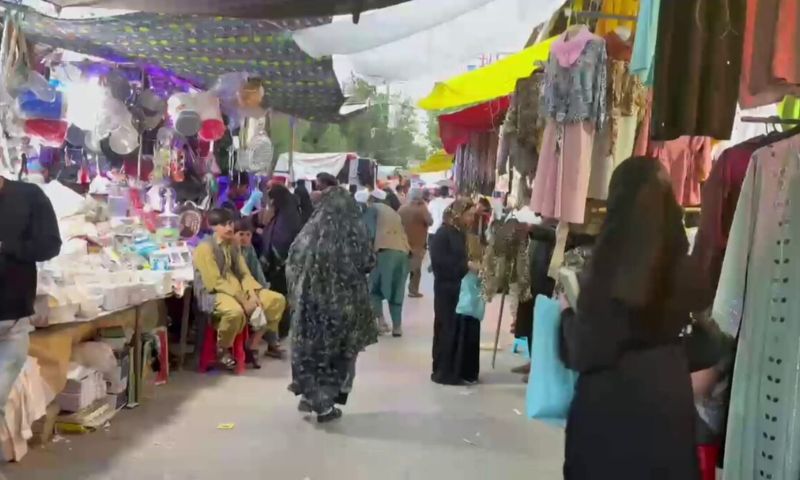
Vendors say that although more people are visiting markets as the Muslim holiday approaches, sales remain weak because many families cannot afford traditional Eid purchases, reported a US-based private Afghan TV.
In the western city of Herat, traders reported sharp increases in the prices of dried fruits, a staple item for Eid celebrations. Some vendors said the increases are linked to the closure of key border crossings with Pakistan, which has disrupted supply chains and raised import costs, it added.
“Just look at the market, there are hardly any customers,” said Amir Mohammad, a dried-fruit seller in Herat, adding that many traders struggle to earn even a basic daily income.
Residents visiting the markets say the rising prices have forced families to scale back their Eid preparations.
“Prices of dried fruits have nearly doubled, and people simply don’t have money,” said Ghulam Rasool, a Herat resident, describing the situation as extremely difficult for ordinary families.
Another resident, Ilyas, said many households are buying only what they can afford for the holiday, reflecting the deepening economic strain across the country.
Although markets remain open late into the evening as Eid approaches, traders say the usual festive bustle seen in previous years is largely absent.
Afghanistan’s economy has struggled since the Taliban returned to power in 2021, with declining foreign aid, limited employment opportunities and rising food prices eroding household incomes.
Humanitarian agencies estimate that millions of Afghans remain in urgent need of assistance, making it difficult for many families to observe the holiday traditionally.