


When the Taliban seized Kabul on August 15, 2021, many observers—both within Afghanistan and abroad—predicted that the new rulers would be unable to govern and that the country would spiral into chaos.
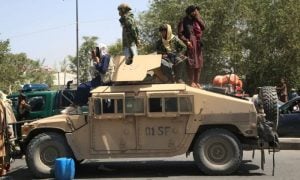
Four years on, the Islamic Emirate remains firmly in power. Security has largely stabilised, markets continue to function despite international sanctions, and the administration has managed to sustain basic government operations.
But at the same time, a number of concerns continue to overshadow this relative stability. The Taliban face persistent criticism for severe restrictions on human rights—most notably the ban on girls’ education, curbs on women’s participation in public life, and the absence of political pluralism.
The Taliban administration has excluded dissenting political and social voices, with political parties outlawed and civil society space shrinking.
Calls for a genuinely broad-based and inclusive government have largely been dismissed, as the current cabinet remains overwhelmingly composed of Taliban figures or close allies.
Isolation amid engagement
Diplomatically, the Taliban government has engaged with countries across the world, including the United States, while pursuing regional connectivity projects with neighbours. Yet it still faces international isolation, an education ban on girls, and economic hardship.
In the four years since their return, Russia has been the only country to officially recognise the Taliban government.
No other state has granted formal recognition, but Taliban officials claim that they maintain diplomatic engagement with many nations—including Western powers—and take part in regional talks.
These include the Oslo meetings with Western officials and Afghan civil society in January 2022.
In July 2022, the Taliban also took part in the Tashkent International Conference on Afghanistan, where their delegation engaged with representatives from more than 30 countries.
Most recently, they have been invited to the ongoing United Nations (UN)-convened Doha process, although formal recognition continues to be withheld.
Interestingly, the former government’s representative still holds Afghanistan’s United Nations seat, and the Organisation of Islamic Cooperation (OIC) has not formally accepted Taliban representation, although Taliban officials attend OIC meetings as observers.
Talking to WE News English over the phone, a senior Taliban official in Kabul describes the UN Credentials Committee’s refusal as “political,” arguing that Afghanistan meets the criteria of control and stability, and that conditions linked to women’s rights and inclusivity are extraneous to credentialing.
Similarly, Taliban spokesman Zabihullah Mujahid has said that recognition and representation are being unfairly tied to what he called “political issues,” including girls’ education, inclusivity, and sanctions.
Governing without constitution
A promised permanent constitution remains unrealised. On 28 September 2021, acting Justice Minister Abdul Hakim Sharei announced that the Emirate would temporarily rely on provisions of the 1964 constitution that did not conflict with Sharia, while working towards a new framework—effectively a pledge to draft a permanent constitution in the future.
The commission—set up under the leadership of Abdul Hakim Haqqani, then Chief Justice and head of the Supreme Court in 2022—has yet to produce a draft.
Oddly enough, the official membership lists have not been made public, and there is no evidence that ethnic balance was taken into consideration when constituting the body.
Taliban leaders sometimes describe the current Islamic system as their governing framework, but elements of the 2004 constitution still apply.
There has been discussion of reviving the 1964 constitution from King Zahir Shah’s era, with amendments, but no formal progress had been made.
In practice, legal continuity is, nevertheless, largely ad hoc: Taliban institutions have referenced pre-existing laws and administrative norms unless deemed contrary to Sharia.
For example, they have retained the use of state administrative boundaries, ministries, and statutory procedures carried over from the previous order.
However, there is no formal list of applicable provisions, and practice is determined on a case-by-case basis by justice authorities.
Education denied
The ban on girls’ secondary and higher education, in place since the Taliban’s return, affects an estimated two million females.
The leadership insists that the restriction is temporary and attributes it to “technical issues,” but no timetable has been provided for reopening schools and universities to women.
The United Nations Educational, Scientific and Cultural Organisation (UNESCO) estimates that between 1.9 and 2.5 million school-age girls are currently barred from continuing their education under the post-2021 restrictions.
These closures have deepened shortages of female teachers and health workers, particularly in areas where cultural norms require female staff, undermining the capacity of both the education and health sectors.
Beyond its internal impact, the ban has drawn persistent international condemnation and remains a central obstacle to the Taliban’s pursuit of formal recognition.
Improved security landscape
The Taliban now exercise full territorial control, including border regions. Large-scale Islamic State of Iraq and the Levant (ISIL) attacks have decreased sharply since 2021, though isolated incidents still occur, including recent operations against Islamic State of Iraq and Syria (ISIS) cells near Kabul.
Despite occasional attacks on diplomatic sites, religious gatherings, and public spaces, overall security has improved significantly compared to the immediate post-takeover period.
According to the United Nations Assistance Mission in Afghanistan (UNAMA), there has been a marked overall decline in nationwide conflict-related deaths since August 2021, even as Islamic State Khurasan Province (ISKP) remains the main factor behind high-profile attacks.
These incidents continue but at significantly lower levels compared with 2021, a trend documented in UNAMA’s periodic and quarterly reports from 2022 to 2024.
Governance sans pluralism
Political parties remain banned, with the Taliban asserting that Western-style democracy is incompatible with their Islamic governance model. The administration is still interim, a factor analysts say hampers international recognition.
In the absence of broader recognition and access to international financing, the long-term sustainability of such a governance structure remains doubtful.
Calls for a broad-based government have been met with Taliban assurances that their cabinet is already inclusive.
Leaders such as Zabihullah Mujahid and Amir Khan Muttaqi argue that the administration draws members from multiple provinces and ethnicities within an Islamic framework, which they claim fulfils the principle of inclusiveness.
They reject Western-style party-based or quota models, insisting that their system already represents the country’s diversity.
Critics, however, contend that the cabinet remains composed almost entirely of Taliban figures or close allies, leaving little space for genuine political pluralism.
Inside Afghanistan, the once-powerful warlords who shaped politics for decades have been largely sidelined, leaving the Taliban as the dominant power but also heightening questions about the long-term inclusiveness and resilience of their governance model.
Fragile economic gains
While domestic revenues have recovered to roughly pre-2021 levels—largely through customs duties and taxation—World Bank and Special Inspector General for Afghanistan Reconstruction (SIGAR) assessments highlight that heavy aid cuts and ongoing sanctions continue to constrain economic growth and public services.
Despite sanctions and frozen assets, the Taliban have kept the Afghani currency stable. About US$7 billion of Da Afghanistan Bank (DAB) reserves were frozen in the United States in August 2021, with US$3.5 billion later transferred to a Switzerland-based Afghan Fund for safeguarded, conditional use.
Additional reserves in Europe and the United Arab Emirates also remain inaccessible, with the freezes tied to the Taliban’s lack of international recognition, as well as concerns over governance and anti–money laundering standards.
Even under these constraints, World Bank assessments note that the Taliban have stabilised the currency through strict foreign exchange and capital controls, enforcement against informal speculation, steady inflows of humanitarian cash, improved customs and tax collection, and occasional central bank interventions. These measures have kept the afghani relatively steady through 2023–2024.
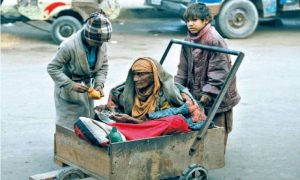
Yet, beneath this surface stability, the economy continues to struggle. Growth remains slow, unemployment is high, and aid flows have dropped sharply compared to the NATO-backed era.
Prolonged low growth and shrinking aid risk driving Afghanistan into entrenched poverty, eroding human capital—especially among women and girls—and leaving key services underfunded.
Without international recognition and sustainable investment, both state capacity and private-sector recovery are likely to remain severely constrained.
Taliban leaders often cite new infrastructure projects as evidence of progress. In Herat, for example, officials highlight the continuation of the Khaf–Herat railway link with Iran, as well as post-earthquake reconstruction of roads and public buildings in the province.
Such projects are showcased as signs of development, but for most Afghans, poverty and limited opportunities remain pressing realities.
Comparisons with previous administrations highlight the scale of change. Under Hamid Karzai and Ashraf Ghani (2002–2020), Afghanistan experienced aid-fuelled GDP growth in the early 2000s, before a gradual slowdown.
This period was marked by high aid dependency and widespread corruption, with foreign grants covering up to 75 per cent of public spending.
After the Taliban takeover in 2021, the economy contracted sharply in 2021–2022 due to aid withdrawal, sanctions, and financial disruption.
However, by 2023–2024, the World Bank noted modest stabilisation: low but positive growth, reduced inflation, and improved revenue administration.
Observers note a reduction in petty corruption since 2021. According to World Bank analyses and independent monitoring, customs and tax collection have improved, and reports of small-scale bribes in service delivery are less frequent than under previous governments.
At the same time, international assessments stress the lack of transparency and ongoing risks of elite capture.
Peace imposed, not negotiated
The Taliban have consolidated power and ensured a level of stability many doubted they could achieve. But they also face persistent criticism over human rights, lack of political pluralism, and international isolation.
For Afghans, the daily reality is a blend of improved security and enduring restrictions. The Taliban themselves had long been the main threat to peace in Afghanistan, and now that they are in power, there is little organised force left to challenge law and order.
This has created a perception that peace and the Taliban are interlinked—a troubling notion, since stability was not achieved through dialogue or reconciliation with dissenting forces but rather imposed through the barrel of a gun.
It is this uneasy mix that will shape whether the Islamic Emirate can transition from mere survival to credible, long-term governance.
Millions still displaced
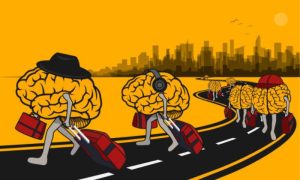
Afghanistan’s refugee crisis remains among the world’s largest, with about 2.6 million registered Afghans living abroad, most in Iran and Pakistan.
Pakistan’s Afghan population comprises roughly 1.43 million Proof-of-Registration (POR) holders, an estimated 800,700 Afghan Citizen Card (ACC) holders, and a large undocumented cohort.
Islamabad has ordered all undocumented and ACC holders to leave by 31 August 2025 and has already begun deportations, with UN/OCHA noting about 800,000–1,000,000 returns since the 2023 drive. Altogether, Afghans in Pakistan—POR, ACC, and undocumented—exceed 3 million.
In recent months, both Iran and Pakistan have intensified deportations, sending back hundreds of thousands, including many long-term residents.
The UN warns that reintegrating these returnees—most of them children—into an economy under sanctions and aid cuts will be a major test for the Taliban administration.
Inside the country, an additional 3.5 million people are displaced by conflict and economic collapse.
Uncertain future
Four years after their return to power, the Taliban have defied predictions of immediate collapse, delivering a measure of stability and security unseen in decades. Yet this stability comes at the cost of political freedoms, women’s rights, and international legitimacy.
While the administration has maintained basic governance under sanctions and avoided large-scale conflict, it remains isolated on the world stage and burdened by economic stagnation and a deepening refugee crisis.
For millions of Afghans, life under the Islamic Emirate is a paradox: safer streets and fewer warlords, but also shuttered classrooms, curtailed freedoms, and an uncertain future in a country still searching for its place in the global order.