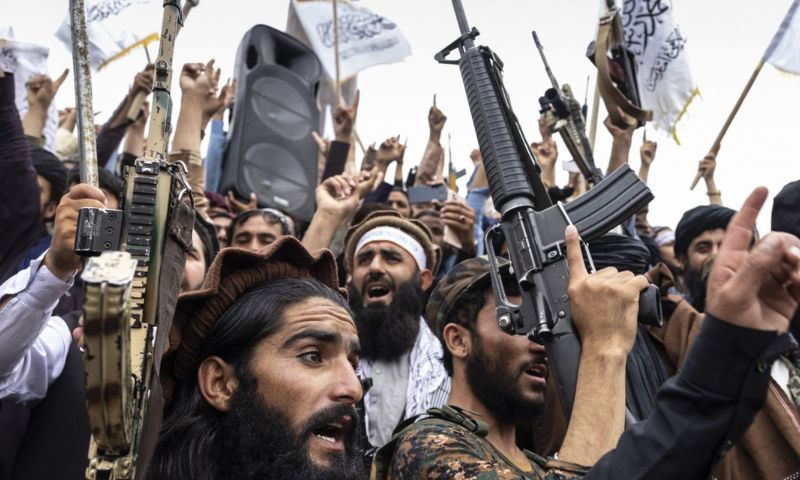



ISLAMABAD: Under the Afghan Taliban regime, Afghanistan has turned into a hub for terrorism, drug trafficking, and human trafficking, posing serious threats to regional and international security.
The Afghan Taliban regime is expanding sanctuaries for terrorist groups with both regional and international ambitions, international magazine ‘The Diplomat’ reported, citing an annual report by the United Nations Analytical Support and Sanctions Monitoring Team.
The report notes that the Taliban continue to allow al-Qaeda and its branches, such as the Tehreek-e-Taliban Pakistan (TTP), to operate.
The Diplomat highlights the existence of terrorist training centres, extremist religious schools, and safe havens linked to deadly TTP attacks across the border in Pakistan.
It said the international community would be deceiving itself if it believed this threat had been contained.
Preventing a repeat of 9/11 requires tightening international sanctions against the Taliban, supporting Afghan political forces that advocate nonviolent change, and providing safe havens for Afghan allies in exile who face legitimate fears of harassment, torture, or execution if they return to Afghanistan.
The Taliban’s claim that their rule has controlled al-Qaeda activities, a condition agreed upon in the 2020 Doha agreement with the United States, is rejected by the UN findings.
Al-Qaeda support
The UN monitoring team reports that al-Qaeda provides support to other terrorist groups and acts as a service provider and reinforcer for them.
The report points to the operation of religious schools in eastern and northeastern provinces, where al-Qaeda instills ideology in children and trains them to fight.
Therefore, this threat is not only immediate but also inter-generational.
While the Taliban have taken some effective action against ISIS, the UN notes that its Khorasan branch remains resilient and continues to pose a threat both inside and outside Afghanistan.
Experts also warn that the Pakistani Taliban, which is linked to al-Qaeda, is a growing and transregional threat.
The UN monitoring team estimates that about 6,000 TTP fighters have taken refuge in Afghanistan, and in 2025 alone, the TTP carried out more than 600 attacks in Pakistan, primarily targeting military and government sites, causing dozens of deaths and many more injuries.
Taliban’s systematic suppression of human rights
The Taliban’s systematic suppression of human rights exacerbates these risks.
The exclusion of women from education, employment, and public life destroys social moderating forces and strengthens ideological control at the family and social levels.
The Diplomat noted that forced marriages, deprive girls of education while reinforcing extremist power structures.
The persecution of ethnic and religious minorities deepens discontent, which transnational terrorist groups have historically exploited for recruitment.
Repression and terrorism are not parallel consequences; they reinforce each other.
The Diplomat said that the world has shifted its focus away from Afghanistan, while the Taliban are becoming a source of inspiration for other extremist groups and a preferred safe haven.
It added that the UN Security Council should insist on stronger sanctions and closely monitor their implementation until tangible and verifiable progress is made in the fight against terrorism.
ALSO READ: Pakistan Rejects Afghan Taliban’s Allegations of Targeting Civilians Inside Afghanistan
The council must add new Taliban leaders to the pre-9/11 sanctions list, prevent the free travel of known terrorist leaders such as Sirajuddin Haqqani, and place the Taliban leadership, especially intelligence chiefs widely known as foreign terrorists, under a separate al-Qaeda sanctions mechanism.
Sanctions alone will not push back extremism
The magazine said sanctions alone will not push back extremism. Addressing this challenge requires creativity, patience, and motivated allies.
Now is the time to expand international outreach to Afghan civil society and its leaders in exile, supporting a roadmap for an Afghanistan at peace with itself and committed to regional stability.
It viewed that to achieve these goals and learn from the experience of 9/11, Afghan citizens who believe in inclusive values and human rights must be protected, both within Afghanistan, where they are effectively hostages, and in countries where they have sought refuge.
Returning Afghan citizens who have worked with the West to Taliban ruled Afghanistan is, in some cases, like signing their death warrants, and in others, it cripples natural allies in the fight against extremism.