Key Points
• More than one million girls denied secondary education since 2021
• Female civil service participation declines to 17.7 per cent
• Healthcare and education systems face severe shortages of women staff
• Economic losses estimated at $84 million annually
ISLAMABAD: UNICEF has warned of a looming services crisis in Afghanistan, where restrictions on girls’ education and women’s employment could lead to a shortage of more than 25,000 teachers and health workers by 2030, deepening economic instability
A new UNICEF analysis titled “The Cost of Inaction on Girls’ Education and Women’s Labour Force Participation in Afghanistan” shows that female representation in the civil service dropped from 21 per cent in 2023 to 17.7 per cent in 2025. The report adds that it reflects shrinking opportunities for women in public sector roles.
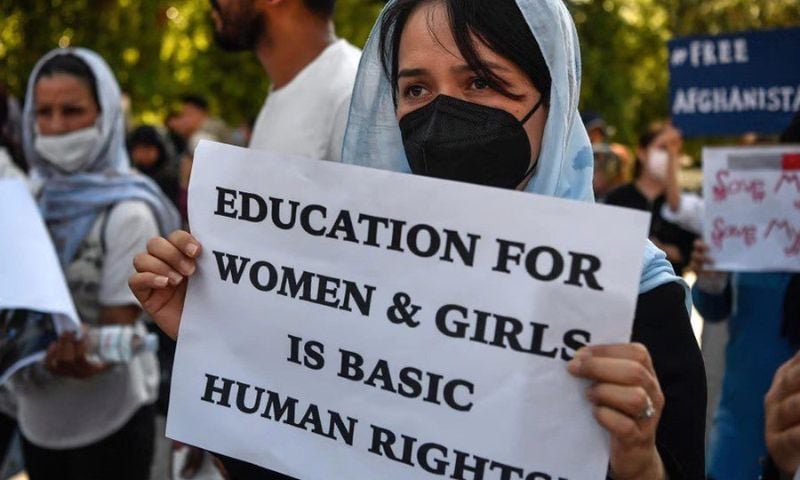
According to the report, more than one million girls have been denied access to secondary education since the ban imposed by Taliban authorities in September 2021.
If restrictions persist, over two million girls could miss out on education beyond the primary level by the end of the decade, compounding already low female literacy rates.
Catherine Russell, Executive Director, UNICEF, warned that the continued exclusion of girls from education would erode the country’s future workforce.
She stressed that Afghanistan risks losing generations of teachers, doctors, nurses and social workers who are essential for sustaining basic services.
The report outlines a dual crisis: the loss of existing trained female professionals and the absence of a pipeline to replace them.
By 2030, Afghanistan could lose up to 20,000 women teachers and around 5,400 healthcare workers, intensifying pressure on already fragile systems.
The education sector has already begun to feel the strain, with the number of female teachers in basic education falling by more than nine per cent from nearly 73,000 in 2022 to about 66,000 in 2024.
The decline is particularly significant as girls’ school attendance is closely linked to the presence of women teachers.
In healthcare, the impact is expected to be more severe due to cultural norms that often limit women’s access to male practitioners.
UNICEF warned that a reduction in female health workers would directly restrict access to maternal, newborn and child healthcare services, increasing risks for women and children.
Beyond social consequences, the restrictions are also weighing on the economy.
UNICEF estimates that limiting women’s participation in education and the workforce is costing Afghanistan around $84 million annually.
Such a loss of economic output, with the figure expected to rise if current policies continue, is deepening Afghanistan’s economic instability.
Despite these challenges, UNICEF reported ongoing support efforts.
In 2025, more than 3.7 million children in public schools received emergency assistance, and 442,000 children, most of them girls, benefited from community-based learning programmes.
The agency has also constructed or rehabilitated 232 schools across the country.
UNICEF urged Afghan authorities to lift restrictions on girls’ education and women’s employment.
The UN agency has also called on the international community to continue supporting access to learning.
It has been warned that the long-term consequences of inaction could entrench poverty, weaken public services and limit the country’s development prospects.