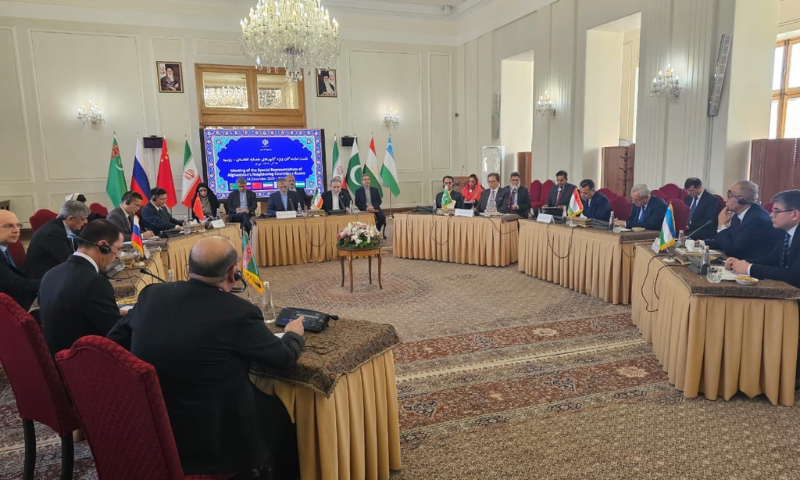



The meeting of Special Representatives for Afghanistan on Sunday was hosted by Iran and attended by envoys from Pakistan, China, Russia, Iran, Tajikistan, Uzbekistan, and Turkmenistan. The Taliban interim Afghan government was invited but chose not to participate.
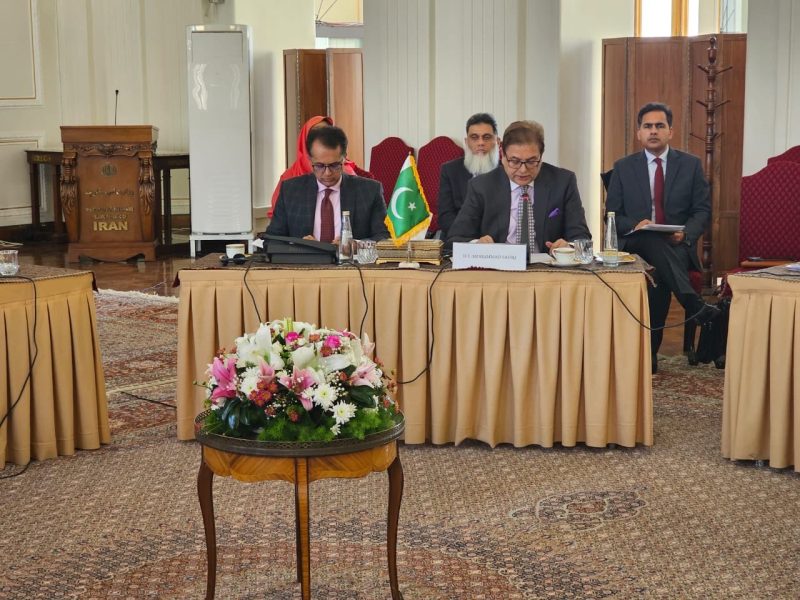
In a post on X following the meeting, Pakistan’s Special Representative for Afghanistan, Mohammad Sadiq, said he agreed with the collective assessment of all participating countries regarding the regional threat posed by terrorism originating from Afghan territory. He stressed that the Afghan people had already suffered enough and deserved peace, stability, and economic opportunity.
Sadiq said it was therefore imperative for Afghanistan’s de facto rulers to take concrete steps to reduce this suffering, beginning with the removal of “all types of terrorists” from Afghan soil without discrimination. He added that only an Afghanistan that does not harbour militant groups would inspire confidence among neighbouring and regional countries, enabling meaningful engagement and helping unlock the country’s vast potential for trade, connectivity, and economic integration.
Participated in the Meeting of Special Representatives for Afghanistan of the Neighbouring Countries + Russia, hosted by Iran, today.
In my remarks, I agreed with the assessment of all participating countries that the continued threat of terrorism emanating from Afghan soil is a… pic.twitter.com/HlMZllFtMH— Mohammad Sadiq (@AmbassadorSadiq) December 14, 2025
From Pakistan’s perspective, officials reiterated that regional stability and economic cooperation cannot move forward without addressing core security concerns. Islamabad has repeatedly warned that cross-border militancy undermines trust and remains the primary obstacle to deeper regional engagement with Kabul.
Other participating countries echoed similar concerns, while Iran emphasised the need for regional solutions rather than foreign intervention. Tehran argued that Afghanistan’s long-term stability lies in cooperation among neighbouring states and its integration into regional political and economic frameworks.
On the sidelines of the meeting, Sadiq held talks with Iranian Foreign Minister Abbas Araghchi, who reaffirmed Tehran’s commitment to strengthening ties with Pakistan and promoting regional peace, according to Pakistan’s ambassador to Iran.
Addressing the forum, Araghchi argued that Afghanistan’s stability depended on its integration into regional political and economic structures rather than external intervention. Citing past failures, he said “imported prescriptions and trans-regional decisions” had not delivered stability and called neighbouring states the most credible actors to address Afghanistan’s challenges.
Highlighting Afghanistan’s strategic location linking Central, West, and South Asia, Araghchi said regional cooperation in trade, energy and transport could help establish long-term stability. He urged confidence-building measures and warned against approaches that focus solely on security while neglecting social and cultural realities.
Iran’s Foreign Ministry said the Taliban’s absence was regrettable but respected. Spokesperson Esmaeil Baqaei noted that Iran shares long borders with both Afghanistan and Pakistan and that tensions between the two directly affect regional stability.
Pakistan’s former ambassador to Iran, Asif Durrani, criticised the Taliban’s decision to stay away, calling it evidence of political immaturity and warning that refusing dialogue would not resolve Afghanistan’s deep-rooted problems.
The Taliban regime’s decision not to participate in tomorrow’s Tehran meeting of senior officials from Afghanistan’s immediate neighbours and Russia is further proof of the Taliban’s lack of political maturity. This decision reinforces the argument that the Taliban cannot…
— Asif Durrani (@AsifDurrani20) December 13, 2025
The meeting highlighted a rare moment of convergence among regional powers on Afghanistan, underscoring that security, counterterrorism, and regional confidence-building remain inseparable from the country’s future trajectory.