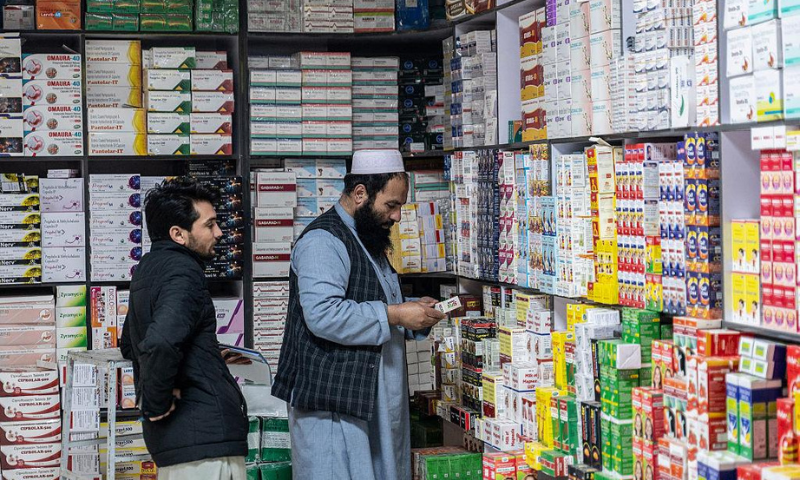



KABUL: Afghanistan is experiencing a sharp rise in medicine prices and mounting concerns over drug quality following the Taliban authorities’ complete suspension of medicine imports from Pakistan, local media reported.
According to Afghanistan’s Hasht-e-Subh Daily, healthcare professionals say the move is severely affecting patients, particularly those reliant on affordable, high-quality medicines previously sourced from Pakistan.
Doctors report that Pakistan has historically been the most reliable and cost-effective supplier of medicines to Afghanistan, both for its quality and geographic proximity.
Even medicines imported from India or other countries typically transit through Pakistan. Following the ban, the prices of imported drugs have increased by around 20%, with some essential medicines now costing two to three times their previous prices.
Patient and healthcare challenges
Healthcare providers say patients are struggling with limited access to affordable, high-quality medicines.
Many domestic and alternative imported drugs, including those from India and Iran, have shown substandard quality, resulting in side effects, treatment failures, and repeated hospital visits.
A doctor in Ghor Province described cases where patients deteriorated rapidly after switching from Pakistani medicines to Indian or domestic alternatives.
He noted serious complications, including digestive disorders, kidney problems, and respiratory distress, highlighting the health risks posed by substandard drugs.
Similarly, Dr. Nasim Saba pointed to past incidents in India and other countries where poorly regulated pharmaceuticals caused fatalities, underlining the risks of using low-quality imported drugs.
Patients and pharmacists report significant hardship, with some resorting to stockpiled Pakistani medicines sold at exorbitant prices.
The price surge has placed a heavy burden on Afghan households. Patients in Kabul say they now spend nearly half of their monthly income on medicines, especially for chronic conditions.
Pharmacy owners confirm that the closure of Pakistani import routes has led to broad price increases, affecting almost all imported drugs.
Taliban policy enforcement
The suspension follows a Taliban directive issued in November 2025, which gave Afghan importers a three-month deadline to settle accounts with Pakistani suppliers and halt imports.
The deadline expired on February 9, 2026. Since then, Taliban-controlled customs offices have blocked Pakistani medicines, urging importers to use “alternative routes,” which has further complicated supply chains and driven prices higher.
Healthcare experts warn that the combined effect of higher prices, reduced supply, and declining quality is a serious threat to public health, disproportionately affecting vulnerable populations in Afghanistan.
They stress that patients bear the direct cost of these policy decisions, facing both financial strain and health risks.