


Key points
- Pakistan urges international efforts to prevent arms access
- New technologies challenge small arms control efforts
- Pakistan calls for stronger arms control cooperation
ISLAMABAD: Pakistan has stated that the acquisition and use of mostly abandoned, modern and potent weapons by terrorist groups based in Afghanistan continues to pose a serious challenge to peace and security in Pakistan and the broader region.
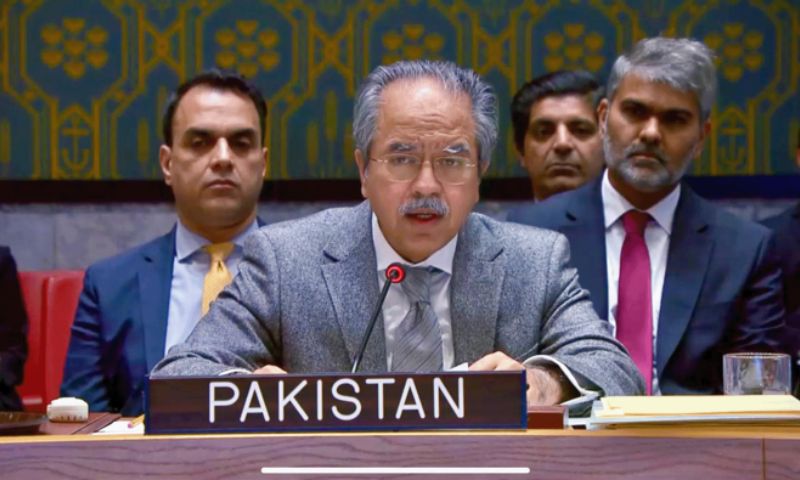
In a national statement at the UN Security Council Open Debate on Small Arms in New York, Ambassador Asim Iftikhar Ahmad, Permanent Representative of Pakistan to the UN said that the terrorist entities including ISIL-K, TTP Fitna Al Khawarij – a UN listed terrorist organisation and the BLA and Majeed Brigade, which operate with impunity from Afghanistan, enabled by external financing and support of principal destabilizing actor in the region, have used these weapons against Pakistani civilians and law enforcement agencies – leading to the loss of thousands of innocent lives.
Referring to the findings of the Secretary General’s reports, he said that Pakistan is seriously concerned about the presence of stockpiles of sophisticated arms and ammunition in Afghanistan.
He urged the international community to make stronger efforts to prevent access to illicit arms to armed terrorist groups in Afghanistan and to ensure that the Afghan interim authorities adhere to their international obligations and commitments in that regard.
Evolving nature of warfare
“The international community needs to step up its efforts and plug gaps in its response to effectively address these threats to international and regional peace and security,” he said.
He highlighted the evolving nature of warfare and the advent of new technologies and described them as posing serious challenges in combating the proliferation of increasingly lethal small arms, such as unmanned aerial vehicles, AI-based weapons, 3D-printed small arms, and high-tech night-vision equipment.
The Pakistan UN Ambassador underscored the need to adapt traditional arms control mechanisms to address emerging challenges posed by new technologies in the manufacturing and proliferation of illicit weapons.
He emphasised a balanced and comprehensive approach, and reaffirmed Pakistan’s commitment to the effective implementation of the United Nations “Programme of Action on the Illicit Trade in Small Arms and Light Weapons in All its Aspects.”
Ambassador Asim stressed that enhanced international cooperation and the full execution of this framework at both national and global levels are essential to counter the illicit arms trade and promote international and regional peace and security
Accumulation of small arms and light weapons
He drew attention to the severe consequences of the illicit transfer and accumulation of small arms and light weapons, stressing their role in fueling conflicts, undermining socio-economic progress, and threatening regional and sub-regional stability.
He noted that despite their name, these weapons are neither “small” nor “light” in their impact, as they perpetuate violence, contribute to human rights violations, and hinder development. Citing empirical data, he highlighted that small arms are the second most frequently used weapons in global terrorist attacks, following explosives
Pakistan expressed deep concern over the Secretary-General’s findings that Africa remains among the regions most affected by the illicit trade and misuse of small arms and light weapons.
“Such weapons have fueled conflicts, intensified internal security threats, and facilitated terrorism, organized crime, and political violence — eroding the rule of law and becoming a major source of instability across the continent,” he maintained.