



ISLAMABAD: Afghan authorities have arrested several Pakistani Taliban leaders and fighters on Afghan soil, including Sarbakaf Mohmand, a senior figure of Jamaat-ul-Ahrar, according to Afghan sources familiar with the matter.
The arrests, carried out by the Afghan interim Taliban government, mark an unusual development in the long-standing relationship between the Afghan Taliban and anti-Pakistani militant groups operating from Afghanistan. Multiple Afghan sources confirmed to WE News that Sarbakaf Mohmand (also spelled Sarbakif Mohmand) — a central leader of Jamaat-ul-Ahrar and a faction aligned with Tehreek-e-Taliban Pakistan (TTP)- has been detained along with several associates.
Jamaat-ul-Ahrar (JuA) operates as a faction of the Tehreek-e-Taliban Pakistan and is currently based in Afghanistan. The group has carried out some of Pakistan’s deadliest attacks, including recent suiciade attack in Islamabad, the 2014 Wagah border suicide bombing, the 2016 Easter attack at Lahore’s Gulshan-e-Iqbal Park, and later assaults claimed in Peshawar and Islamabad.
In August 2020, JuA formally merged back into the TTP as part of efforts to reunify splinter factions.
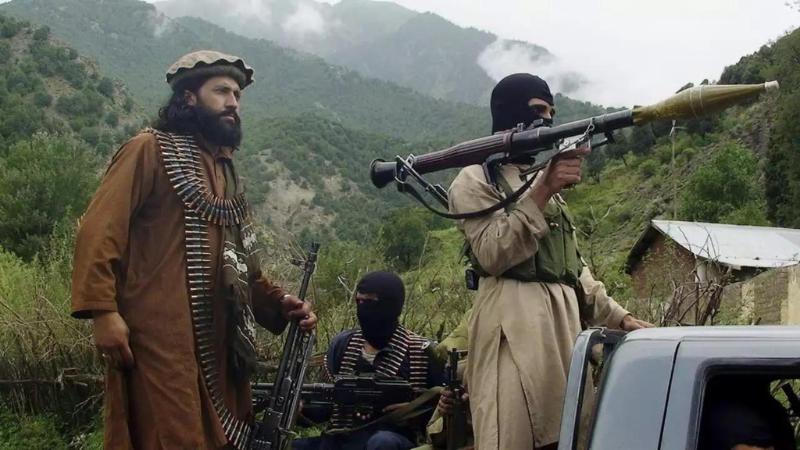
While the Afghan Taliban have not publicly confirmed the arrests, they have also not denied them. Zabihullah Mujahid, the Taliban’s chief spokesperson, told journalists he would “look into the matter” but offered no formal clarification.
Jamaat-ul-Ahrar-linked media accounts, meanwhile, acknowledged internally that contact with Sarbakaf Mohmand has been lost since mid-November, adding to speculation that he is in custody.
Pakistani officials recently said that detentions alone were insufficient, stressing that Pakistan wants militants accused of orchestrating attacks inside the country to be handed over.
Pakistan has long accused the TTP and allied groups of using Afghan territory to plan and launch attacks across the border. Islamabad maintains that despite repeated assurances from Kabul, Afghan soil continues to serve as a sanctuary for militants responsible for deadly violence in Pakistan.
A UN Security Council report issued this week said that more than four years after the Taliban’s return to power, multiple militant groups continue to operate from Afghanistan.
It warns that neighbouring countries increasingly view Afghanistan as a growing source of regional insecurity.
The TTP’s reliance on Afghanistan for refuge predates the Taliban’s return to power but has expanded significantly since August 15, 2021. Before that, Pakistani Taliban fighters frequently crossed into Afghanistan to evade military operations but were kept under pressure by US-led drone strikes carried out in coordination with Pakistani intelligence.
These strikes prevented militants from establishing permanent safe havens.
That dynamic changed after the Afghan Taliban took control of Kabul. Since then, TTP fighters and their families have settled openly in eastern Afghan provinces, including Khost, Paktika, Paktia, and Kunar. These areas have become regrouping hubs after attacks in Pakistan, according to a TTP commander who spoke on condition of anonymity. The commander said several senior Afghan Taliban figures act as protectors, facilitating cross-border movement and shelter.
The arrests come amid growing religious and political pressure inside Afghanistan. Earlier this month, more than 1,000 Afghan clerics and religious scholars gathered in Kabul, urging the interim government to prevent militant groups from using Afghan territory to carry out attacks abroad. Their call to curb cross-border militancy was widely interpreted as indirectly addressing Pakistan’s concerns over TTP sanctuaries.
Following that gathering, Afghan Foreign Minister Amir Khan Muttaqi publicly reaffirmed the Taliban administration’s pledge to block cross-border attacks.
“Anyone using Afghan soil to target another country will be dealt with as a criminal,” Muttaqi said, speaking at a ceremony in a Kabul madrassa. “We have a clear commitment that Afghan territory will not be used against any other country. If any Afghan violates this principle, the Islamic authorities have the full right to stop them and hold them accountable.”
Despite these assurances, Pakistani officials and international observers remain sceptical, noting that TTP and other militant groups continue to be accused of carrying out attacks inside Pakistan from Afghan territory.
Whether the recent arrests represent a genuine shift in Taliban policy or a limited gesture aimed at easing diplomatic pressure remains unclear.