


KABUL: Afghanistan’s Taliban authorities said they were ready to enter negotiations with Pakistan after Islamabad carried out large-scale cross-border counterstrikes inside Afghan territory, attacks that Pakistani officials said killed 331 Taliban fighters and destroyed key military installations.
“The Islamic Emirate of Afghanistan has always tried to resolve issues through dialogue, and now also we want to resolve this matter through dialogue,” Taliban spokesman Zabihullah Mujahid said in Kabul after the Pakistan airstrike targeted sites in Kabul, Kandahar, and several eastern provinces.
According to the Taliban, Pakistani forces struck parts of Kabul, Kandahar, and Paktia on Thursday night, followed by further attacks on Paktia, Paktika, Khost, and Laghman on Friday.
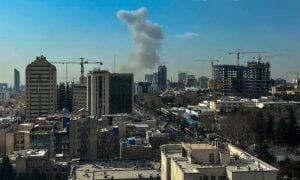
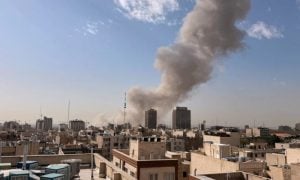
In Kabul, Reuters witnesses reported thick plumes of black smoke rising from at least two sites, while ambulances rushed through the streets following loud explosions and the sound of jets overhead. A large blaze was visible in video footage verified by Reuters.
“The plane came and dropped two bombs, then flew away again. After that, we heard explosions,” he said. “Everyone, in panic, ran down from the second floor of the house.”
Lt Gen Ahmed Sharif Chaudhry, Director General Inter-Services Public Relations, a spokesman for Pakistan’s military’s media wing, said Pakistani forces struck 18 high-value targets across 22 locations.
These included corps headquarters, battalion headquarters, and terrorists’ safe havens. He said the strikes were conducted with precision and restraint.
“Military targets were very carefully selected. No civilian infrastructure was targeted,” he said, rejecting claims of indiscriminate force.
On Friday, Pakistan’s armed forces launched an “immediate and effective” response to terrorist attacks originating from across the Pakistan–Afghanistan border, targeting Afghan Taliban positions and terrorist infrastructure at multiple locations, Chaudhry said.
The military spokesman said 12 Pakistani soldiers were martyred and 27 were injured during the clashes. On the Afghan side, he said that 274 Afghan Taliban fighters were killed and around 400 were injured.
Pakistan’s Information Minister Attaullah Tarar on Saturday provided an updated assessment of Operation Ghazab Lil Haq, detailing what he described as significant losses inflicted on Afghan Taliban forces.
Operation Ghazb lil Haq
Update 0900 hours 28 Feb✅*Summary of Afg Taliban losses*
▪️331 Killed,
▪️500 + Injured,
▪️104 Check posts destroyed,
▪️22 Post Captured,
▪️163 Tanks and Armed vehs Destroyed
▪️37 Locs across Afg eff tgt by air— Attaullah Tarar (@TararAttaullah) February 28, 2026
In a statement issued, Tarar said 331 Taliban fighters had been killed and more than 500 wounded during the operation.
He added that 104 Taliban check posts were destroyed, while Pakistani forces had taken control of 22 additional positions.
According to the minister, 163 tanks and armoured vehicles were destroyed, and air operations effectively targeted 37 locations across Afghanistan.
He further stated that approximately 150 tanks, armoured vehicles, and armoured personnel carriers (APCs) were destroyed.
The operation — named Operation Ghazab Lil Haq — also targeted and neutralised two Taliban corps headquarters, multiple brigade and battalion command centres, sector headquarters, ammunition depots, logistics bases, and more than 135 tanks, artillery pieces and armoured vehicles, according to Pakistan’s Information Minister Attaullah Tarar.
Escalation After Border Clashes
The latest violence follows long-running tensions between the two neighbours over Islamabad’s repeated allegations that Afghanistan harbours militants linked to the Pakistani Taliban who seek to destabilise Pakistan.
Security sources in Pakistan said the strikes involved air-to-ground missile attacks on Taliban military offices and posts, describing them as a response to Afghan attacks a day earlier.
Taliban officials said Afghan drone strikes began late Thursday against Pakistani military positions in the northwest along the shared border, after Pakistani airstrikes last weekend had already inflamed tensions.
Islamabad maintains that leaders of the Tehreek-e-Taliban Pakistan (TTP) operate from Afghan territory, using it as a safe haven to plan and launch cross-border attacks inside Pakistan. The United Nations has previously reported links between the TTP and Afghanistan’s Taliban authorities.
In New York, U.N. Secretary-General Antonio Guterres said he was “deeply concerned by the escalation of violence” between Afghanistan and Pakistan and its impact on civilians, according to his spokesperson Stephane Dujarric.
“He calls for an immediate cessation of hostilities and reiterates his appeal to the parties to resolve their differences through diplomacy,” Dujarric said.
The United States voiced support for Pakistan’s position.
“The United States supports Pakistan’s right to defend itself against attacks from the Taliban, a Specially Designated Global Terrorist group,” a U.S. State Department spokesperson said.
The spokesperson added that the Taliban had “consistently failed to uphold their counterterrorism commitments,” allowing militant groups to use Afghan territory as a base for attacks that destabilize the wider region.
The European Union also urged restraint. EU foreign policy chief Kaja Kallas called on both sides to de-escalate tensions and engage in dialogue.
“The EU reiterates that Afghan territory must not be used to threaten or attack other countries and calls on the Afghan de facto authorities to take effective action against all terrorist groups operating in or from Afghanistan,” Kallas said in a statement.