


ISLAMABAD: Pakistan has urged the Afghan Taliban regime to take “verifiable steps” to address Islamabad’s concerns over cross-border terrorism, warning that any ceasefire or dialogue would depend on concrete action against terrorist groups operating from Afghan territory, a senior security official said.
Briefing journalists from various districts of Khyber Pakhtunkhwa at the headquarters of the military’s media wing, Inter-Services Public Relations (ISPR), the official said the Afghan Taliban regime was “well aware of Pakistan’s concerns” but had yet to demonstrate meaningful change.
“If they want dialogue or a ceasefire, they must take verifiable steps,” the senior security official said, adding that the decision now rested with the Afghan Taliban regime in Kabul.
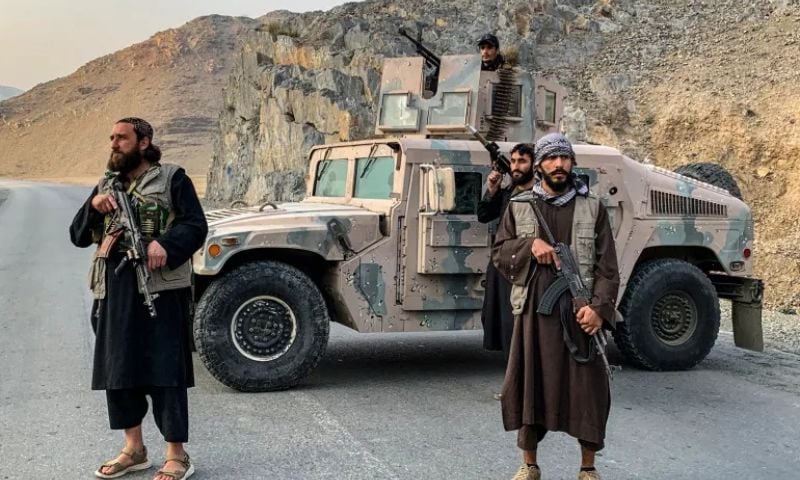
Pakistan, he said, had no issue with Afghanistan or the Afghan people but was concerned about the policies of the Taliban, which allowed terrorist groups to freely operate from Afghan soil and conduct cross-border terror attacks.
Operation against terrorist networks
The briefing focused on Operation “Ghazab lil-Haq”, part of Pakistan’s continuing counterterrorism campaign against terrorist organisations.
Security sources said the operation was precisely targeting terrorist hideouts, facilitation centres and launch pads used by terrorist groups Fitna-al-Khawarij and Fitna-al-Hindustan.
“All operations are based on credible intelligence and are directed only at terrorist infrastructure,” the senior security official said, rejecting reports that civilians were being targeted.
Pakistan was exercising “utmost responsibility” during operations and was working to avoid collateral damage, the security official added.
He said the security forces were targeting locations where terrorists were provided with “weapons, resources and technical equipment”.
Border tensions
Relations between Pakistan and the Afghan Taliban have deteriorated sharply in recent months.
Pakistan has repeatedly asked the Taliban regime to take verifiable action against terrorist groups based in Afghanistan.
However, the Taliban failed to take any action; rather, according to UN and US reports, the Taliban provided support and weapons to terrorist groups in Afghanistan.
Pakistan launched strikes on terrorist camps and hideouts in Nangarhar and Paktika provinces of Afghanistan on February 22.
Pakistani authorities said the strikes targeted terrorists linked to the banned Tehreek-i-Taliban Pakistan (TTP) terrorist group.
The senior security official said the Afghan Taliban later launched unprovoked attacks along the border. In response, Pakistan initiated Operation Ghazab lil-Haq on February 26 to eliminate terrorist infrastructure.
The security official said the Afghan Taliban were aware of Pakistan’s demands to stop the escalation.
“The Afghan Taliban know what our demands are to stop the war,” he said.
Cross-border terrorism
Pakistan has repeatedly accused terrorist groups of freely using Afghan territory to plan and launch terrorist attacks across the border.
The security official said Pakistan was the only country guarding the Pak-Afghan border on one side, while terrorists were given shelter in areas across the border in Afghanistan.
“On the other side, terrorist elements are provided shelter by the Taliban in the border areas and facilitated,” he said.
The senior security official added that Pakistan had destroyed 36 terrorist posts inside Afghanistan that were used to launch attacks against Pakistani territory.
The security official also said that weapons and ammunition stored at terrorist centres, including those linked to Bagram, had been targeted to disrupt attacks against Pakistan.
Counterterrorism operations
Alongside cross-border actions, Pakistani security forces were continuing intelligence-based counterterrorism operations within the country.
Security officials said more than 200 intelligence-based operations were being conducted daily against terrorist networks across Pakistan.
The official stressed that national unity and the full implementation of the National Action Plan (NAP) were essential for eliminating terrorism and extremism.
“Until the entire nation develops a clear and unified narrative against terrorism, total eradication may not be possible,” he said.
He added that gaps in internal security and governance could strengthen terrorist groups if left unaddressed.
Pakistan respects Afghanistan’s sovereignty
The security official said Pakistan did not have an interventionist agenda in Afghanistan and respected the country’s sovereignty.
“Afghanistan’s political future is a matter for the Afghan people,” he said.
“Our only clear position is that Afghan soil must not be used for terrorism against Pakistan.”
Pakistan, he added, remained committed to maintaining constructive relations with neighbouring countries but was fully prepared to defend its sovereignty and territorial integrity.
The security official also rejected attempts by terrorist groups to justify terrorism and violence in religious terms.
He said the terrorist groups referred to as Khawarij were promoting a distorted interpretation of Islam and stressed that suicide attacks and violence against civilians had no place in the religion.
“The killing of innocent people, oppression of women and attacks on mosques are contrary to our religious and social traditions,” the official said, adding that scholars from various schools of thought had declared the struggle against such groups a righteous cause.