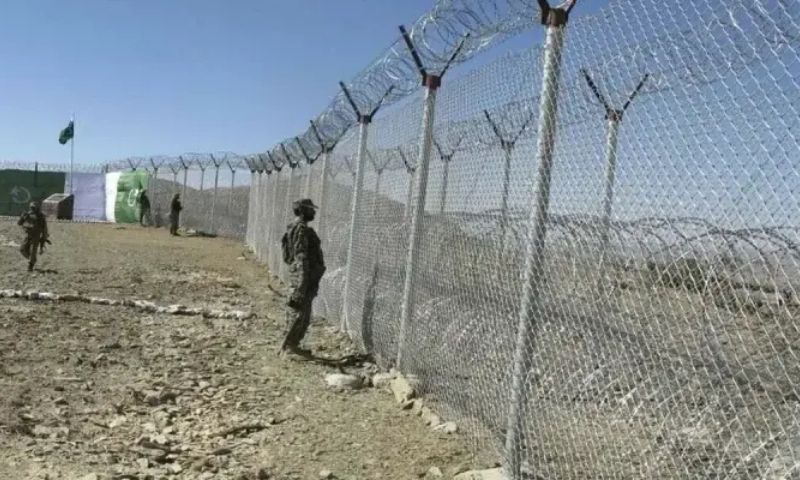



ISLAMABAD: The Afghan Taliban initiated unprovoked firing along the Pakistan-Afghanistan border in Torkham and Tirah, Pakistan’s prime minister’s spokesperson for foreign media said on Tuesday.
Spokesperson Mosharraf Zaidi said in a post on social media platform X that Taliban fighters opened unprovoked fire and that Pakistan’s security forces responded “immediately and effectively”.
“Pakistan’s security forces responded immediately and effectively, silencing the Taliban aggression,” the spokesperson wrote.
He warned that any further provocation would be met “immediately and severely” and said Pakistan would “continue to protect its citizens and guard its territorial integrity”.
The Afghan Taliban regime initiated unprovoked firing along the Pakistan-Afghanistan Border in Torkham & Tirah sub-sectors.
Pakistan’s security forces responded immediately & effectively, silencing the Taliban aggression.
Any further provocation will be responded to…
— Mosharraf Zaidi 🇵🇰 (@mosharrafzaidi) February 24, 2026
Air strikes on terrorist sanctuaries in Afghanistan
The Afghan Taliban aggression comes days after Pakistan carried out intelligence-based precision air strikes in Afghanistan’s eastern provinces.
Pakistan’s Ministry of Information and Broadcasting said the pre-dawn precision strikes targeted seven hideouts linked to the banned Tehreek-i-Taliban Pakistan (TTP) terrorist group, which the state refers to as “Fitna al-Khawarij”, and the Islamic State-Khorasan Province (ISKP).
The ministry said the strikes were conducted in Nangarhar, Paktika and Khost provinces and were a “limited, proportionate and retributive response” to recent suicide bombings in Islamabad, Bajaur and Bannu during the holy month of Ramadan.
Pakistan said more than 100 terrorists were killed in the precision strikes on hideouts.
Minister for Parliamentary Affairs Dr Tariq Fazal Chaudhry told the Senate that over 100 terrorists had been killed in a precise, retaliatory operation by the Pakistan Air Force (PAF).
“The operation was a necessity, not a choice,” Chaudhry told the upper house of parliament on Monday.
He said Pakistan had shared “irrefutable, credible evidence” with Kabul about terrorist groups planning attacks from Afghan soil but had received an ineffective response.
Security sources said the strikes targeted terrorist camps in eastern Afghanistan, particularly in Khost, Nangarhar, Paktika and Kunar provinces.
Pakistan rejected Afghan claims of civilian casualties, saying the operation was based on selective targeting of terrorist infrastructure.
Local residents cited by regional media outlets said Taliban authorities restricted access to the affected areas following the strikes.
Rising cross-border tensions
The air strikes marked one of the most extensive confirmed cross-border intelligence-based operations since the Afghan Taliban returned to power in Kabul in 2021.
Islamabad has repeatedly accused the Afghan Taliban government of allowing anti-Pakistan terrorist groups to operate from Afghan territory.
Pakistan has witnessed a surge in cross-border attacks since 2021, including suicide bombings and assaults on security forces and civilian targets.
In an earlier statement, Pakistan’s information ministry said it had “conclusive evidence” that recent attacks inside Pakistan were carried out by terrorists acting at the behest of Afghanistan-based leadership and handlers.
It said repeated efforts to urge the Afghan Taliban to deny the use of Afghan territory by terrorist groups had failed to produce “substantive action”.
International concerns over terrorist groups in Afghanistan
International actors have also voiced concerns over the presence of terrorist groups in Afghanistan.
Russia’s Foreign Ministry said in a recent statement that between 20,000 and 23,000 fighters affiliated with various international terrorist organisations are operating in Taliban-ruled Afghanistan, more than half of them foreign nationals.
The ministry identified Islamic State-Khorasan Province (ISKP) as having around 3,000 fighters and the TTP as having between 5,000 and 7,000 fighters.
It estimated al-Qaeda’s strength at between 400 and 1,500 fighters. Smaller groups include the East Turkestan Islamic Movement, the Islamic Movement of Uzbekistan — also known as the Turkestan Islamic Party — and Jamaat Ansarullah.
Russian officials said ISKP remains the only group openly hostile to Afghanistan’s current Taliban rulers but assessed that it lacks the capability to seize territory and instead focuses on destabilising attacks.
Separately, The Diplomat magazine cited findings from the United Nations Analytical Support and Sanctions Monitoring Team as saying that Taliban authorities continue to allow al-Qaeda and affiliated terror groups, including the TTP, to operate inside Afghanistan.
According to the UN report referenced by the magazine, around 6,000 TTP fighters are based in Afghanistan and the group carried out more than 600 attacks in Pakistan in 2025, mainly targeting military and government sites.