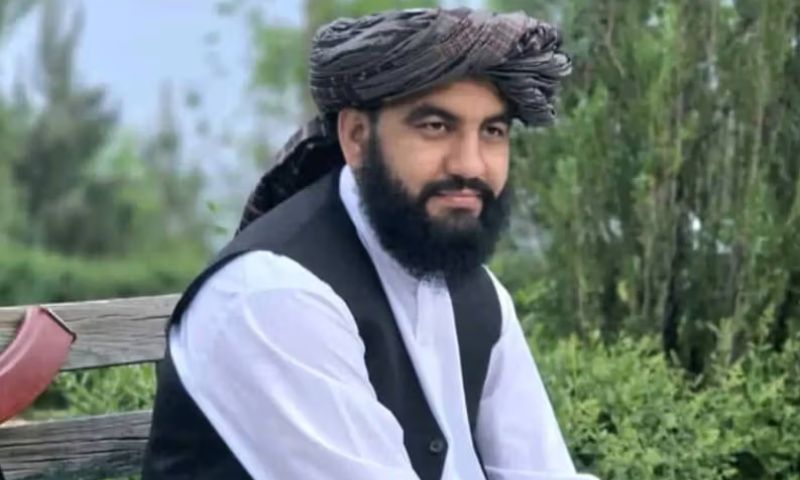



KABUL, Afghanistan: An aide to the Afghan Taliban intelligence chief has been killed in Kabul in what eyewitnesses described as a targeted attack, contradicting initial claims that his death was caused by a domestic accident, Afghan media reported.
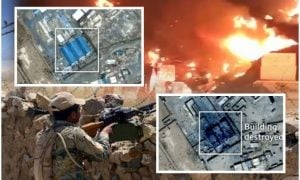
Eyewitnesses cited by Afghanistan International said Mawlawi Noman, a close aide to Taliban intelligence chief Abdul Haq Wasiq, was killed in a drone or rocket strike on his residence in Kabul.
The account contradicts earlier statements from sources close to the Taliban, who had said Noman died when a gas cylinder exploded inside his home.
An eyewitness living near the house told Afghanistan International that a second-floor room, where Noman and a guest were present at the time, was completely destroyed.
The witness described the blast as “highly targeted and calculated”, adding that its intensity did not match that of a household gas cylinder explosion.
According to the witness, cited by Afghanistan International, the guest accompanying Noman was also killed. The identity of the guest has not been disclosed, according to Afghan media.
The eyewitness, cited by Afghanistan International, further said that Taliban forces arrived quickly at the scene and deleted images and videos recorded by local residents in the immediate aftermath of the blast.
Taliban authorities have not issued any public statement on the incident. It remains unclear whether the intended target was Noman or the unidentified guest.
Reports of Taliban infighting
Afghan media reports suggested that Noman’s killing may be linked to internal Taliban rivalries rather than an external attack.
Some sources alleged that the killing was the result of infighting within the Taliban’s ranks, naming Taj Mir Jawad as a possible figure involved. These claims have not been independently verified.
The killing comes amid renewed reports of internal Taliban clashes elsewhere in Afghanistan.
In October, Afghanistan International reported that fighting broke out in Badakhshan province between Taliban units and fighters loyal to Abdul Rahman Ammar, the group’s former provincial head of mining.
Local sources said clashes erupted on October 29 in the Shahr-e-Buzurg district. Casualties were initially unconfirmed, though Ammar’s fighters were said to be surrounded by Taliban reinforcements.
According to sources cited by Afghanistan International, the clashes pit Ammar’s forces against those of Shafiqullah Hafizi, the Taliban’s current head of mining in Badakhshan, in a dispute over control of lucrative gold mines.
Taliban army chief of staff Fasihuddin Fitrat reportedly travelled to Badakhshan to mediate, but his efforts have so far failed to end the fighting.
Later reports said Taliban border battalion troops joined the fighting in support of Hafizi, while additional reinforcements were dispatched from the provincial capital.
Earlier accounts suggested at least three people were killed, including two fighters loyal to Ammar and one Taliban officer identified as Abdul Alim Hamidi, an operations commander in the Taliban’s 1st Brigade.
Both Ammar and Hafizi are influential figures in Badakhshan. Although Ammar no longer holds an official post, he is regarded as a powerful local commander with loyal fighters and independent funding.
Since seizing power in August 2021, the Taliban have prioritised mining as a key revenue source.
In resource-rich provinces such as Badakhshan, competition over control of mines has repeatedly triggered internal disputes and armed clashes.