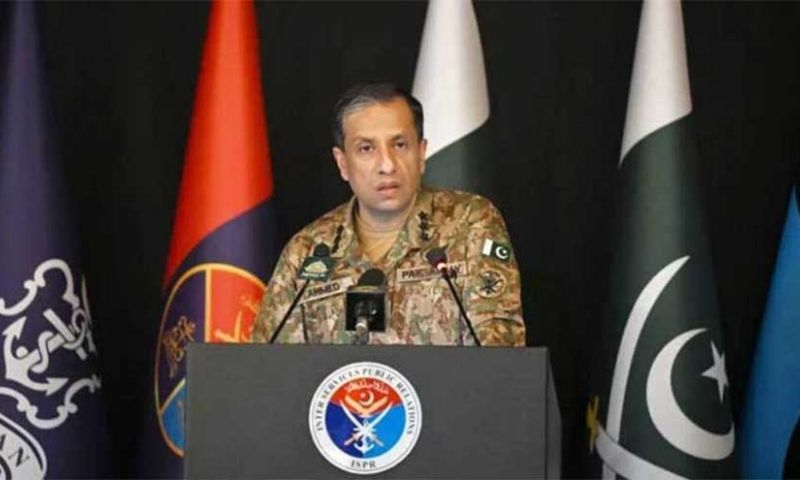



ISLAMABAD: Pakistan’s military has accused Afghanistan of serving as a base for terrorist operations targeting Pakistan, saying Afghan Taliban-linked terror groups were behind major attacks in 2025.
Speaking at a press conference on Tuesday, Pakistan military spokesperson Lieutenant General Ahmed Sharif Chaudhry said Islamabad had responded decisively to border hostilities and had repeatedly issued warnings to Afghan authorities.
“Afghanistan has become the centre of terrorist operations in the region,” he said, adding that the Pakistani military had taken all necessary action to deliver a “hard message” to terrorists.
Highlighting cross-border threats, Lt Gen Chaudhry said armed quadcopters, mosques, public spaces, and civilian homes were being exploited by terrorist networks, with some operations using women and children as human shields.
The ISPR chief linked the rise of terrorism in Pakistan to the political and security situation in Afghanistan following the 2020 US-Taliban Doha Agreement.
He said that the Afghan Taliban had failed to uphold commitments to prevent terrorism on Afghan soil and alleged that the group had actively nurtured and trained the banned Tehreek-i-Taliban Pakistan (TTP) and other terrorist organisations.
Pakistan’s counter-terrorism efforts
The military spokesperson said 2025 was a “landmark and consequential year in our fight against terrorism”, adding there were four reasons behind this conclusion.
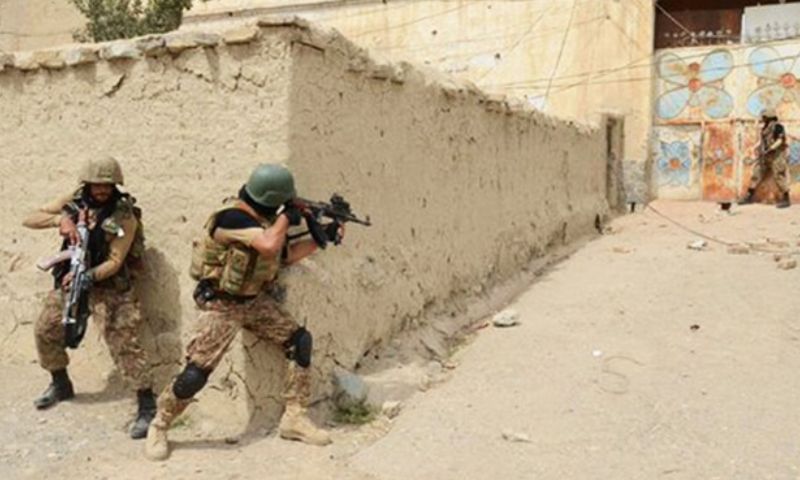
Lt Gen Chaudhry provided detailed data on Pakistan’s counter-terrorism efforts in 2025, saying security forces conducted 75,175 intelligence-based operations — averaging 206 per day — resulting in 2,597 terrorist deaths and 1,235 law enforcement and civilian fatalities.
He noted 27 suicide bombings occurred, including attacks involving female bombers, and said Khyber Pakhtunkhwa remained the most affected region due to what he described as a “politically conducive environment” for militants.
Giving a breakdown of counter-terrorism operations, the military spokesperson said that of these operations, 14,658 were conducted in Khyber Pakhtunkhwa, 58,778 in Balochistan and 1,739 in the rest of Pakistan.
He added that 5,397 terror incidents took place in Pakistan during the last year, of which 3,811 were reported from KP (71pc), 1,557 from Balochistan (29pc) and 29 from other areas.
Moreover, 2,597 terrorists were killed in Pakistan in 2025, the DG ISPR said. Among them, 1,800 were killed in KP, 784 in Balochistan and 10 in other areas.
Last year, he continued, 1,235 law enforcement personnel and civilians were martyred in the fight against terrorism during 2025.
Sharing data about incidents of suicide bombing, he said a total of 27 had taken place in 2025. Of them, 16 took place in KP, 10 in Balochistan and one in Islamabad, at the judicial complex.
The ISPR chief accused India of supporting armed drones used by the terrorist groups, including TTP. He said recent intelligence indicated that around 2,500 foreign fighters, primarily from Syria, had joined Afghan-based groups.
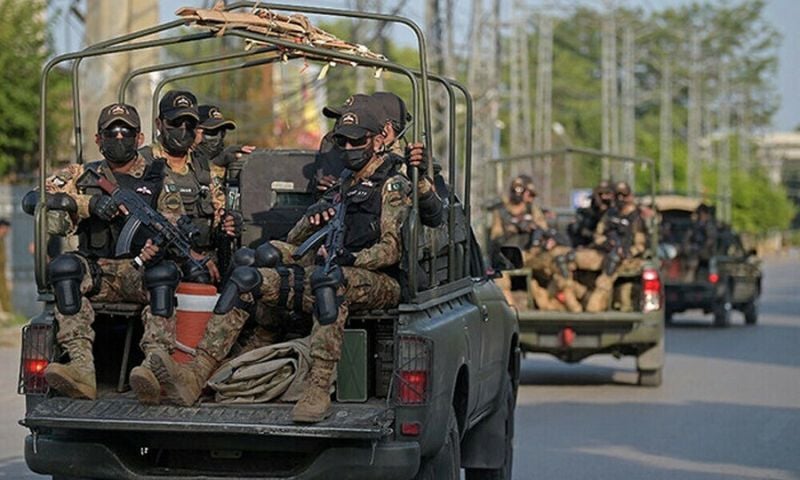
“Winning the war against terrorism is a national imperative, and we must succeed at all costs,” Lt Gen Chaudhry said, reiterating Pakistan’s commitment to sustained counter-terrorism operations and the implementation of the National Action Plan (NAP) and Azm-i-Istehkam operation.
“These terrorists are khawarij and have no connection to Islam. Their operations from Afghanistan threaten Pakistan’s stability and the safety of its citizens,” he said, adding that Pakistan’s position on these cross-border threats has gained international recognition.
In 2025, he continued, the state of Pakistan, as well as the people, gained “complete clarity on terrorism”.
“The state already had this clarity, which permeated slowly and gradually down[ward] that these terrorists are khawarij [and] they have no relation with Islam. They are Fitna-al-Hindustan and have no relation with Pakistan or [the people of] Balochistan,” he elaborated.
Fitna-al-Khawarij is a term that the state has designated for the banned Tehreek-i-Taliban Pakistan (TTP), and it uses Fitna-al-Hindustan for Balochistan-based terrorist groups to highlight India’s alleged role in terrorism and destabilisation across Pakistan.
World accepts Pakistan’s stance on terrorism
Lieutenant General Chaudhry further highlighted that in 2025, the world accepted and acknowledged Pakistan’s stance and narrative regarding terrorism, particularly about Afghanistan having become a “base of terrorism” operations.
The military spokesperson explained that there was a change in Afghanistan in 2021 following the Doha Agreement.
“Under the agreement, the Afghan Taliban made three commitments — that they will form an inclusive government in Afghanistan, use of Afghan soil for terrorism will not be allowed, and women will be given rights [in Afghanistan],” the DG ISPR recalled.
But were the commitments fulfilled, the military spokesperson questioned.
“Has terrorism been eradicated [from Afghanistan]? Contrarily, Afghanistan becomes a hub of terrorists and non-state actors. Terrorists of different creeds operate from there. So that is what started happening in 2021.”
Naming various terror outfits that the DG ISPR said were operating from Afghanistan, he said it had become a “centre point where terrorists of all kinds are being nurtured”.
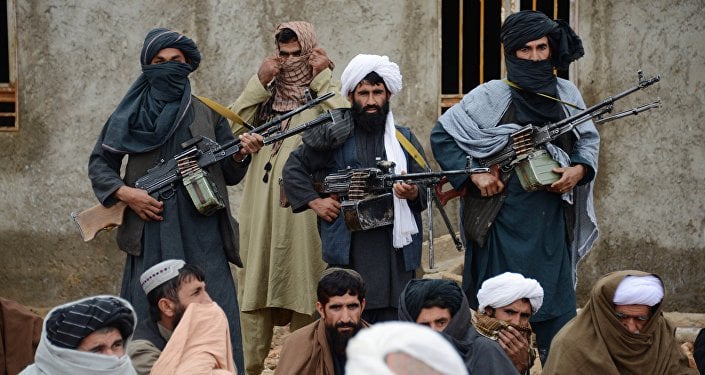
The military spokesperson also said that the Afghan Taliban, “which is now the mother organisation,” had started organising the TTP as per its organisational structure. They also trained and gave direction to the terror outfit, the DG ISPR.
India’s use of Afghan Taliban as proxies
The DG ISPR also spoke about the war economy in this regard. He referred to a recent report by the Special Inspector General for Afghanistan Reconstruction, which he said mentioned that around $144 billion was pumped into the reconstruction of Afghanistan.
“When the [supply of] that money stopped, in order to continue to run the war economy, they [Afghan Taliban] spread the war in the form of terrorism in the entire region. And they find new patrons, new financial sponsors. And the biggest patron they find for terrorism in Pakistan is India.”
The military spokesperson said India was using the Afghan Taliban as proxies and was providing them with financial and other assistance.
“So the base of operations is being provided in Afghanistan by Afghan Taliban and India’s money and patronage [is available],” the military spokesperson maintained.
He added that the Afghan Taliban were taking the assistance of sponsors from elsewhere, too — wherever they were able to find them — to run the war economy.
The military spokesperson further said that modern US equipment worth $7.2bn was left behind in Afghanistan. It included night-vision devices, long-range sniper rifles, bulletproof jackets, protection equipment, M-4 and M-16 — “the best of weapons and ammunition”.
This equipment was “available to the Afghan Taliban, in the black market, to all these terrorist organisations”.
The military spokesperson said that Afghanistan has become the base of terrorist group operations, adding that Pakistan repeatedly urged Kabul to end cross-border terrorism.
“And then we carry out strikes on terrorists on the Pak-Afghan border in October, not on the Afghan Taliban or their posts. And what did the Afghan Taliban regime do, who is acting as a proxy and a base of operations for the Indians? They attacked Pakistani posts. They come in direct support of the terrorists.
“So the State of Pakistan did what was necessary. Dozens of Afghan posts were obliterated within hours and a hard message was sent.”
The DG ISPR said posts were not just obliterated at the border but also inside Afghanistan.
The border was closed after that and then you saw terror incidents and facilitation of terrorists going down, he added.
“The number of terrorists killed in the last three months after the border was closed in October rose to 276 per month. There are signs here for those who can understand.”
Pakistan’s military success against India
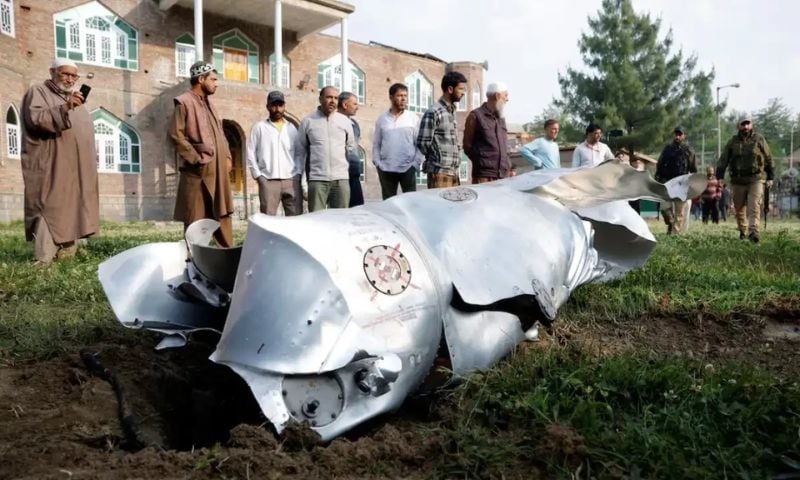
He said parallels had been drawn between Pakistan’s actions in October last year and India’s in May 2025.
He said those drawing the parallel are trying to spin a narrative.
In May 2025, India targeted Pakistani citizens, but Pakistan did not target Afghans in October.
The DG ISPR noted Pakistan’s military success during the May 2025 clash with India, stating that Pakistan successfully defended its positions.
“We targeted our own citizens who were present there and involved in terrorism in Pakistan. They have training centres there.
“We knew TTP was present there. Did we target TTA (Tehreek-i-Taliban Afghanistan)? No, we did not?
“Only the state of Pakistan has the right to punish or reward its citizens in accordance with the law and Constitution of Pakistan. Who is India to cause harm to any Pakistani citizen?”
He again asserted that in the October strikes, Pakistan’s military targeted the TTP.
The DG ISPR said Pakistan had been pressing the Afghan Taliban for the constitution of a verifiable mechanism, adding that Pakistan had evidence of where and to whom the Afghan Taliban had been providing refuge.
Stressing the difference between India‘s and Pakistan’s cross-border strikes, he said whoever tried to point out similarities between the two developments was lying.
They were trying to deceive the people, spinning a misleading narrative, the DG ISPR said.
Listing 10 “major” incidents of terrorism in Pakistan in 2025.
“And who are involved in all of these high-impact [terror incidents]? They are all Afghanis.”
Lieutenant General Chaudhry concluded by stressing that Afghanistan-based networks remain the main external threat, and continued vigilance and cooperation are essential to safeguard Pakistan’s security.