
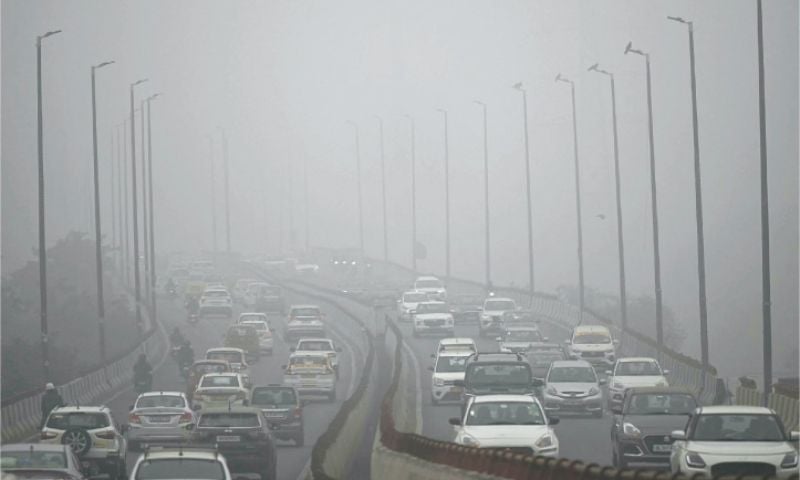
EW DELHI: Toxic air pollution in India’s capital, New Delhi, surged on Wednesday to more than 30 times the World Health Organisation’s (WHO) recommended daily limit, underscoring the authorities’ continued failure to tackle the city’s worsening air quality.
Air quality deteriorated three days after authorities tightened restrictions on traffic and construction activities in an effort to tackle the choking smog engulfing the capital, home to more than 30 million people.
The pollution is expected to worsen ahead of Sunday’s Diwali festival, when firework displays traditionally add to the toxic air, further testing the effectiveness of the Narendra Modi government’s efforts to address the annual environmental crisis.
Air pollution is now more deadly than war, smoking and TB. It kills 7 million people every yr.
We have solutions to keep our communities safe and deal with the #climatecrisis. Implement them. #ActOnClimate
#AirPollution #ClimateChange #climate #energy #renewables #GreenNewDeal https://t.co/arOawx7JrC
— Mike Hudema (@MikeHudema) November 2, 2026
India’s Supreme Court has allowed the limited use of so-called green firecrackers, designed to reduce emissions, during the festival. However, restrictions are frequently flouted, with fireworks continuing to fill the city with smoke and noise.
Levels of PM2.5 – cancer-causing fine particles small enough to penetrate deep into the lungs and enter the bloodstream – exceeded 461 micrograms per cubic metre in parts of Delhi, according to air quality monitoring firm IQAir.
India’s environment ministry data show that vehicles account for 23 per cent of Delhi’s winter pollution, while biomass burning, including agricultural stubble fires, contributes 20 per cent. Industrial activities, including coal-fired power plants, account for around nine per cent.
READ ALSO: Delhi’s Toxic Air Forces Families to Flee as India’s Pollution Crisis Deepens
The largest share, 27 per cent, comes from secondary particles formed when gases released by vehicles, industries, power plants and biomass burning react in the atmosphere.
Jacob Koshy, science editor of The Hindu newspaper and author of The Nitrogen Bomb, said fertiliser use in agricultural fields surrounding the capital also contributed to the formation of these harmful particles.
He explained that ammonia released by fertilisers reacts with other pollutants in the atmosphere, creating additional particulate matter. “The sheer quantity of ammonia that is going into the atmosphere creates a base layer for other pollutants to react with,” Koshy said.
The scale of India’s air pollution crisis is reflected in a 2024 study published in The Lancet Planetary Health, which estimated that 3.8 million deaths in the country between 2009 and 2019 were linked to air pollution.