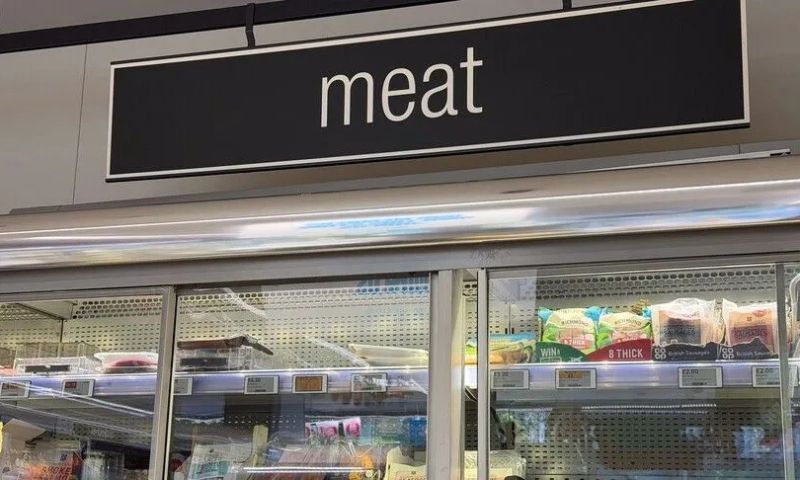
LONDON: Cyberattacks have affected businesses in Britain’s meat processing industry, although the impact has so far been minimal, the National Cyber Security Centre (NCSC) said on Tuesday, as cyberattacks on supermarket refrigeration systems across Europe raised concerns about vulnerabilities in everyday technology.
Paul Chichester, the NCSC’s director of operations, said the agency was working with affected UK businesses following cyber incidents targeting the sector.
“We’re aware of those incidents in the UK, and obviously we’re working with the affected organisations. We’ll keep monitoring that. At the moment, the impact is minimal,” he said at the launch of the NCSC’s annual report.
Today, we’ve published our 2026 annual review: The State of the Cyber Nation.
The UK faces a moment of choice. The future of cyber resilience is not set.
Read the report now:
https://t.co/TzqzYedqXQ@GCHQ @DanJarvisMBE https://t.co/mIFWrBB5Yt
— NCSC UK (@NCSC) November 3, 2026
The British Association of Independent Meat Suppliers said some of its more than 300 members had been affected as collateral in the attacks. However, the industry body said no meat had been lost.
It described the incidents as a reminder that businesses throughout the food supply chain could become targets of cyberattacks.
No UK grocery chain has been directly affected so far, according to reports.
Refrigeration Systems Targeted Across Europe
The UK incidents came amid a series of cyberattacks on food businesses across Europe. Hackers targeted refrigeration systems, causing temperatures in fridges and freezers to rise and food to spoil.
Problems were reported on Monday in Sweden, Belgium, Estonia, Luxembourg, the Netherlands, Ireland and Denmark. Retailers in Finland were also investigating whether overnight temperature irregularities were linked to the attacks.
Some refrigeration units reportedly reached temperatures as high as 50 degrees Celsius (122 Fahrenheit). Several companies confirmed they had been hacked.
Similar attacks were reported in France last month.
NCSC chief executive Richard Horne told reporters that the attack in France involved older technology connected to the internet and protected by default passwords.
Today, NCSC CEO Richard Horne has said the UK is living through a ‘sliding doors’ moment of ‘enormous consequence’. Read the full speech now: https://t.co/8zAJTyzdWe https://t.co/flskP44wjc
— NCSC UK (@NCSC) November 3, 2026
He said Britain’s intelligence agency GCHQ had been working through the night to contact UK organisations considered vulnerable to similar attacks, according to Sky News.
Chichester said the NCSC was helping businesses identify weaknesses in their technology and address them before hackers could exploit them.
He said the agency could not comment on who might have been behind the attacks. However, he said they were not enabled by artificial intelligence and had exploited vulnerabilities that had existed for a long time.
NCSC Warns of Wider Cyber Threat
Horne described the refrigeration attacks as the “foothills” of a much broader cyber threat facing businesses and the public.
He warned that artificial intelligence could help identify weaknesses in IT networks that organisations had overlooked or failed to fix.
“There are so many vulnerabilities out there that … you could say are waiting to be exploited,” he said.
Horne said decades of underinvestment had left the UK vulnerable to increasingly sophisticated cyber threats, adding that the country had done “tech on the cheap”.
“Vulnerabilities that have been tolerated for far too long can now be discovered and exploited at a scale that was once unimaginable,” he said.
The NCSC’s annual report warned that hackers seeking ransom payments were “highly likely” to use artificial intelligence to target the UK by 2028.
Horne urged businesses to address weaknesses in their systems, warning that failure to act could have serious consequences.
He said companies could eventually be forced to explain why they had ignored warning signs when faced with disruptions such as empty supermarket shelves and power blackouts.