
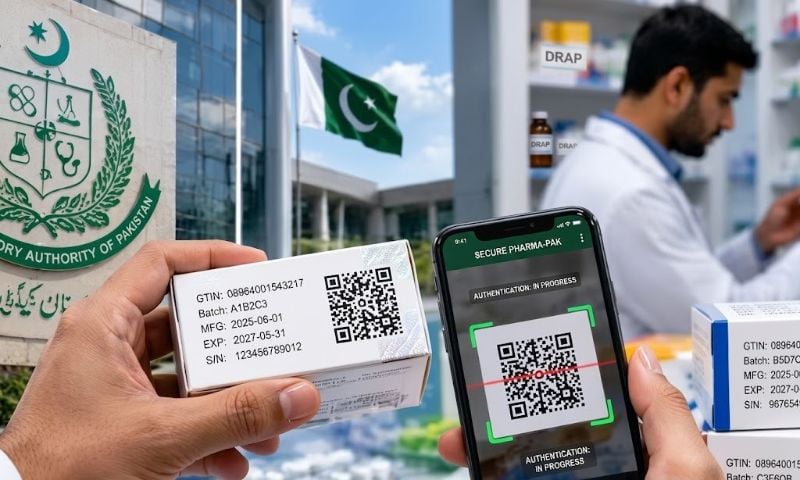
ISLAMABAD: Pakistan has stepped up efforts to combat counterfeit medicines by introducing a 2D barcode system, with pharmaceutical companies having begun implementing the technology on approximately 80 per cent of medicines to improve drug traceability, ensure authenticity and protect public health.
The progress was reviewed at a meeting chaired by Federal Health Minister Mustafa Kamal and attended by the Chief Executive Officer of the Drug Regulatory Authority of Pakistan (DRAP), officials from relevant institutions and other stakeholders.
Officials informed the meeting that pharmaceutical companies had initiated the process of introducing 2D barcodes on around 80 per cent of medicines as part of the government’s efforts to strengthen monitoring and eliminate fake and substandard drugs from the market.
During the meeting, the Ministry of Health decided to issue formal notices to pharmaceutical companies that had failed to submit the required medicine data to DRAP. The minister warned that strict legal action would be taken against companies failing to comply with the requirements.
Read Also: Deadly Impact: Substandard Indian Medicines Linked to Child Deaths Worldwide
Mustafa Kamal said production units of pharmaceutical companies that failed to submit their medicine data would be sealed, making it clear that there would be no compromise on the implementation of the 2D barcode system.
He said eliminating counterfeit medicines had become essential to safeguarding public health and stressed that a zero-tolerance policy would be adopted against noncompliance.
The minister also directed all pharmaceutical companies to ensure the submission of their medicine serialization data to DRAP without delay, emphasising that the system must be implemented effectively across the pharmaceutical sector.
How 2D barcodes will improve medicine safety
The 2D barcode system is designed to strengthen the identification, tracking and verification of medicines throughout the supply chain. Unlike conventional barcodes, which generally contain limited product information, 2D barcodes can store more data in a compact, machine-readable format.
The technology can carry important information, including a medicine’s product identification number, batch or lot number, manufacturing date and expiry date, along with a unique serial number for individual packs.
The @NAofPakistan was informed today that the government has devised a project to effectively address the issue of counterfeit medicines in the country
@KamalMQM #RadioPakistan #News
https://t.co/mQnciqnunh https://t.co/3XCZtOZp07— Radio Pakistan (@RadioPakistan) October 30, 2026
Pharmacists, distributors, regulators and other authorised users can scan the barcode using compatible scanners or mobile devices to access the encoded information and verify the product against the relevant regulatory database.
Read Also: Pakistan Approves Digital System to Combat Counterfeit Medicines
The system can help identify duplicate or suspicious medicine packs, improve tracking from manufacturers to pharmacies, facilitate product recalls and make it easier to detect counterfeit medicines entering the supply chain.
By introducing unique identification and traceability, Pakistan aims to strengthen pharmaceutical regulation, improve transparency and ensure that patients receive authentic and safe medicines.