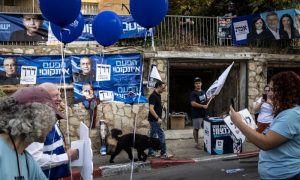
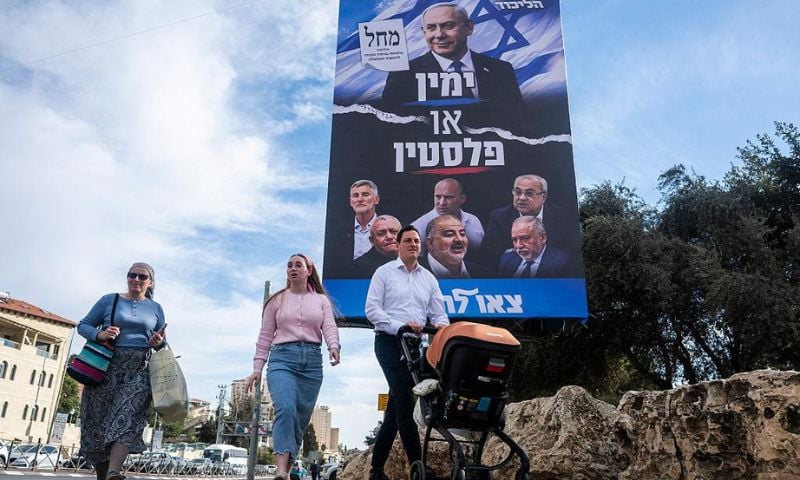
JERUSALEM: Israelis head to the polls on Tuesday in an election that could determine the political future of Prime Minister Benjamin Netanyahu and the balance of power in the country’s 120-seat parliament.
With Netanyahu’s allies and the opposition bloc competing for a parliamentary majority, the outcome may depend on more than which side wins the largest share of votes.
Arab voter participation, the positions of key political figures, the performance of smaller parties and security concerns could all shape the negotiations that follow the election.
Here are five factors that could influence who forms Israel’s next government.
1. Arab Voter Turnout
The participation of Arab citizens of Israel could prove crucial in determining the balance of power between Netanyahu’s bloc and his opponents.
A poll by the Stat-Net Institute, cited by Reuters, estimated turnout among Arab voters could reach about 63%, up from just over 53% in the 2022 election.
The projections come despite calls from some groups to boycott the vote, reflecting frustration over discrimination, violent crime, public services and the perceived limitations of political participation.
The northern branch of the Islamic Movement, which is outlawed in Israel, has rejected participation and urged supporters not to vote for either of the two main Arab political blocs: the United Arab List, known as Ra’am, and the Joint List.
The movement’s southern branch, represented by Ra’am and led by Mansour Abbas, has encouraged participation and left open the possibility of joining a future government. The Joint List has also urged voters to turn out.
An estimated 1.18 million Arab citizens are eligible to vote, representing roughly 16% of Israel’s electorate, according to the Madar studies centre. Arab citizens account for about 21% of the country’s population.
However, turnout alone will not determine their influence. The number of seats won by Arab parties and the willingness of other political groups to cooperate with them will also matter.
2. Bennett’s Political Position
Former prime minister Naftali Bennett is another central figure in the election, with his position potentially affecting the opposition’s ability to form a government.
Bennett and Netanyahu share several positions, including opposition to Palestinian statehood and a hardline approach towards Iran.
They differ, however, over the administration of the occupied West Bank, accountability for the security failures of 7 October 2023 and compulsory military service for ultra-Orthodox Jewish men.
In 2021, Bennett helped assemble a coalition that ended Netanyahu’s 12-year consecutive period in power.
For the current election, he has joined forces with opposition figures from across the political spectrum, including Yair Lapid, Gadi Eisenkot, Avigdor Lieberman and Yair Golan, to pursue an alternative government.
But Bennett has previously served in Netanyahu-led governments, leaving questions over whether the two could eventually reach an accommodation.
Earlier this month, Bennett sparked controversy by suggesting Netanyahu could join a future government if he accepted conditions including an official commission of inquiry into the October 7 failures and mandatory military service for all.
He later withdrew from that position, according to The Times of Israel.
Any renewed understanding between the two could disrupt the opposition alliance and complicate its efforts to assemble a parliamentary majority.
3. Smaller Right-Wing Parties
The performance of smaller right-wing parties could also affect Netanyahu’s prospects of retaining power.
Under Israel’s electoral system, a party must secure at least 3.25% of the vote to enter the Knesset. Votes cast for parties that fail to cross the threshold do not translate into parliamentary seats.
That could weaken Netanyahu’s bloc if smaller right-wing lists fall short, potentially making it harder for his allies to secure the 61 seats needed for a majority.
Among the parties facing uncertainty are the People of Israel Party, led by Ofer Winter; the Reservists–Economic Party alliance, led by Yoaz Hendel and Yaron Zelekha; the Haredi Public Party, led by Moti Leitner; and Israel First, led by Sharren Haskel.
According to The Times of Israel, 38 parties and lists are contesting the election.
The threshold means that even parties with a modest share of the vote could have an outsized impact on the final distribution of seats and the ability of either bloc to form a government.
4. Security Concerns
Security developments in Israel and the wider region could influence voter behaviour as the election approaches.
Concerns resurfaced after two Israeli soldiers were killed by Palestinian gunmen near Hebron. Netanyahu had warned that Israel’s enemies might attempt attacks before the vote, without publicly specifying the nature of the threat.
Military chief Eyal Zamir subsequently warned of possible escalations “across all fronts”, while Defence Minister Israel Katz said armed groups were seeking to disrupt the election through attacks, according to Israeli media reports.
Netanyahu has also accused Iran and its allies of trying to influence the election through attacks and campaigns intended to undermine public confidence in Israel’s security.
He cited warnings from the Mossad intelligence agency but did not publicly disclose the supporting details.
Opposition figures have challenged the government’s warnings. Yair Lapid called for clarification and, after receiving a security briefing, said there was no reason to alarm the public.
The security debate places renewed focus on Netanyahu’s record following the October 7 attacks. While his supporters emphasise subsequent military operations against Israel’s adversaries, critics argue that the initial security failure raises serious questions about his leadership.
Whether the latest warnings influence turnout or shift voters towards security-focused candidates remains uncertain.
5. Polling Station Monitoring
Plans by Netanyahu’s Likud party and its far-right coalition partner, Religious Zionism, to deploy about 2,000 activists at hundreds of polling stations in Arab towns have raised concerns about possible voter intimidation.
The activists would not have formal election-monitoring authority. The parties have justified the deployment by alleging vote fraud, although The Times of Israel reported that no evidence had been presented to support those claims.
The Israel Democracy Institute has warned that the presence of party activists could provoke voters, trigger confrontations or disrupt the voting process.
The issue is particularly sensitive given the importance of Arab turnout to the election and the longstanding concerns of Arab communities over discrimination and political representation.
The effectiveness of election safeguards and the conduct of party activists at polling stations could therefore become another point of contention during the vote.
What Happens Next?
The election will determine the composition of the Knesset, but the largest party will not automatically secure the premiership. The decisive question will be which political bloc can assemble the support needed to form a government.
Arab voter turnout, the survival of smaller parties, Bennett’s political choices and developments on the security front could all affect those calculations. The conduct of polling-station monitoring may also influence confidence in the process.
With the race closely contested, negotiations after the vote could prove as consequential as the results themselves.