WASHINGTON: University enrolment in Afghanistan has fallen sharply under Taliban rule, with the number of students dropping from approximately 430,000 in 2020 to 208,000 in 2026, while women remain completely excluded from university education for the third consecutive year, according to a new United Nations report.
The figures highlight the deepening crisis in Afghanistan’s higher education system since the Taliban returned to power in August 2021, with restrictions on women’s rights, changes to academic curricula and mounting economic pressures undermining access to education.
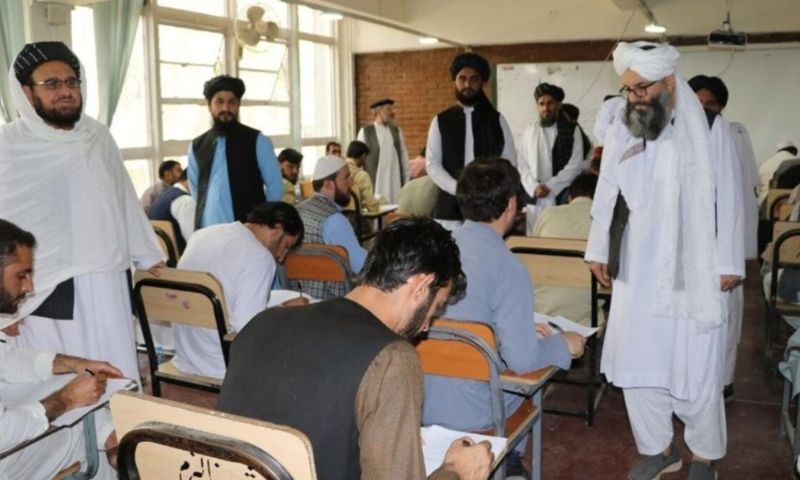
According to the report, Afghanistan’s public and private universities enrolled around 208,000 students in 2026, all of them men. In 2020, the country had approximately 430,000 university students, including 124,000 women.
The report warned that women remained excluded from formal participation in higher education, male enrolment had fallen substantially from pre-Taliban levels, the academic workforce had shrunk and private educational institutions continued to face financial difficulties.
🗓️ Day 1,863 since the Taliban stopped secondary age girls going to school.
Millions of Afghan girls and women have been betrayed as the ‘temporary ban’ on their education seems to have been delayed indefinitely.
How can the world recognise the Afghan government while these injustices continue?
You are not forgotten.
#LetAfghanGirlsLearn #AfghanWomen
— Yalda Hakim (@SkyYaldaHakim) October 26, 2026
The Taliban banned women from attending universities in December 2022. In December 2024, they also barred women from medical training institutes offering diplomas in nursing, midwifery and other healthcare fields, further restricting women’s access to professional education.
Since seizing power in 2021, the Taliban have imposed sweeping restrictions on women and girls. Girls are prohibited from pursuing education beyond the sixth grade, while women face extensive restrictions on employment, public activities and access to public spaces and facilities.
The restrictions have severely curtailed women’s educational and professional opportunities, leaving an entire generation of Afghan girls with limited prospects for academic advancement.
Restrictions on men’s education
The Taliban’s policies have also affected male students and the broader academic environment.
The United Nations report said the authorities had tightened their control over higher education by introducing additional oral examinations on religious subjects, enforcing dress codes, removing hundreds of books and other learning materials, and discontinuing more than a dozen subjects related to human rights, democracy, gender, governance and social sciences.
These measures have raised further concerns about academic freedom, the quality of university education and the ability of graduates to compete in an increasingly challenging employment market.
Farid, a university student in Kabul who withheld his full name for security reasons, told VOA that limited employment opportunities had reduced students’ motivation to pursue higher education.
“There are only a few opportunities for graduates. This makes people not be motivated to continue their studies,” he said.
READ ALSO: Male University Enrolment in Afghanistan Falls by One-Third: UN
Farid added that financial hardship was forcing some students to abandon their studies, as worsening economic conditions made even daily commuting to university increasingly difficult.
He said students were also concerned about their employment prospects after graduation, leaving many uncertain whether completing their degrees would lead to meaningful career opportunities.
Uncertain future
Mohammad Asif Nang, a former deputy minister for education in Afghanistan, said that the future of the country’s higher education system remained uncertain.
He said young Afghans were losing hope when they could not find opportunities in a system based on competition, merit and professional qualifications.
The decline in university enrolment and the exclusion of women threaten to deepen Afghanistan’s educational crisis, while potentially weakening the country’s capacity to produce qualified professionals in essential sectors.
The United Nations report warned that these trends would affect not only higher education but also the future availability of skilled workers across Afghanistan’s education, healthcare and wider service sectors.
With women still barred from university education and male enrolment continuing to lag behind pre-2021 levels, Afghanistan faces growing challenges in developing its human capital and sustaining essential public services under Taliban rule.