
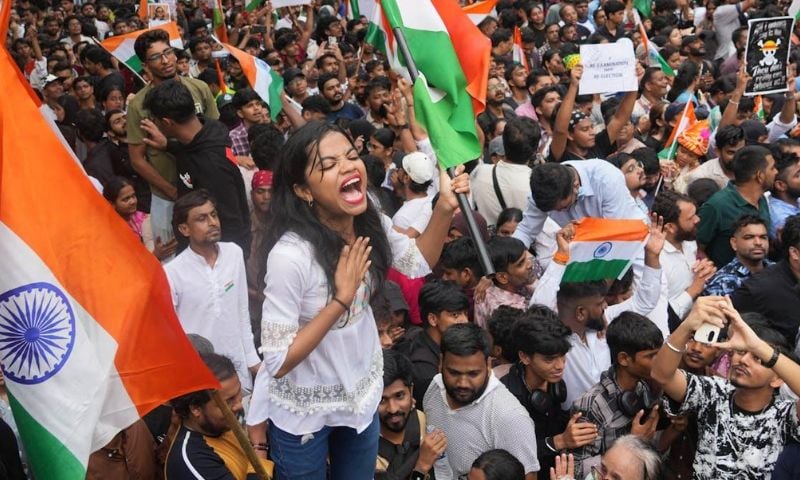
NEW DELHI, India: Flags ripple above a sea of raised mobile phones. Young men in jeans and trainers, women with backpacks and students in T-shirts chant “Vote chor!” — vote thieves — as cameras capture every slogan and defiant face. Oversized copies of India’s Constitution rise above the crowd.
For a generation raised on reels, memes and instant messaging, the streets have become an extension of the smartphone screen. But this is no online performance. These young Indians are challenging a political system they believe has failed them on jobs, fairness and accountability.
Their anger has found a focus in electoral transparency. Its deeper fuel is a question familiar across campuses and family homes: after years of education and expectations, what future awaits them?
The Meme Machine
The revolt’s unlikely spark was a joke. In May, young activists began building the Cockroach Janta Party (CJP), an online satire movement, after Chief Justice Surya Kant was reported to have likened unemployed young people to cockroaches.
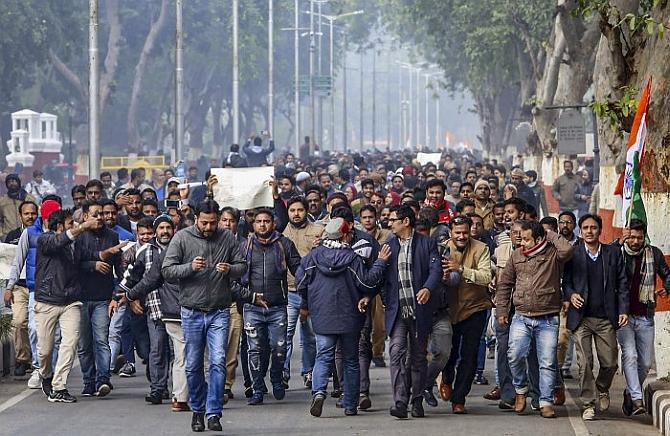
Mockery became mobilisation. Memes and sarcastic posts gave frustrated young people a shared language, while messaging groups and social platforms helped turn scattered grievances into collective action.
Behind the humour lies a harder reality: qualifications do not guarantee employment, and young people who feel shut out of opportunity are increasingly willing to challenge those they hold responsible.
But online dissent carries risks. CJP activists Ashutosh Ranka and Saurav Das had their detention extended by two days. Founder Abhijeet Dipke said he knew he could be picked up at any time.
“We aren’t afraid of this type of thing,” he said.
The message was defiant: a generation accustomed to speaking through screens was refusing to remain there.
Backpacks And Banners
On 12 October, thousands joined a march led by opposition leader Rahul Gandhi, chanting “vote thief” and waving Indian flags and copies of the Constitution. Gandhi briefly travelled in an open bus, holding the document above the crowd.
For protesters, the dispute over voter lists has become a test of democratic accountability.
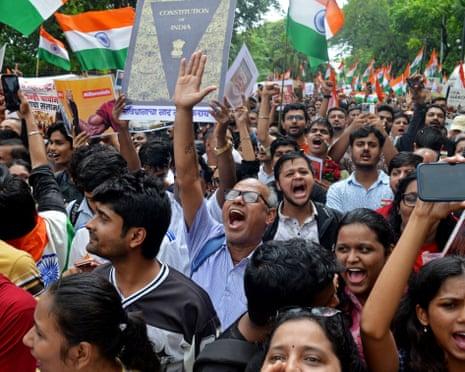
“This is bigger than anything,” said Anjali, 21, arguing that citizens must keep protesting until Chief Election Commissioner Gyanesh Kumar resigns.
Abhay Aryan, 28, said he was glad to join the march after being briefly detained two days earlier.
Their presence captures the movement’s blend of youthful energy and political urgency: casual clothes, phones held high, familiar slogans and a determination to make their grievances visible both on the streets and online.
Yet viral attention alone cannot sustain a movement. Organisation, trust and a cause capable of uniting people beyond a single demonstration are harder to build.
The Electoral Fault Line
India’s Special Intensive Revision (SIR) has removed millions of names from electoral rolls. Election officials say the exercise targets deceased, duplicate and ineligible entries, including voters who cannot be traced.
Critics warn that eligible voters could also be excluded, particularly among poorer and marginalised communities. Opposition parties allege the process could benefit the ruling Bharatiya Janata Party (BJP).
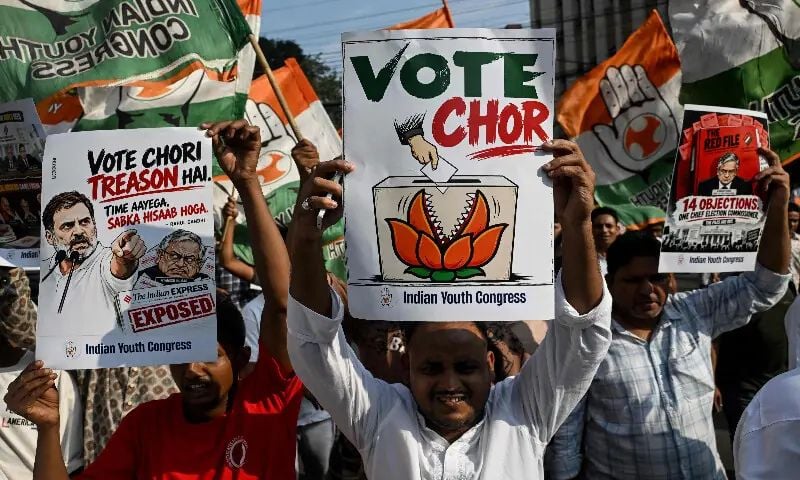
For young protesters, the controversy raises a fundamental question: if citizens cannot trust the process that determines who can vote, how can they hold power accountable?
Prime Minister Narendra Modi has governed since 2014. The BJP lost its parliamentary majority in the 2024 election but retained power with coalition partners. The protests do not yet establish a generational political realignment, but they expose growing unease among some young Indians.
When Screens Go Dark
The smartphone is the movement’s megaphone and a vulnerability.
On 2 October, authorities ordered a 12-hour mobile internet suspension within a 1.5km radius of Delhi’s Jantar Mantar, according to Indian media.
Security tightened around youth-led demonstrations, while reports described thousands being detained and some beaten. Most were later released.
Some activists have turned to Bitchat, an app developed by Jack Dorsey that uses Bluetooth to exchange messages between nearby devices.
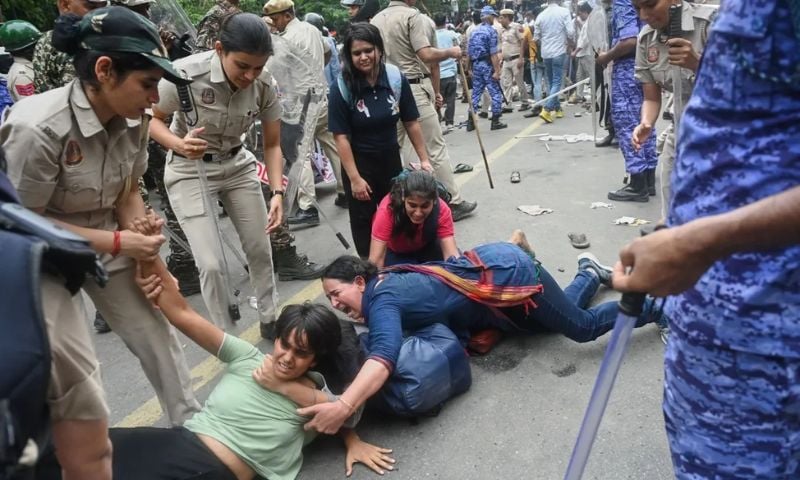 It can provide limited communication without conventional internet access, but it cannot restore web browsing or social media, and its reach depends on nearby participating devices.
The confrontation is therefore not only about who controls the streets, but who controls the flow of information. Protesters use phones to document events and organise; restrictions and detentions can disrupt both.
The Test Of Power
The grievances extend beyond voting. Unemployment, educational pressures, civil liberties and demands for accountability converge in a generation uncertain that patience will deliver the future it was promised.
Historian and novelist Mukul Kesavan has argued that established opposition parties joining the 12 October march distinguished it from more isolated demonstrations. He has also questioned whether preventive detentions were being used to stop gatherings and raised concerns about the Election Commission’s impartiality.
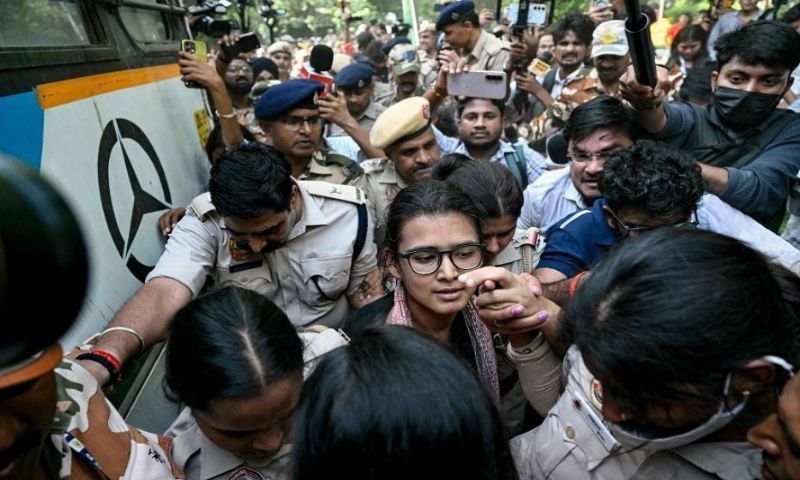
Opposition involvement could amplify the movement, but it also poses a dilemma: will young activists retain their independence or see their anger absorbed into established party politics?
For now, the outcome remains uncertain. A viral post does not guarantee votes; a packed street does not ensure lasting change.
India’s Gen Z has shown it can turn satire into slogans and digital connections into public protest. Whether it can sustain that pressure is the bigger test.
The cockroach began as an insult. It has become a symbol of refusal and a challenge to a political system that may find this generation harder to dismiss than to contain.