Key Points
- Pakistan highlights its return to international capital markets.
- Policy continuity is identified as essential for investor confidence.
- Privatisation and post-privatisation regulatory arrangements feature in discussions.
- Both sides reaffirm cooperation on sustainable economic development.
ISLAMABAD: Pakistan’s Finance Minister Muhammad Aurangzeb has discussed Pakistan’s transition from macroeconomic stabilisation to sustainable, investment-led growth with senior World Bank officials, emphasising fiscal discipline, policy continuity, structural reforms and measures to strengthen private-sector activity.
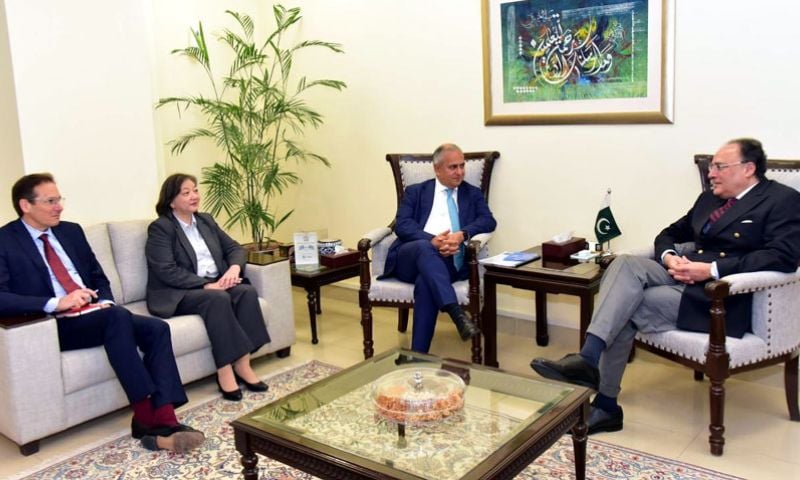
The discussions took place during a meeting between Federal Minister for Finance and Revenue Senator Muhammad Aurangzeb and Sandeep Mahajan, Regional Practice Director for the Prosperity Vertical for the Middle East, North Africa, Afghanistan and Pakistan (MENAAP), World Bank. Bolormaa Amgaabazar, World Bank Country Director, and Simon Andrews, Division Director at the International Finance Corporation (IFC), also attended the meeting.
Finance Minister, World Bank Discuss Pakistan’s Macroeconomic Stabilisation, Reform Agenda and Priorities for Investment-Led Growth
Federal Minister for Finance and Revenue, Senator Muhammad Aurangzeb, held a meeting with Mr. Sandeep Mahajan, Regional Practice Director for the Prosperity Vertical for the Middle East, North Africa, Afghanistan and Pakistan (MENAAP), World Bank, accompanied by Ms. Bolormaa Amgaabazar, Country Director, and Mr. Simon Andrews, Division Director, International Finance Corporation (IFC), to discuss Pakistan’s economic reform agenda, the transition from stabilisation to sustainable growth, and priorities for strengthening investment and private-sector activity.
Mr. Sandeep Mahajan congratulated Pakistan on restoring macroeconomic stability and commended the Government’s effective management of the recent crisis arising from regional conflict. He noted that the buffers built through stabilisation efforts and a timely policy response had helped Pakistan manage external pressures. The World Bank representatives emphasised the importance of sustaining these gains through continued reforms and effective implementation.
Senator Muhammad Aurangzeb emphasised that the Government’s priority was to make macroeconomic stability durable and translate it into sustainable growth and investment led, export led. He noted that Pakistan had regained access to international capital markets, including through its recent US$3 billion Eurobond issuance with 5 year and 10 year maturities. He also mention about ensuring a pathway for further credit rating upgrades. He highlighted the importance of building on this progress, strengthening investor confidence and improving Pakistan’s sovereign credit profile.
The Finance Minister discussed the importance of a credible transition framework that sustains fiscal discipline, addresses external-sector vulnerabilities and strengthens the foundations for private sector investment-led responsible and sustainable growth. The discussion also covered drawing on international experience in strengthening fiscal frameworks and policy credibility to manage external risks and support investor confidence.
The meeting also covered policy continuity as a key requirement for sustained economic progress. Senator Muhammad Aurangzeb noted that investment and productivity depend on a predictable policy environment and consistent implementation.
The Finance Minister and the World Bank representatives exchanged views on the Government’s growth and jobs agenda, including opportunities to strengthen private-sector investment, improve the regulatory environment and mobilise financing for infrastructure. The discussion covered privatisation, the importance of clear regulatory frameworks and credible post-privatisation arrangements, and the potential to develop infrastructure projects through appropriate financing structures and collaboration with development partners.
Both sides reaffirmed the importance of continued cooperation between Pakistan and the World Bank, with a shared focus on sustaining macroeconomic stability, advancing structural reforms, strengthening policy continuity and translating reform gains into investment, employment and improved economic opportunities for the people of Pakistan.
— Ministry of Finance, Government of Pakistan (@Financegovpk) October 23, 2026
According to a Finance Division press release issued on Friday, the discussions focused on Pakistan’s economic reform agenda, the sustainability of recent stabilisation gains, investment priorities and opportunities to mobilise private-sector financing for economic development.
Stabilisation to growth
Mahajan congratulated Pakistan on restoring macroeconomic stability and commended the government’s management of the recent crisis arising from regional conflict. He said the buffers built through stabilisation efforts and a timely policy response had helped the country withstand external pressures.
The World Bank representatives stressed that sustaining these gains would require continued reforms and effective implementation of government policies.
Aurangzeb said the government’s priority was to make macroeconomic stability durable and translate it into sustainable, export-led and investment-led growth. He highlighted Pakistan’s return to international capital markets through a US$3 billion Eurobond issuance in September, describing it as an important development for the country’s financing strategy and international investor engagement.
The finance minister also highlighted the importance of further sovereign credit rating upgrades, stronger investor confidence and improvements in Pakistan’s credit profile.
Reform implementation
The meeting examined the need for a credible transition framework that preserves fiscal discipline, addresses external-sector vulnerabilities and creates conditions conducive to private investment. They also discussed international experience in strengthening fiscal frameworks and policy credibility to manage external risks and support investor confidence.
Aurangzeb emphasised that policy continuity was essential for sustained economic progress, arguing that investment and productivity depended on a predictable policy environment and consistent implementation.
Private investment and jobs
The finance minister and World Bank representatives also exchanged views on the government’s growth and jobs agenda, including ways to encourage private-sector investment, improve the regulatory environment and mobilise financing for infrastructure.
The discussions covered privatisation, clear regulatory frameworks and credible arrangements following the transfer of public-sector assets to private ownership, exploring the potential for infrastructure development through appropriate financing structures and collaboration with development partners.
The World Bank has argued that sustained implementation of fiscal, energy-sector and business-environment reforms could support stronger investment and productivity growth.
Privatisation and infrastructure
Privatisation and infrastructure financing featured prominently in the discussions, reflecting the government’s efforts to increase private-sector participation in economic activity and mobilise financing for development projects.
The meeting considered the importance of clear regulatory arrangements and credible post-privatisation frameworks to support investor confidence, focusing on financing structures that could facilitate infrastructure projects in collaboration with development partners.
The discussions also reflected the importance of a predictable policy environment in encouraging businesses to make long-term investment decisions.
Sustaining cooperation
Both sides reaffirmed the importance of continued cooperation between Pakistan and the World Bank, with a shared focus on preserving macroeconomic stability, advancing structural reforms and translating economic progress into investment and employment.
The meeting concluded with an emphasis on policy continuity, stronger private-sector participation and improved economic opportunities for the people of Pakistan.