UNITED NATIONS: The United Nations Secretary-General has acknowledged Pakistan’s diplomatic efforts that led to the Islamabad Memorandum of Understanding (MoU) between the United States and Iran, saying the MoU had helped ease tensions and restore a period of calm and stability, while expressing hope that ongoing diplomatic contacts would produce positive results.
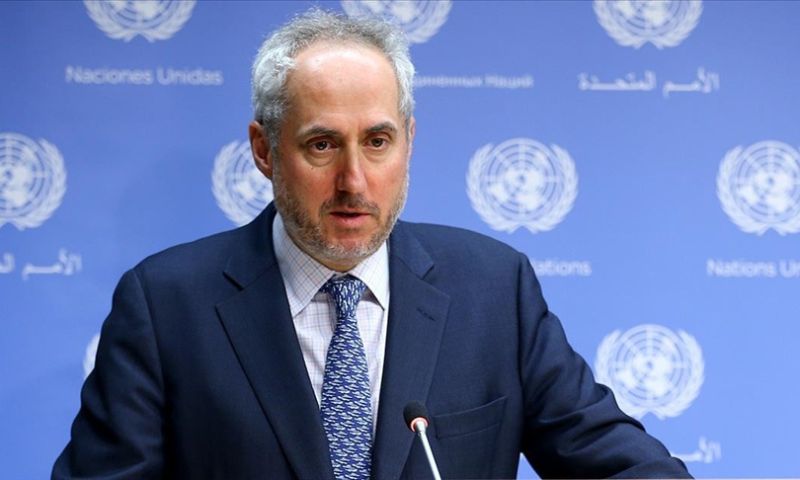
Responding to a question during a press briefing in New York, UN Secretary-General’s spokesperson Stéphane Dujarric said the Secretary-General had supported and acknowledged Pakistan’s mediation efforts aimed at de-escalating tensions between the US and Iran.
Dujarric said the mediation efforts led by Pakistan had resulted in the Islamabad MoU, which brought about a reduction in tensions and a period of calm and stability.
He said the period was significant as the movement of energy, food and other essential goods through the Strait of Hormuz had also continued relatively smoothly.
“It is important to keep that period in mind,” the UN spokesperson said, referring to the earlier reduction in tensions and improved flow of essential goods through the strategic waterway.
Dujarric said the United Nations had received reports of various talks and diplomatic contacts taking place, adding that the organisation hoped the ongoing efforts would lead to positive results.
His remarks came amid renewed diplomatic efforts to revive the Islamabad MoU, with Pakistan continuing to engage the concerned parties to facilitate dialogue and de-escalation.
Islamabad MoU framework
Pakistan has maintained that diplomacy and dialogue remain the only sustainable means of resolving the crisis and has continued contacts with the relevant parties to revive the understanding and build on the period of calm, it previously helped facilitate.
The Pakistan-brokered Islamabad MoU, signed in June, provides the framework for ending the US-Iran conflict and pursuing a negotiated settlement.
Under the Islamabad MoU, Iran and the US committed to halt military operations, reopen the Strait of Hormuz to commercial shipping and negotiate a comprehensive agreement covering Iran’s nuclear programme, US sanctions and a permanent ceasefire within 60 days.
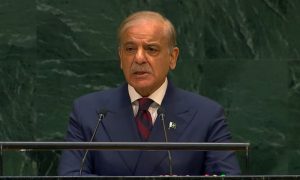
On Wednesday, Prime Minister Sharif said Islamabad was “completely focused” on mediating an end to the war between the US and Iran through dialogue and diplomacy.
“Pakistan is playing the role of a sincere and honest mediator between Iran, our neighbourly country, and the United States,” Prime Minister Sharif told reporters at the United Nations.
Prime Minister Sharif said he signed the Islamabad Memorandum of Understanding (MoU) in June with Iranian President Masoud Pezeshkian and US President Donald Trump.
“Unfortunately, events after that got a bit unpredictable, but Pakistan is completely focused. We have not lost hope; we are absolutely determined that we will further make efforts and make progress to de-escalate the situation,” the Prime Minister added.
Asked if there are plans for another meeting, Prime Minister Sharif said it is a “conscious process” and that all friendly countries are contributing to achieve regional peace.
رئيس الوزراء الباكستاني شهباز شريف: باكستان “تركز تماماً” على الوساطة لإنهاء الحرب المتعلقة بإيران pic.twitter.com/g9vR38RMKQ
— العربية (@AlArabiya) September 23, 2026
The United States and Iran have remained locked in conflict since US-Israeli strikes on Iran began on February 28.
Islamabad MoU framework for US-Iran talks
Pakistan is the key mediator between the US and Iran after helping secure a ceasefire on April 8. Later, Pakistan hosted high-level US and Iranian delegations for talks in Islamabad on April 12 and 13.
Pakistan has repeatedly urged a return to the Islamabad MoU between the US and Iran, maintaining that dialogue and diplomacy were the only way to resolve the months-long conflict.
Under the Islamabad MoU, Iran and the United States committed to halt military operations, reopen the Strait of Hormuz to commercial shipping and negotiate a comprehensive agreement covering Iran’s nuclear programme, US sanctions and a permanent ceasefire within 60 days.
Pakistan and Qatar later co-mediated the first round of high-level talks in Lucerne, Switzerland, on June 21. The meeting was attended by Vance and Ghalibaf.
Pakistan is making efforts to revive talks under the Islamabad MoU framework to permanently end the conflict through diplomacy and dialogue.
On Monday, Pakistan’s Interior Minister Mohsin Naqvi met his Iranian counterpart Eskandar Momeni in Tehran and discussed the latest regional developments.
During their meeting, the two ministers exchanged views on the situation in the region, Pakistan’s Interior Ministry said.
Momeni thanked Prime Minister Shehbaz Sharif and Chief of Defence Forces and Chief of Army Staff Field Marshal Syed Asim Munir for their efforts towards regional peace and stability.
“We are grateful for Pakistan’s continuous efforts to establish peace in the region,” Momeni said.
وفاقی وزیر داخلہ محسن نقوی کی ایرانی وزات داخلہ آمد، ایرانی ہم منصب اسکندر مومنی سے ملاقات
پاک ایران دوطرفہ تعلقات اور خطے کی تازہ ترین صورتحال پر تبادلہ خیالملاقات میں دونوں ممالک کی وزارت داخلہ کے درمیان مختلف شعبوں میں جاری تعاون پر پیش رفت کا جائزہ لیا گیا pic.twitter.com/bEjeAaTKj5
— Ministry of Interior GoP (@MOIofficialGoP) September 21, 2026
US, Iran hold meeting in New York
US President Donald Trump said on Tuesday that senior US officials held a three-hour meeting with an Iranian delegation in New York, describing the talks as “very good” and productive.
Trump said US envoys Steve Witkoff and Jared Kushner took part in the meeting, which was held shortly before he spoke to reporters following his address to the UN General Assembly.
“We had a very good meeting. I mean, I must tell you it was a very good, very productive meeting,” Trump said, adding that another meeting had been scheduled “in the very near future”.
President Trump Participates in a Multilateral Meeting with the Gulf Cooperation Council https://t.co/GMMkjnmNJL
— The White House (@WhiteHouse) September 22, 2026
Witkoff also described the talks positively but did not provide details.
According to The New York Times, citing Iranian officials, Foreign Minister Abbas Araghchi led the Iranian delegation, while Pakistan and Qatar mediated the meeting.
Trump did not disclose details of the discussions but reiterated his demand that Iran never acquire a nuclear weapon.
In his UN address earlier on Tuesday, he had presented Tehran with what he described as a choice between a deal that would allow it to prosper and what he called “obliteration”.
“Will a deal be made with Iran that lets them rebuild and create a far greater country than it ever was before? … Or do I annihilate the Islamic Republic and do it quickly?” Trump said on the floor of the UN as he threatened to destroy an entire nation.