
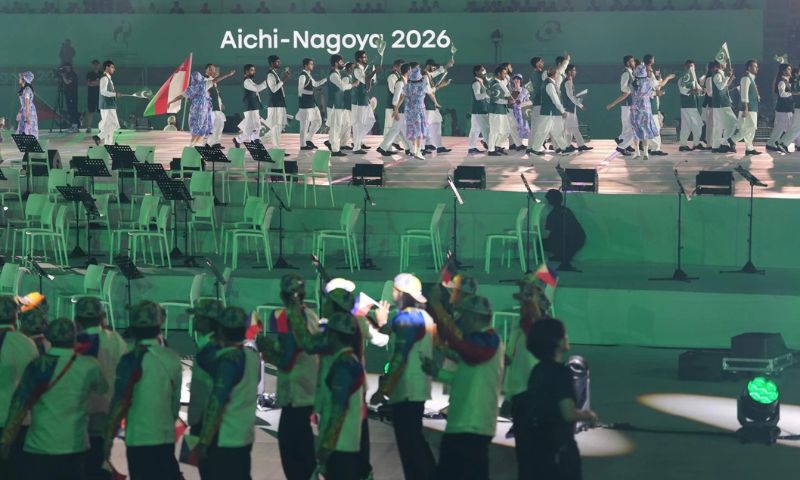
ISLAMABAD: The 2026 Asian Games in Aichi-Nagoya have come under mounting criticism as athletes and officials face accommodation shortages, transport disruptions and a series of organisational blunders that have overshadowed the sporting spectacle, with several delegations describing the event as chaotic.
Around 17,000 athletes and officials are attending the Games, but the absence of a traditional athletes’ village has forced organisers to rely on hotels, temporary modular container-style homes and the Costa Serena cruise ship, where more than 4,000 people are being housed.
Read Also: Why Asian Games Athletes Will Reside on a Cruise Ship During the 2026 Games?
Unconventional housing triggers widespread complaints
Organisers abandoned plans for a permanent athletes’ village to reduce long-term infrastructure costs, opting instead for temporary accommodation across Nagoya.
Local organizers of the Aichi-Nagoya Asian Games defended the athletes’ accommodation on Thursday following growing resident concerns over the use of shipping-container-style modular units.#AichiNagoya2026 #AsianGames2026 #SportsNews pic.twitter.com/u5Vm8mBYXo
— Alkass English (@alkassenglish) September 24, 2026
The decision has drawn criticism from multiple teams, with athletes reporting cramped sleeping quarters, leaking roofs, double-booked rooms and food shortages.
South Korea said some container units were too small for basketball players, while Thailand described the accommodation system as a game of “musical chairs” after athletes and staff were repeatedly relocated because of insufficient beds.
Indian mixed martial arts (MMA) fighter Suchika Tariyal broke down in tears and initially refused to accept the decision or shake hands after her controversial women’s traditional -60kg semifinal defeat against Singapore’s Hui Hoon Teo at the 2026 Asian Games. pic.twitter.com/JVprEdpf5r
— Atulya (@DesiMemesTweets) September 24, 2026
Thai officials said their medical staff had to stay nearly 90 minutes away from Nagoya due to room shortages, forcing the delegation to rent additional vehicles from Tokyo.
Transport delays add to athletes’ frustration
Transportation has emerged as another major headache, with teams reporting buses arriving late, changing schedules at short notice or failing to appear for training and airport transfers.
Chinese Taipei said it had booked around 100 additional hotel rooms before the Games as a precaution after being informed there were not enough beds.
Athletes have complained of poor accommodation, long delays at airports and in boarding cruise ship housing.https://t.co/d3uRB0HzMZ
— The Star (@staronline) September 24, 2026
High-profile arrivals were also affected, including Chinese Olympic gymnast Zhang Boheng, who was reportedly stranded at the airport for more than six hours because of registration and transport delays before heavy rain further disrupted transfers to the cruise ship.
Read Also: Asian Games Kick Off in Japan With Record Participation
Bizarre incidents overshadow early competition
Among the most unusual episodes of the Games, Qatar’s national eFootball team lost by forfeit after venue staff reportedly directed players to the wrong waiting room, causing them to miss the mandatory verification deadline and handing South Korea a walkover victory.
In another embarrassing mistake, organisers accidentally played North Korea’s national anthem instead of South Korea’s before a men’s hockey match, prompting a formal apology and an explanation that the wrong audio file had been selected.
Aichi-Nagoya Asian Games. The North Korean anthem is mistakenly played for the South Korean team. pic.twitter.com/SycDoRWlF1
— 由仁アリン Arin Yuni 🇸🇬 Singapore meetup (9/26) (@Arin_Yumi) September 18, 2026
The accommodation concerns also prompted India’s cricket authorities to independently arrange separate hotel accommodation for the men’s team rather than use the official allocation, while local Japanese-Indian families reportedly offered spare rooms as an emergency backup.
Organisers defend preparations
Despite growing criticism, the organising committee insists the logistical problems have not disrupted competition.
Spokesman Hiroshi Koshizuka said shuttle bus services had been expanded to meet athletes’ needs and maintained that no sporting event had been delayed because of transport issues.
Read Also: Typhoon Threatens Asian Games in Japan After Record Rainfall
Officials also defended the modular housing, saying the units represent the largest size that can be transported by truck and that ottomans were added to beds to accommodate taller athletes.
However, criticism has continued from athletes, residents and national Olympic committees, with South Korean Olympic chief Ryu Seung-min saying the organisers deserved a failing grade, while local residents questioned whether the narrow container rooms provide suitable living conditions for elite competitors.