Key Points
- Govt invites bids for Pakistan’s first 400MW wheeling auction.
- Federal Minister Awais Leghari says govt is exiting electricity purchases.
- Producers and consumers can transact directly under CTBCM.
- The government plans to auction 800MW over five years.
ISLAMABAD: Pakistan’s federal government on Sunday invited Request for Proposals (RFPs) for Pakistan’s first electricity wheeling auction under the Competitive Trading Bilateral Contract Market (CTBCM), as Federal Minister for Energy Sardar Awais Ahmad Khan Leghari announced that the government was effectively exiting electricity purchases.
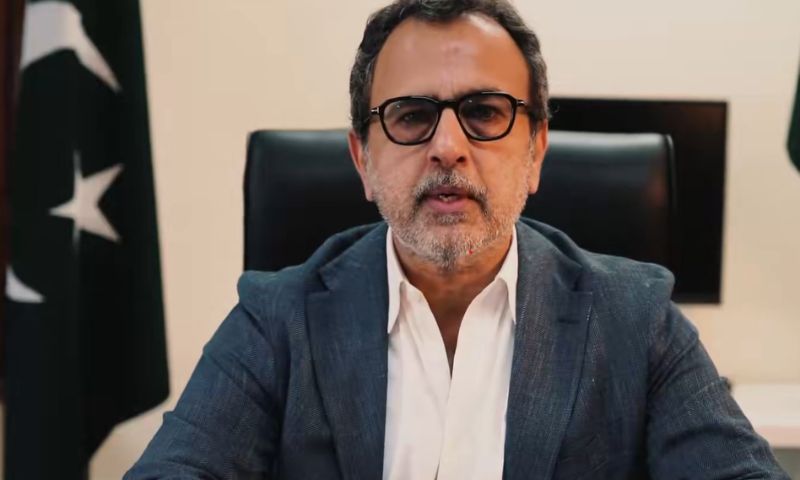
In a televised address in Islamabad, Leghari said the move would enable electricity producers and consumers to transact directly, marking a shift away from the longstanding centralised model in which the government purchases electricity from generators and supplies it to consumers.
“The government is practically exiting electricity purchases from today.” – Federal Minister Awais Leghari
“The government is practically exiting electricity purchases from today,” he said.
The first auction will offer 400 megawatts (MW) of electricity, while the government plans to make a total of 800MW available through competitive wheeling auctions over the next five years. The auction process is being administered through the Independent System and Market Operator of Pakistan (ISMO).
Leghari said businesses and industries would be able to purchase electricity from power plants on a competitive basis under the new arrangement.
I am proud to announce that the RFP for 400 MW of wheeling has been issued today.
Decades old commitment of different governments has been practically implemented by PM Shahbaz Sharifs Team Power.
Suppliers and Consumers of Power can now transact with each other. No more… pic.twitter.com/SaRPwQhEtv— Awais Leghari (@akleghari) September 20, 2026
“Nobody will have the right to sell electricity to the government, nor will the government be able to purchase it,” he added.
The minister said the system would initially apply to industrial and other large consumers, with consumers using more than one megawatt eligible to participate in the first phase.
Leghari said an electricity market would develop in the coming years, allowing ordinary consumers eventually to purchase electricity according to their choice.“
The government will no longer be able to purchase electricity and forcibly sell it to the public at its own rates.” – Federal Minister Awais Leghari
“The government will no longer be able to purchase electricity and forcibly sell it to the public at its own rates,” he added.
He said cheaper electricity would help Pakistani industries remain competitive in global markets and enable them to export their products.
Single-buyer model
At present, the government purchases electricity through a centralised system and supplies it to consumers, Leghari said, adding that questions had long been raised about the terms and conditions governing electricity purchases.
“The name of IPPs [independent power producers] has become notorious today,” the minister said.
The new wheeling mechanism will allow eligible consumers to obtain electricity from a supplier other than their conventional distribution company while using the existing electricity transmission and distribution infrastructure to deliver the contracted power.
Wheeling framework
The move comes days after the National Electric Power Regulatory Authority (NEPRA) approved uniform Use of System Charges (UoSC) for open-access bulk electricity consumers, strengthening the regulatory basis for competitive electricity transactions.
In a separate post on X, Leghari said the Shehbaz Sharif-led government had practically implemented a decades-old commitment of successive governments.
“Suppliers and consumers of power can now transact with each other. No more buying of power by the government, no more IPPs.” – Federal Minister Awais Leghari
“Suppliers and consumers of power can now transact with each other. No more buying of power by the government, no more IPPs,” he wrote while sharing the public notice inviting Reference for Proposals for the 400MW wheeling auction.
The government had already announced in 2025 that 800MW of demand would be transparently allocated to market participants through wheeling auctions, with the reform aimed at enabling industrial and bulk consumers to procure electricity at competitive rates.
Competition for industry
Leghari said the availability of cheaper electricity would allow Pakistani industries to compete more effectively in international markets and increase exports.
The government has argued that direct contracting between suppliers and consumers could introduce competition into electricity procurement, potentially allowing large consumers to negotiate electricity supply arrangements instead of relying exclusively on the existing procurement structure.
Leghari said the competitive market would eventually expand to ordinary consumers, giving them greater choice over electricity suppliers.
The minister also said the government would no longer be able to purchase electricity and resell it to consumers under the traditional arrangement.