Key Points
- US envoy Natalie Baker calls on Bilal Bin Saqib.
- Talks focused on regulation, innovation and financial transparency.
- Pakistan is moving towards formal oversight of virtual assets.
- The Virtual Assets Act was introduced in March 2026.
- Detailed virtual-assets regulations were notified in August.
- The framework incorporates anti-money-laundering and counter-terror-financing safeguards.
ISLAMABAD: Pakistan has briefed the United States on its newly developed regulatory framework for digital assets as Islamabad moves to bring the rapidly expanding sector under formal oversight and position the country for growth in the digital economy.
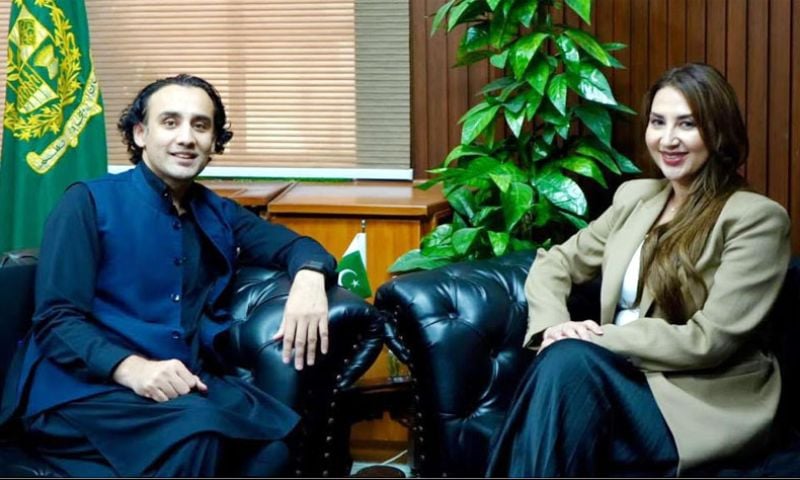
Minister of State and Pakistan Virtual Assets Regulatory Authority (PVARA) Chairman Bilal Bin Saqib discussed the regulatory framework with US Chargé d’Affaires Natalie Baker, with the talks focusing on digital-asset innovation, financial transparency and the future of Pakistan’s digital economy.
“Pakistan is developing a modern and robust regulatory framework for the digital assets sector,” Saqib said.
He said Pakistan was laying the foundations for a digital economy while keeping the future of the financial system in view.
“Through innovation and financial transparency, Pakistan is charting a new direction for its digital economy,” he added.
The meeting comes as Pakistan moves from policy formulation towards implementation of a formal virtual-assets regime, with PVARA established as the federal authority responsible for licensing, regulating and supervising virtual-asset service providers and issuers.
Pakistan’s Virtual Assets Act, 2026, introduced in March, represents the country’s first comprehensive legal framework for overseeing virtual assets and businesses operating in the sector. The framework is aimed at protecting consumers and investors, maintaining market integrity and addressing risks including money laundering and terrorist financing.
Global engagement
The meeting with Baker is part of a wider effort by PVARA to engage international policymakers and financial institutions as Pakistan develops its digital-assets ecosystem.
Earlier this month, Saqib briefed Finance Minister Muhammad Aurangzeb following his visit to Hong Kong, where he engaged with policymakers and institutions including the Financial Services and the Treasury Bureau, Hong Kong Monetary Authority and Securities and Futures Commission.
Those discussions covered virtual assets, digital finance, blockchain, tokenisation, stablecoins, compliance frameworks and digital financial infrastructure, with the finance minister stressing the importance of a responsible, transparent and well-structured ecosystem.
On September 12, Saqib also addressed a United Nations session on digital assets and blockchain, calling for countries to move from discussions about the technology towards building regulatory and institutional frameworks for the next generation of global finance.
He argued that digital assets, tokenisation and distributed-ledger technologies could create opportunities for emerging economies in areas including financial inclusion, payments, remittances and capital mobilisation, while also warning about risks linked to illicit finance, volatility and inadequate regulatory capacity.
Digital economy
PVARA’s statutory mandate extends beyond simply regulating cryptocurrency-related businesses. The authority is also tasked with promoting blockchain and distributed-ledger technology, encouraging responsible innovation and attracting investment in the virtual-assets sector.
The framework, therefore, seeks to balance development of the digital economy with safeguards designed to protect consumers, investors and the integrity of financial markets.
For Pakistan, the regulatory shift comes as digital assets and blockchain-based financial products become an increasingly prominent part of discussions about the future of finance.
The engagement with the US also provides an opportunity for Pakistan to discuss its emerging regulatory architecture with a major international economic partner.
Broader implications
PVARA’s emerging framework places Pakistan among countries attempting to establish formal rules for an industry that operates across borders and increasingly intersects with conventional banking, payments and financial markets.
The authority’s international outreach indicates that Pakistan is also looking beyond domestic legislation towards regulatory cooperation, knowledge-sharing and alignment with international standards as the sector develops.
For now, the government’s stated approach combines regulation with support for technological innovation.
Saqib said Pakistan was laying the foundations for a digital economy while keeping the future of the financial system in view.
The meeting with Baker thus comes at a key stage in Pakistan’s transition from developing a legal framework for virtual assets to implementing detailed rules governing the businesses and financial activities operating within the sector.