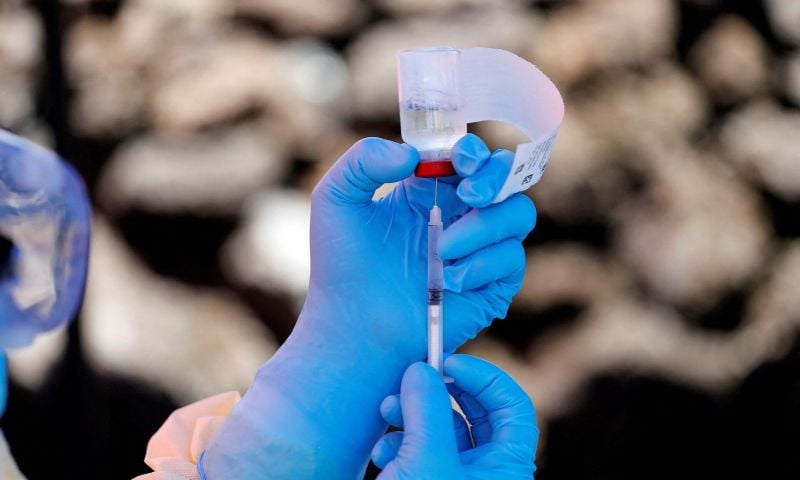
KINSHASA: Health workers in parts of the Democratic Republic of Congo worst affected by a deadly Ebola outbreak began a trial vaccination programme on Saturday to assess whether a vaccine developed for a different strain of the virus could offer protection against the current outbreak.
The programme, supported by the World Health Organisation (WHO) and Doctors Without Borders (MSF), will involve 20,000 frontline health workers in Ituri and North Kivu provinces. The study is expected to run for up to a year.
According to the latest figures from Congolese authorities, the current outbreak has killed 3,639 people among 7,541 confirmed cases, putting the case fatality rate at 48.3 per cent.
📢 In DRC, we and Epicentre, our epidemiology arm, have launched BRAVO, a study following 20,000 frontline workers to assess whether an existing Ebola vaccine can offer protection against the Bundibugyo virus.https://t.co/vh69LFpa7g
— MSF International (@MSF) September 19, 2026
The outbreak is being caused by the Bundibugyo strain of the Ebola virus, for which there is currently no approved vaccine or treatment.
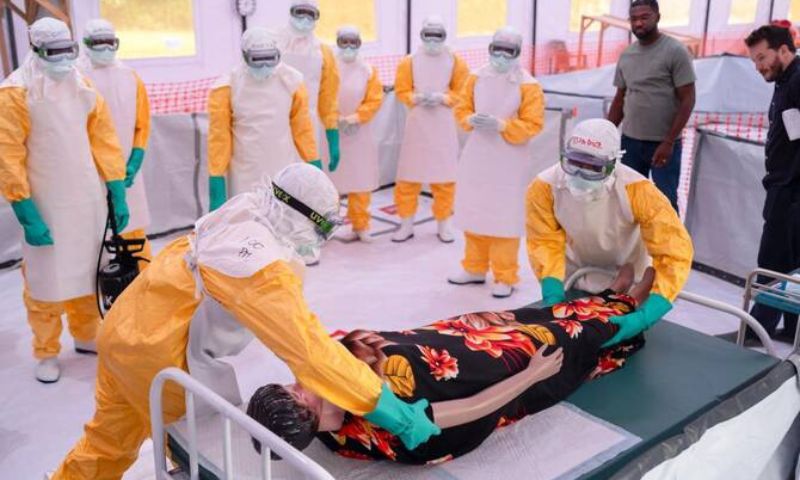
Ervebo vaccine developed against Zaire strain of Ebola
The Ervebo vaccine being administered in the trial was developed to protect against the Zaire strain of Ebola. Researchers will assess its effectiveness against the Bundibugyo strain as part of the study.
“We don’t know to what degree it might be effective against the Bundibugyo strain,” said Steve Ahuka, a Congolese official who is part of the health task force against the Ebola outbreak.
“It might offer a certain level of cross-protection against the Bundibugyo virus,” said Nana Mimbu, an MSF research coordinator.
While WHO officials have cited “encouraging signs” that transmission may be slowing, Doctors Without Borders (MSF) warned on Friday that there was still no clear evidence that the outbreak was coming under control.
ALSO READ: Ebola Outbreak Spreading Fast in DR Congo: UN Health Agency
WHO experts have said early data on the Ervebo vaccine, particularly from animal studies, indicated that it could provide some protection against the strain driving the current outbreak.
The UN health agency said last month that 70,000 doses of the vaccine, developed by pharmaceutical company Merck and manufactured in Germany, would be delivered to the Democratic Republic of Congo.