ISLAMABAD: Oil prices extended their sharp weekly rally in early Asian trading on Friday, with Brent crude approaching $109 a barrel and US West Texas Intermediate (WTI) rising above $103 as mounting disruptions along key Middle Eastern shipping routes intensified concerns over global oil supplies.
Brent crude futures rose $1.05, or 1 per cent, to $108.68 a barrel by 0045 GMT, while WTI gained 95 cents, also 1 per cent, to $103.45. Both benchmarks had surged more than 6 per cent on Thursday, leaving them nearly 13 per cent higher on the week.
The overnight rise shows that the aggressive rally has carried into Friday trading, although the pace has moderated significantly from Thursday’s advance. Brent briefly reached $109.97 during the latest trading, according to market data, before easing back towards $109.
The market is now focused on whether prices can sustain the overnight gains and whether disruptions to crude shipments will persist long enough to create a prolonged physical supply shortage.
Oil Shipping disruption remains central
The latest advance followed the seizure of Yemen’s Mocha port by Iran-aligned Houthi forces, adding to concerns over oil shipping through the Red Sea and the Bab el-Mandeb Strait.
The development has raised fears that the Houthis could gain greater control over a key maritime chokepoint for energy shipments between the Middle East and global markets. Wall Street Journal reporting cited ANZ Research analysts as saying the development could put further pressure on Saudi oil exports.
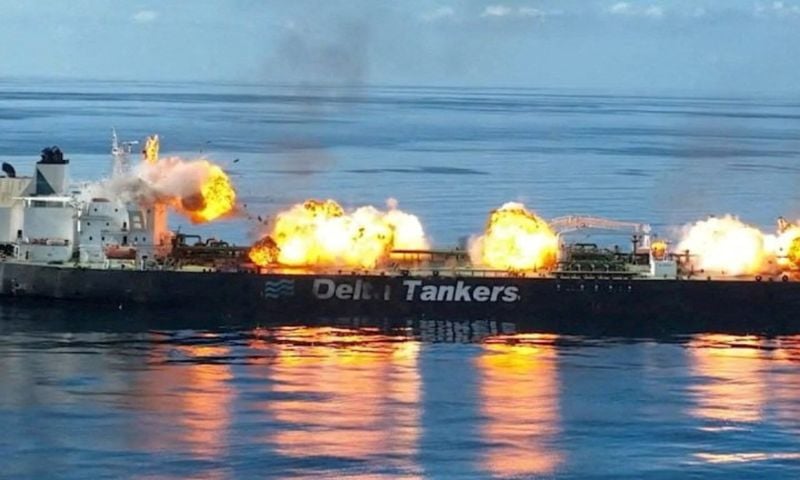
9 OIL TANKERS HIT IN STRAIT OF HORMUZ?!
Oil Prices set to soar as the IRGC Navy announced it struck 3 oil tankers on “unauthorized” routes in the Strait of Hormuz and 3 US-affiliated vessels in retaliation for today’s US strikes on 3 Iranian tankers, per Iranian state media and… pic.twitter.com/uOObnS7Dcq
— Ed Krassenstein (@EdKrassen) September 5, 2026
At the same time, tanker traffic through the Strait of Hormuz remains severely restricted after a sharp escalation in attacks on shipping.
READ ALSO: Global Oil Prices Jump to $106 a Barrel as Middle East Conflict Escalates
The simultaneous disruption around Hormuz and the Red Sea has raised concerns that alternative routes may not be enough to offset lost or delayed shipments if the situation persists.
Direction ahead
Friday’s early trading suggests that traders have not yet taken profits after Thursday’s surge. Instead, oil prices have added roughly another 1 per cent overnight, keeping both benchmarks close to their highest levels in months.
The immediate direction will depend on developments around the two major shipping corridors, particularly any indication that tanker movements through Hormuz are recovering or that attacks on vessels and energy infrastructure are spreading.
President Trump said oil prices would fall sharply after the US midterm elections, predicting that gasoline prices could drop below $2 a gallon.
NEW: President Trump insisting gas prices will fall below $2 a gallon after the midterms, saying current high prices are the cost of keeping Iran from obtaining a nuclear weapon.
“Right after the election, oil prices are going to be tumbling downward. They’re going to be… pic.twitter.com/qGZk8mSpBU
— Fox News (@FoxNews) September 9, 2026
He added that current high oil prices were the cost of preventing Iran from obtaining a nuclear weapon.
“Right after the election, oil prices are going to be tumbling downward. They’re going to be tumbling down, and we’ll get them down, I think for gasoline, we’ll get them below $2 a gallon.”
Inflation risk
The renewed oil surge is also raising concerns about global inflation. Higher crude prices feed into gasoline, diesel, transport and industrial costs, complicating the outlook for central banks, already assessing the impact of higher energy costs on interest rates.
Asian financial markets have already come under pressure from the oil rally. Early Friday trading showed major regional equity markets lower as investors assessed the combined impact of higher energy prices and rising bond yields.
For Pakistan, sustained crude prices near current levels could raise the cost of imported petroleum products and put pressure on the country’s import bill and domestic fuel prices.
For now, the oil market remains firmly in an upward phase, but Friday’s 1 per cent overnight rise is materially smaller than Thursday’s more than 6 per cent surge.
The key question is whether the latest gains consolidate or accelerate if physical supply disruptions continue.