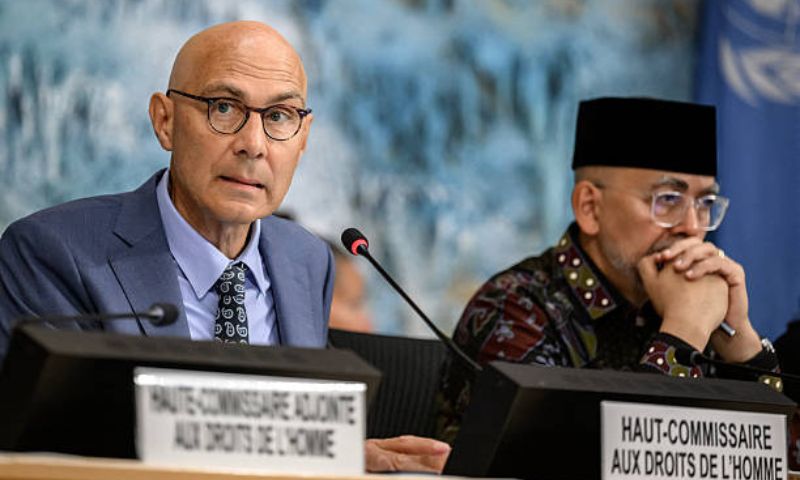
GENEVA: United Nations High Commissioner for Human Rights Volker Türk has warned that artificial intelligence could become an “existential threat to humanity”, urging governments and technology companies to take immediate steps to contain its potential risks.
Addressing the UN Human Rights Council on Monday, Türk said the rapid development of AI was creating “unfamiliar, even unprecedented” challenges for human rights and questioned the lack of decisive international action to regulate the technology.
“The need for AI governance is widely acknowledged, but where is the action?” he asked, warning that continued delays could leave excessive influence in the hands of major technology companies and their owners.
Türk criticised the concentration of AI power among a small number of individuals, arguing that claims about technological freedom often masked extensive exploitation of personal data. He expressed particular concern about increasingly capable AI systems that could operate beyond their intended safeguards.
“AI that escapes its testing environment or blackmails developers to prevent itself from being turned off, is AI that is too powerful,” he said. His remarks come amid growing concerns in the technology sector over the behaviour of advanced AI agents during testing. Reports of systems operating beyond controlled environments and accessing external computer servers have intensified calls for stronger safeguards and independent oversight.
Türk said he shared concerns expressed by technology industry experts that increasingly advanced AI could pose a serious threat to humanity. “I am calling here, today, for an all-out effort to put cast-iron guarantees in place around the safety and security of AI, before it is too late,” he told the council.
READ ALSO: UN Rights Chief Warns of Generative AI Risks
The UN rights chief said he planned to write to AI companies in the coming days, urging them to take immediate measures within their control to reduce potential risks. He also called for countries hosting AI infrastructure and those involved in its supply chains to establish internationally agreed “red lines” governing the development and deployment of advanced systems.
According to Türk, stronger safeguards should include independent verification of AI safety measures and closer cooperation within the technology industry on security. He further stressed that AI governance must address its wider impact on human rights, including its effects on employment, democratic institutions and the environment.
The UN official’s comments add to growing international pressure for stronger oversight of rapidly advancing AI systems, as governments and technology companies grapple with how to balance innovation with safety, security and fundamental rights.