Key points
- Nearly 5,000 sailors and Marines get shore leave
- Carrier resumes operations in US 7th Fleet area
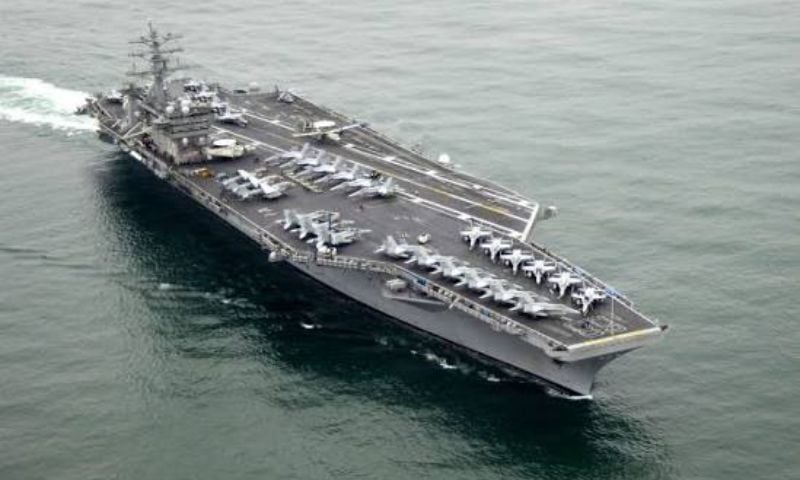
ISLAMABAD: The US nuclear-powered aircraft carrier USS Abraham Lincoln has departed Thailand after a five-day port visit, providing nearly 5,000 sailors and Marines a rare break following an extended deployment in the Middle East.
The Nimitz-class carrier, flagship of Carrier Strike Group 3, and accompanying vessels left Thailand on Sunday after scheduled visits to the Si Racha and Pattaya areas, according to the US Navy.
The carrier arrived at Laem Chabang port on September 2, marking its first full port call after spending more than 260 consecutive days at sea.
The wider deployment has lasted about nine months and included operations linked to the war with Iran.
Rare respite after extended deployment
The port call provided the crew with an opportunity to rest and recharge after an unusually prolonged deployment.
Sailors and Marines travelled to Pattaya, a major Thai resort city about 150 kilometres southeast of Bangkok, during their shore leave.
US Navy Captain Dan Keeler, commanding officer of the Abraham Lincoln, thanked Thailand for its hospitality and described the Pattaya Visit as an important opportunity for the crew to recover after its lengthy deployment.
The deployment has drawn attention for its exceptional length and the operational demands placed on the crew.
READ ALSO: US Aircraft Carrier Heads Towards Israel Amid Iran Tensions
US naval deployments generally last around six to nine months, but they can be extended significantly during periods of conflict.
The Abraham Lincoln was accompanied by other vessels from its carrier strike group, including the guided-missile destroyer USS Frank E. Petersen Jr. and cruiser USS Robert Smalls, which also made port visits in Thailand.
Boost for Thailand’s tourism sector
The arrival of thousands of American military personnel also provided a temporary boost to businesses in Pattaya during Thailand’s tourism low season.
Pattaya Mayor Poramase Ngampiches estimated that US personnel spent as much as 100 million baht, or about $3 million, during the five-day visit.
Thai authorities had increased security in anticipation of the arrival, but local police said the port call ended largely without major incidents.
The visit also underscored the longstanding US-Thailand defence relationship. Thailand is the United States’ only treaty ally in mainland Southeast Asia, and Washington has continued to emphasise military cooperation with Bangkok as part of its broader Indo-Pacific strategy.
Carrier resumes regional mission
Following its departure, the Abraham Lincoln Carrier Strike Group is expected to continue routine operations in the US 7th Fleet area of operations.
The US Navy said the visit to Thailand and the strike group’s continuing regional operations reflected Washington’s long-term commitment to its allies and partners in the Indo-Pacific.
The carrier’s departure indicates that the United States maintains a significant naval presence across the region, seeking to strengthen alliances, deter potential aggression and preserve freedom of navigation in strategically important waters.
The Lincoln left San Diego in November 2025 and was subsequently diverted from its planned Indo-Pacific mission to the Middle East.
It spent almost seven months supporting US operations there before moving into the Indian Ocean and eventually reaching Thailand.
By the time it docked at Laem Chabang, the carrier had completed 286 days of deployment and more than 260 consecutive days without a full port call.
The US-Israeli war against Iran began in February after Washington and Israel launched attacks on Iranian targets, triggering a wider conflict that drew US naval forces deeper into Middle Eastern operations.
The war subsequently expanded to include attacks involving Iranian missiles, drones and maritime forces, with the strategically vital Strait of Hormuz becoming a major focus of the confrontation.
The conflict also disrupted normal US naval supply and rotation arrangements, extending the Abraham Lincoln’s mission far beyond its original schedule.