NEW DELHI: India’s internet revolution has produced more than a billion broadband subscribers, and a rapidly expanding data-centre industry, but the physical infrastructure connecting the country to the global internet remains dangerously concentrated.
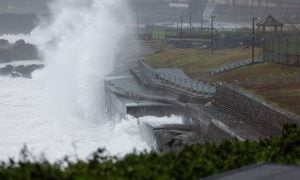
Around Mumbai’s Versova coast, at least 13 of India’s 18 intercontinental submarine cables come ashore within a six-kilometre stretch. Together, they carry as much as 95% of the country’s international bandwidth towards Europe, Africa and West Asia.
Experts warn that simultaneous damage to several cables — whether accidental or deliberate — could severely disrupt connectivity.
Traffic could be rerouted through other landing points, including Chennai and Kochi, preventing a complete blackout, but slower connections could still hurt banks, stock exchanges, cloud services, government networks and AI infrastructure.
India’s Digital Growth At Risk
The vulnerability is particularly striking given India’s enormous appetite for data. The country accounts for roughly 20% of global data consumption but is connected to only around 3% of the world’s submarine cables.
Ageing infrastructure adds another concern. A recent Takshashila Institution paper found that 11 of India’s 18 international cables are more than 20 years old, approaching the nominal 25-year operating lifespan of submarine cable systems.
Cable faults themselves are common globally, with an estimated 150-200 occurring annually due largely to fishing activity, ship anchors, natural hazards and equipment failures.
ALSO READ: Indian Fighter Pilot Abhinandan Shot Down by Pakistan Joins Commercial Airline
India also lacks its own subsea cable-repair ships. Foreign vessels must travel from locations such as Dubai or Singapore and secure permission to operate in Indian waters, potentially adding weeks to repairs.
Bureaucracy further complicates expansion. Industry representatives say around 50 clearances involving at least 16 government bodies can be required to establish a cable landing station.
Meanwhile, India’s data-centre capacity has surged from 375MW in 2020 to about 1,575MW, while AI is driving even greater demand for high-speed connectivity.
India is responding by commissioning four new submarine cable systems, with another three planned. Experts, however, argue that the country needs more geographically diverse landing stations, faster approvals, protected cable routes and domestic repair capacity.
India’s internet boom, therefore, faces a paradox: digital demand is racing ahead, but the infrastructure carrying it remains surprisingly vulnerable.