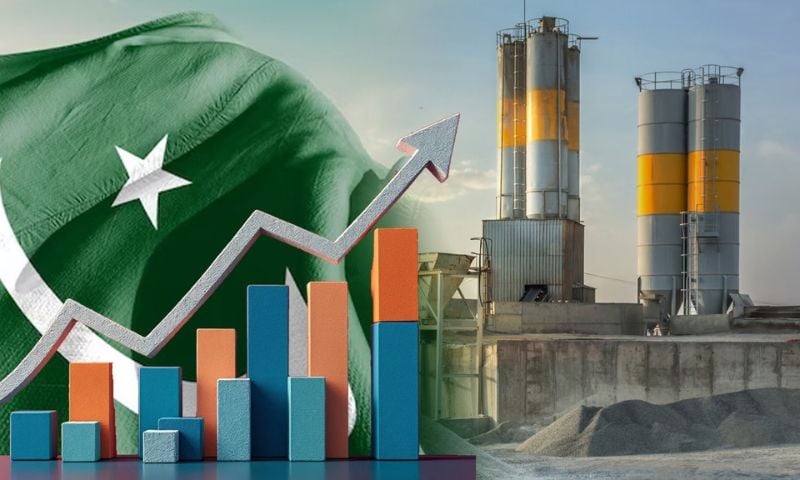
ISLAMABAD: Pakistan’s large-scale manufacturing (LSM) sector is experiencing a remarkable resurgence, with the Quantum Index of Manufacturing (QIM) climbing to 121.65 during July to May of fiscal year 2026, up from 115.02 in the same period last year, a clear signal that the country’s industrial engine is firing on all cylinders.
The LSM sector recorded an impressive 5.77% year-on-year growth, with improved performance across multiple manufacturing industries, according to official data released on Saturday.
The surge reflects the tangible benefits of policy support and investment facilitation under the Special Investment Facilitation Council (SIFC), which has prioritised industrial revival as a cornerstone of Pakistan’s economic recovery strategy.
The growth comes at a critical juncture for Pakistan’s economy, which has been grappling with macroeconomic challenges. The manufacturing sector’s robust performance offers a glimmer of hope, suggesting that targeted policy interventions and investment incentives are beginning to bear fruit.
Pakistan’s large-scale manufacturing sector is gaining momentum!
The Quantum Index of Manufacturing (QIM) rose to 121.65 during July to May of fiscal year 2026, up from 115.02 in the same period last year.
LSM sector recorded 5.77% year-on-year growth, with improved… pic.twitter.com/BH1RyXfafz
— SIFC | Special Investment Facilitation Council🇵🇰 (@sifcpakistan) July 24, 2026
SIFC-led policy support fuels industrial revival
The SIFC, established to streamline investment and accelerate economic growth, has identified large-scale manufacturing as one of its priority sectors. The council’s efforts to remove regulatory bottlenecks, provide incentives for exporters, and attract foreign direct investment appear to be yielding tangible results.
The improved performance across various industrial sectors is continuously enhancing Pakistan’s manufacturing capacity and production. Key industries including textiles, chemicals, food processing, and engineering goods have shown significant improvement, contributing to the overall growth trajectory.
Industrial revival drives exports and economic activity
The manufacturing sector’s resurgence is having a cascading effect on Pakistan’s broader economy. Industrial development is helping to:
- Increase exports– Enhanced manufacturing capacity is enabling Pakistani producers to compete more effectively in international markets
- Enhance productivity– Modernization and efficiency improvements are boosting output per unit of input
- Boost economic activities– The multiplier effect of industrial growth is creating jobs and stimulating demand in allied sectors
As one of SIFC’s priority sectors, industry continues to benefit from policy support and investment facilitation that strengthen manufacturing, enhance Pakistan’s export ecosystem, and contribute to economic growth.
Read Also: Pakistan Seeks Foreign Investment in Energy and Critical Minerals
Sectoral performance highlights
While official data has not yet provided a detailed sector-by-sector breakdown, industry sources indicate that several key sectors have been driving the growth:
- Textiles and garments– Pakistan’s largest export sector has benefited from improved global demand and policy incentives
- Chemicals and fertilizers– Increased domestic production has reduced reliance on imports
- Food processing– Value addition in agricultural products is expanding
- Engineering goods– Local manufacturing of machinery and equipment is gaining traction
- Pharmaceuticals– Enhanced production capacity is meeting growing domestic demand
Pakistan’s industrial sector: A new era of opportunity
Pakistan’s industrial sector continues to create new opportunities for investment, with the manufacturing sector’s activities improving due to the support of the Special Investment Facilitation Council.
The government has been actively working to create an enabling environment for industrial growth, including:
- Simplified regulatory frameworks
- Competitive energy tariffs for export-oriented industries
- Enhanced access to financing for industrial projects
- Infrastructure development in industrial zones
Read Also: Pakistan’s Business Confidence Rebounds, Outlook Strengthens: Gallup
Economic implications
The 5.77% growth in large-scale manufacturing carries significant implications for Pakistan’s economic trajectory:
Boost to GDP: Manufacturing contributes approximately 12-13% to Pakistan’s GDP, and the sector’s growth is expected to make a meaningful contribution to overall economic expansion.
Employment generation: Industrial growth is creating jobs, particularly in urban centers where manufacturing hubs are concentrated.
Export competitiveness: Enhanced manufacturing capacity is enabling Pakistani producers to diversify exports and reduce the country’s reliance on a narrow range of export products.
Import substitution: Increased domestic production in key sectors is helping reduce Pakistan’s import bill, a critical factor in managing the country’s balance of payments.