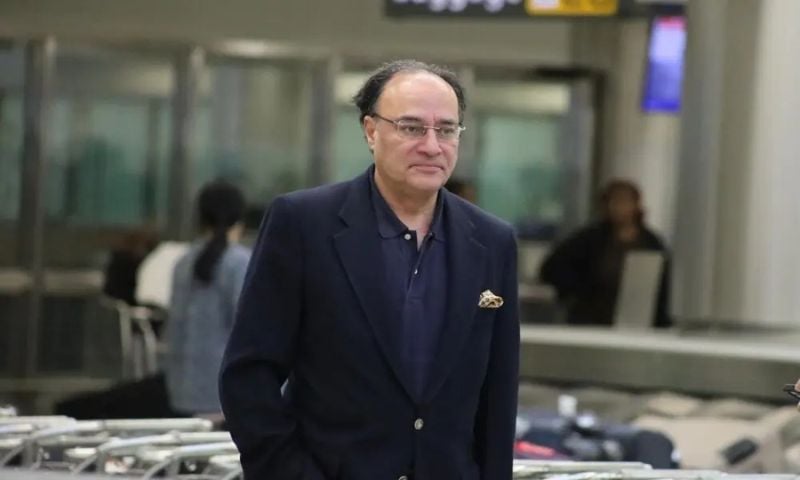
ISLAMABAD: Pakistan’s Finance Minister Muhammad Aurangzeb held a series of meetings with senior International Monetary Fund officials in Washington on Wednesday, reviewing the country’s macroeconomic performance and progress under its IMF programmes
Aurangzeb met First Deputy Managing Director Dan Katz, Deputy Managing Director Nigel Clarke, Middle East and Central Asia Department Director Jihad Azour, and Pakistan Mission Chief Iva Petrova during his visit to the US capital.
The discussions focused on Pakistan’s performance under the Extended Fund Facility (EFF) and the Resilience and Sustainability Facility (RSF), as well as the overall reform agenda supported, according to the Finance Ministry.
The finance minister highlighted improvements in Pakistan’s fiscal and external accounts.
The country had achieved its revenue targets, strengthened foreign exchange reserves, recorded an all-time high in workers’ remittances and improved its current account position, he added.
The two sides also reviewed progress on tax and energy sector reforms, privatisation efforts, tariff rationalisation, debt management and plans to diversify financing sources.
Pakistan’s planned return to international capital markets also featured prominently in the discussions.
Pakistan-IMF huddle covers long-term priorities
Beyond macroeconomic issues, the meetings covered longer-term development priorities, including human capital development, women’s economic participation, demographic trends, technology-driven growth and a private-sector-led, export-oriented economic model.
Aurangzeb thanked the Fund officials for acknowledging Pakistan’s ownership of the reform programme. The Minister reaffirmed the government’s commitment to maintaining fiscal discipline, policy continuity and structural reforms aimed at achieving sustainable long-term growth.
Pakistan is currently implementing a 37-month Fund programme under the Extended Fund Facility, complemented by the climate-focused Resilience and Sustainability Facility.
The IMF has repeatedly cited Islamabad’s progress in stabilising the economy through fiscal consolidation and structural reforms since the programme began in 2024.