ISLAMABAD: For millions of mothers in Pakistan, the fear of losing a newborn to a preventable disease has been a haunting reality for decades. But today, that fear has receded significantly.
Following a comprehensive field assessment in partnership with UNICEF, the World Health Organisation (WHO) has pre-validated the elimination of maternal and neonatal tetanus (MNT) in Khyber Pakhtunkhwa province, bringing Pakistan to the brink of a historic public health milestone.
Around 94% of Pakistan’s population, approximately 250 million people, now live in areas where the spread of neonatal tetanus remains within controlled limits, defined as less than one case per 1,000 live births.
94% of Pakistan’s population now lives in areas where neonatal tetanus remains under controlled limits.
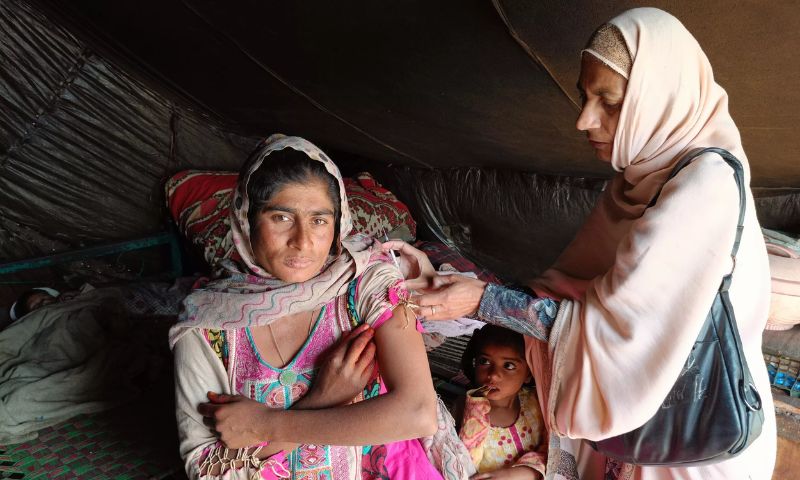
In 2025, UNICEF and @WHOPakistan supported vaccination of 5.4 million pregnant women and women of childbearing age across Pakistan.
Press Release: https://t.co/KPh8DzxOAD
— UNICEF Pakistan (@UNICEF_Pakistan) June 19, 2026
This achievement follows similar successes in Gilgit-Baltistan (July 2025), Islamabad Capital Territory and Pakistan-Administered Kashmir (March 2025), Sindh (December 2024), and Punjab (2016). With Khyber Pakhtunkhwa now crossing the elimination threshold, Balochistan stands as the only province still working toward this life-saving goal.
The pre-validation assessment, requested by the Khyber Pakhtunkhwa government, was carried out through a rigorous review led by WHO and UNICEF. The process combined field visits to high-risk districts with low immunization coverage, including Dera Ismail Khan, Battagram, and Kohistan, with a desk review of three years of surveillance data and a quality audit of vaccination campaigns in South Waziristan, where on-ground access was not feasible.
This milestone was made possible through transformative strategies spearheaded by national and provincial governments in partnership with UNICEF and WHO. These efforts encompassed improved immunization for pregnant women, enhanced surveillance, community engagement, safer delivery practices, skilled birth attendance, proper cord care, and better access to maternal and child health services.
At the forefront of this drive were around 12,000 Lady Health Workers, supported by thousands of vaccinators and frontline staff, who reached women in even the most remote and underserved corners of the province.
Congratulations,@HealthKPGovt for achieving @WHO pre-validation for maternal and neonatal tetanus (MNT) elimination after a field review in partnership with @UNICEF.
Nearly 94% of Pakistan’s population now live in MNT-safe areas.
Our goal: leave no child or mother behind. pic.twitter.com/IWjDCFkVqO— WHO Pakistan (@WHOPakistan) June 19, 2026
In 2025 alone, WHO and UNICEF supported the vaccination of 5.4 million pregnant women and women of childbearing age across Pakistan, including more than 870,000 in Khyber Pakhtunkhwa.
“This achievement shows the commitment of Pakistan’s authorities, its health workforce, and communities to saving lives and protecting every mother and child from a preventable disease,” said WHO Representative in Pakistan Dr. Luo Dapeng. “To achieve prosperity and sustainable development, every country needs healthy mothers and newborns. WHO will stand by Pakistan and its partners to achieve the elimination of neonatal tetanus across the country and protect every family, no matter where they live.”
Despite this progress, Pakistan remains among the eight countries worldwide yet to eliminate MNT. While Khyber Pakhtunkhwa’s success marks a major milestone, sustained efforts are essential to maintain the hard-fought gains.
“Pakistan is one step closer to protecting every mother and newborn from maternal and neonatal tetanus,” said Pernille Ironside, UNICEF Representative in Pakistan. “Khyber Pakhtunkhwa’s progress reflects the determination of women to protect their own health and give their babies the best start in life, supported by dedicated frontline health workers and stronger health services.