
Key Points
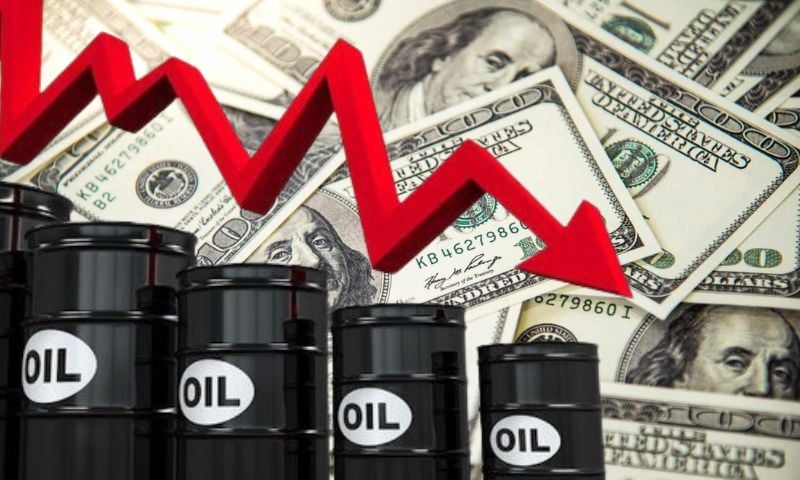
- Brent crude has plunged about 37% from its war-era peak near $126 a barrel
- Markets are pricing in the return of significant Iranian oil exports following the US-Iran agreement
- Benchmark crude prices have fallen to their lowest levels in three months amid easing geopolitical risk
ISLAMABAD: Global oil markets extended a sharp decline on Wednesday, with Brent crude falling below $80 a barrel for the first time in three months as selling accelerated on the expected US-Iran peace agreement.
Traders anticipated that the deal, reportedly scheduled for Friday, would increase prospects of the Iranian crude return to international markets and restore normal shipping through the Strait of Hormuz.
Brent crude was trading around $78.90 per barrel, while US West Texas Intermediate (WTI) hovered near $76 per barrel after suffering a roughly 5 per cent single-day drop in the previous session.
The decline has pushed both benchmarks to their lowest levels since March.
The latest sell-off marks a dramatic reversal from the height of the Middle East conflict, when Brent crude surged to around $126 per barrel, and WTI climbed above $111 a barrel.
The oil touched its peaks amid fears that prolonged disruptions in the Strait of Hormuz could choke off a significant portion of global energy supplies.
Based on current prices, Brent has lost roughly $47 per barrel, or about 37 per cent, from its wartime peak.
Unlike a typical consolidation phase, the current market movement reflects a reassessment of global supply expectations.
Traders are rapidly removing the geopolitical risk premium that had been embedded in oil prices during months of conflict and shipping disruptions across the Gulf region.
A key factor behind the decline is the prospect that sanctions on Iranian oil exports could be eased under the emerging agreement between Washington and Tehran.
Market participants believe the return of Iranian barrels could significantly improve global supply balances at a time when major consuming economies are showing mixed demand signals.
The anticipated reopening and normalisation of traffic through the Strait of Hormuz has further strengthened bearish sentiment.
The waterway handles a substantial share of global oil trade, and fears over its disruption had been among the principal drivers of the earlier price surge.
With those concerns easing, traders are increasingly betting on smoother energy flows from the Gulf.
Analysts note that the market is now focused less on conflict-related supply risks and more on the possibility of additional barrels reaching the market.
The combination of prospective Iranian exports, improved shipping conditions and reduced geopolitical uncertainty has created one of the sharpest downward adjustments in oil prices seen this year.
The decline is being welcomed by major oil-importing economies, particularly across Asia.
In import-dependent countries, lower energy costs could help ease inflationary pressures and reduce import bills.
Financial markets in several countries have already reacted positively to the prospect of cheaper crude.
Despite the sharp fall, analysts caution that volatility is likely to remain elevated.
Much depends on how quickly any sanctions relief is implemented, the pace at which Iranian exports return to global markets, and whether the agreement succeeds in delivering lasting stability in the Gulf region.