


TEHRAN, Iran: Iran said on Tuesday that a US naval blockade on its ports had been lifted following a Pakistan-mediated agreement between Washington and Tehran to end months of hostilities, as oil prices fell on expectations of improved maritime flows through the Strait of Hormuz.
Iranian Deputy Foreign Minister Majid Takht-Ravanchi said the blockade had been removed ahead of a planned formal signing of the agreement on Friday.
“The lifting of the blockade was something we had emphasised from the outset. It has now begun, and the blockade has been lifted prior to the formal signing,” Takht-Ravanchi said.
Political Deputy @TakhtRavanchi to reporters: “The lifting of Iran’s naval blockade has already begun prior to the official signing of the 14-clause MoU. The formal signing by Dr. Qalibaf and US VP JD Vance will take place this Friday, followed by immediate negotiations.” (1/2) pic.twitter.com/o5f0UAzLLX
— Government of the Islamic Republic of Iran (@Iran_GOV) June 16, 2026
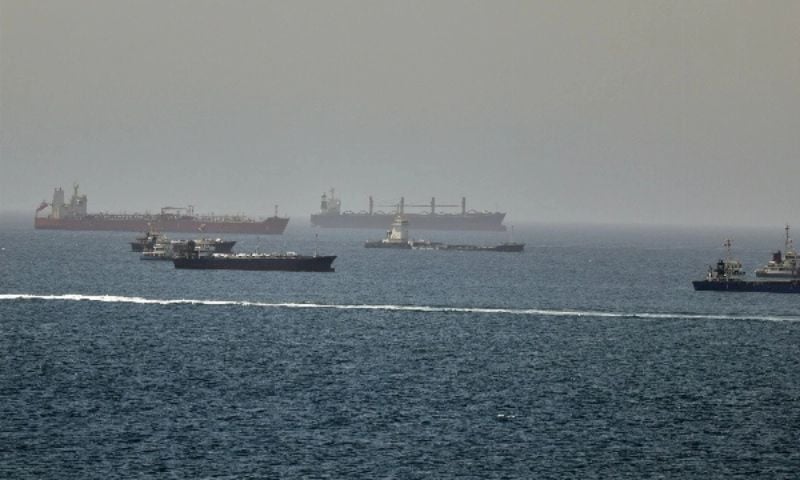
Meanwhile, Iranian media reported that the first Iranian ships crossed the area of the US naval blockade without obstruction after a memorandum of understanding was reached to end the war.
The semi-official Fars News Agency said at least three Iranian oil tankers and two cargo ships carrying essential goods had crossed the area without obstruction.
The news agency reported that a large crude carrier, along with another vessel used for transporting livestock, had moved from open waters towards Iranian ports.
Another tanker carrying oil had also crossed the Gulf of Oman towards its designated export route, according to Fars, which did not provide further operational details.
Pakistan’s diplomatic efforts
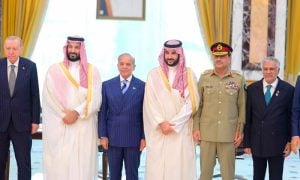
Pakistan has played a key mediating role in facilitating the agreement between Washington and Tehran.
Pakistan’s Prime Minister Shehbaz Sharif announced on Monday that the United States and Iran had reached an agreement after extensive negotiations.
He said both sides had agreed to an “immediate and permanent end” to military operations across all fronts, including in Lebanon.
The agreement is scheduled to be formally signed in Switzerland on Friday.
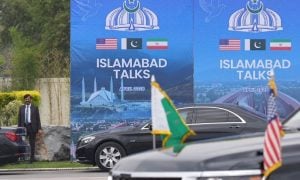
Pakistan will host the signing ceremony of the memorandum of understanding between the US and Iran.
After the signing of the peace deal, second phase of the negotiations to resolve the remaining issues between the US and Iran will commence.
Iran to respect international law regarding Hormuz
Iran’s Foreign Minister Abbas Araghchi and Oman’s Foreign Minister Badr bin Hamad Albusaidi also discussed maritime security in a phone call, according to the Oman News Agency.
The agency said both sides reaffirmed their commitment to international law on safe and free navigation through the Strait of Hormuz.
معالي السّيد وزير الخارجية ونظيره الإيراني يؤكدان خلال اتصالٍ هاتفيّ الحرص المشترك على علاقات التعاون بين البلدين الجارين وتطويرها في مختلف المجالات، انطلاقًا من مبادئ حسن الجوار والروابط التاريخية والثقافية التي تجمع دول وشعوب المنطقة.#العُمانية
— وكالة الأنباء العمانية (@OmanNewsAgency) June 16, 2026
“They renewed their countries’ commitment to the rules of international law regarding the safe and free passage of maritime navigation through the Strait of Hormuz,” the report said.
It added that the ministers expressed hope for “serious and diligent efforts” in the next phase to ensure a stable diplomatic process and regional security.
Trump says Hormuz will fully reopen on Friday
US President Donald Trump said on Tuesday that the Strait of Hormuz would be fully open by Friday.
Speaking to reporters alongside United Arab Emirates President Sheikh Mohamed bin Zayed Al-Nahyan, Trump said shipping activity was already resuming.
“The ships are starting to move now, we’re going to have it fully open by Friday,” Trump said. “Oil is starting to go and the prices are coming down rapidly.”
He reiterated that preventing Iran from obtaining a nuclear weapon remained the central objective of the agreement.
Oil prices fall on supply optimism
Global oil prices fell more than 2 percent on Tuesday to their lowest levels in about three months, as markets reacted to expectations of improved supply flows through the Strait of Hormuz.
Brent crude futures fell $2.02, or 2.4 per cent, to $81.15 a barrel by 1059 GMT, after touching $80.89, the lowest since March 4.
US West Texas Intermediate (WTI) dropped $2.22, or 2.8 per cent, to $78.53 a barrel, after hitting $78.27, its lowest level since March 10.
Traders said sentiment was driven by optimism that a US-Iran understanding could reduce risks to maritime energy routes through the strategic waterway.