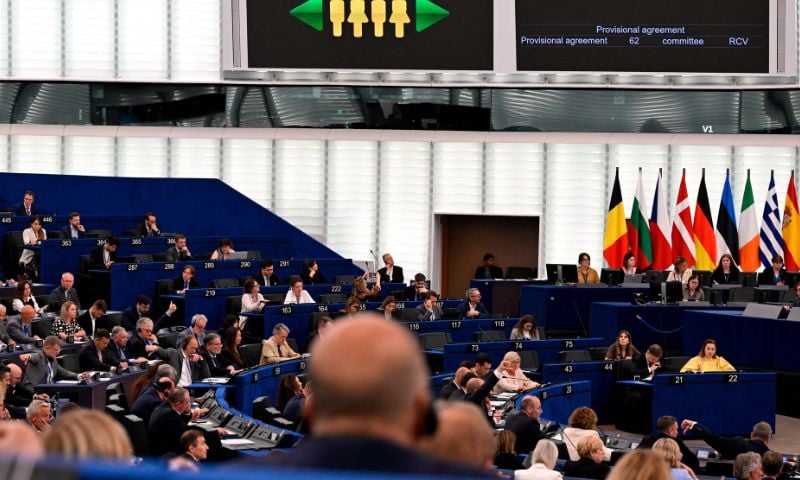
STRASBOURG, France: The European Parliament on Tuesday gave final approval to a tariff agreement with the United States, clearing the last hurdle for the deal as Brussels seeks to stabilise trade relations with Washington.
The vote in Strasbourg marks a significant step towards implementing the agreement reached between the European Union and the United States in July last year following a wave of tariffs imposed by US President Donald Trump.
Under the agreement, most EU exports to the United States will face tariffs of 15 percent, while the bloc committed to eliminating tariffs on US industrial goods.
The deal had already been endorsed by EU member states. Parliament’s approval was the final political step required before implementation.
The agreement also helps the EU avoid the risk of additional US tariffs on European vehicles. Trump had warned that failure to ratify the deal before a July 4 deadline could trigger new duties on the sector.
According to the voting results, around 440 lawmakers supported the agreement, while 151 voted against and 50 abstained.
Only procedural steps remain before the agreement enters into force. These include a final approval by EU member states, expected in the coming days, and publication in the EU’s official journal.
European Commission President Ursula von der Leyen welcomed the parliamentary vote.
“With this milestone, we are days away from fulfilling our commitment to remove tariffs on imports of US industrial goods,” von der Leyen said on social media.
“With full implementation on both sides, our agreement will deliver even more benefits for citizens and businesses,” she added.
The agreement emerged after Trump returned to the White House last year and introduced a series of tariffs targeting imports of steel, aluminium and automobiles.
Seeking to reduce trade tensions, von der Leyen pursued negotiations with Washington to secure lower tariff rates and preserve economic ties between the two sides.
The European Union and the United States maintain one of the world’s largest trading relationships, valued at approximately $2 trillion annually.
Despite reaching the agreement last year, Brussels delayed implementation of some commitments amid concerns over Trump’s threats to seize Greenland and a US Supreme Court ruling that invalidated several of his tariff measures.