Key Points
- GDP grows 3.7 per cent to $452 billion from $408 billion
- Per capita income improves to $1,901, and inflation drops to 6.7 per cent
- Fiscal deficit narrows, and primary surplus strengthens
- Rising remittances to $33.9 billion strengthen the central bank-held reserves at $17.2 billion
- Industrial growth hits 6.1 per cent, led by broad-based recovery in manufacturing.
- Reforms yield with rising IT exports, higher investment, and over 39,000 new firms registered
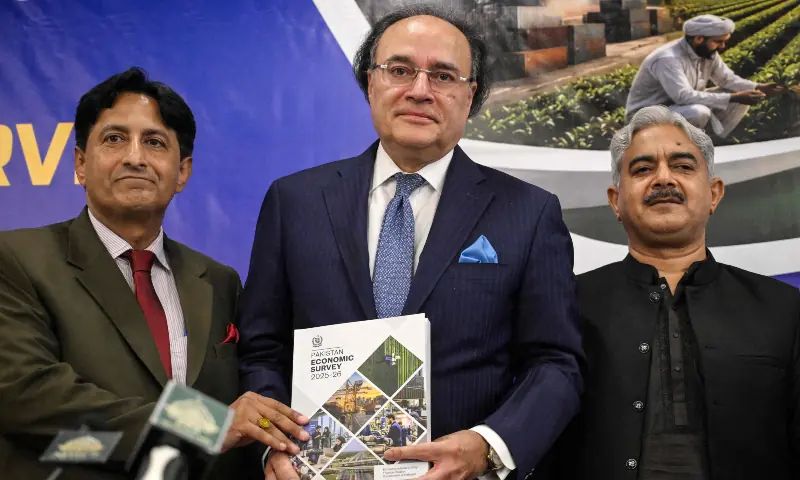
ISLAMABAD: Pakistan’s economy grew 3.7 per cent in fiscal year 2025–26, reaching a record $452 billion, according to the Economic Survey released on Thursday ahead of the federal budget.
Launching the Survey, Finance Minister Muhammad Aurangzeb said the data reflects a gradual shift from stabilisation toward recovery, supported by easing inflation, stronger external inflows, and improving fiscal indicators.
Pakistan’s annual Economic Survey is an official performance report on the economy based on the first nine-month figures, toeing the multi-year data compiled by the advisers’ wing of the Finance Ministry.
The Minister, with his colleagues from Planning Ahsan Iqbal, Information Ataullah Tarar and the Minister of State for Finance Bilal Azhar, presented the Economic Survey 2025–26 to a jam-packed presser.
It revealed a broad-based economic improvement across agriculture, industry, services, external sector stability, investment flows, and structural reforms, alongside emerging strength in digital exports and capital market participation.
The Minister insisted that the economy performed well compared to regional peers in handling energy shocks and geopolitical tensions, over the Iran war and consequent disruptions in the Strait of Hormuz.
Overall economic growth
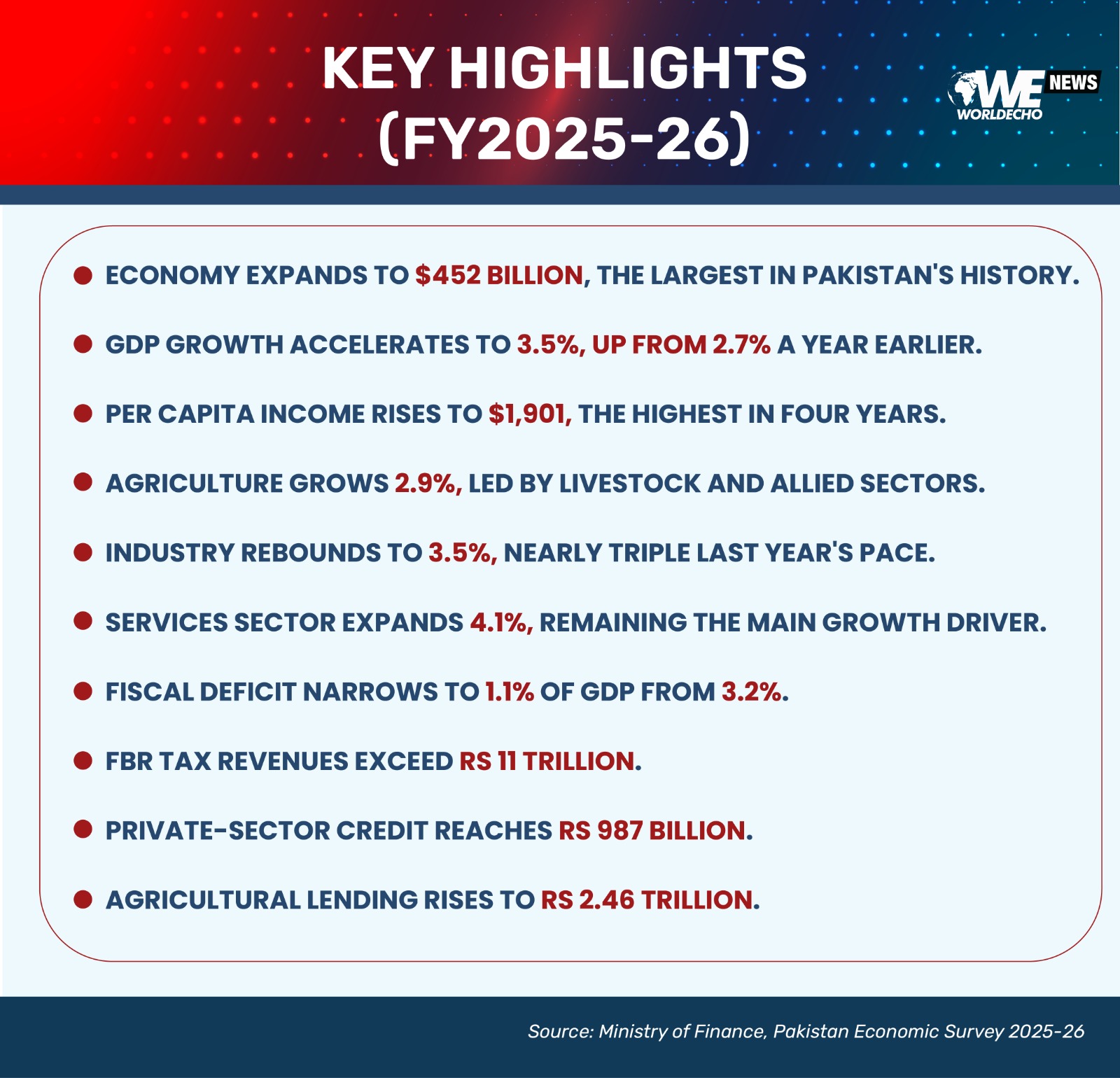
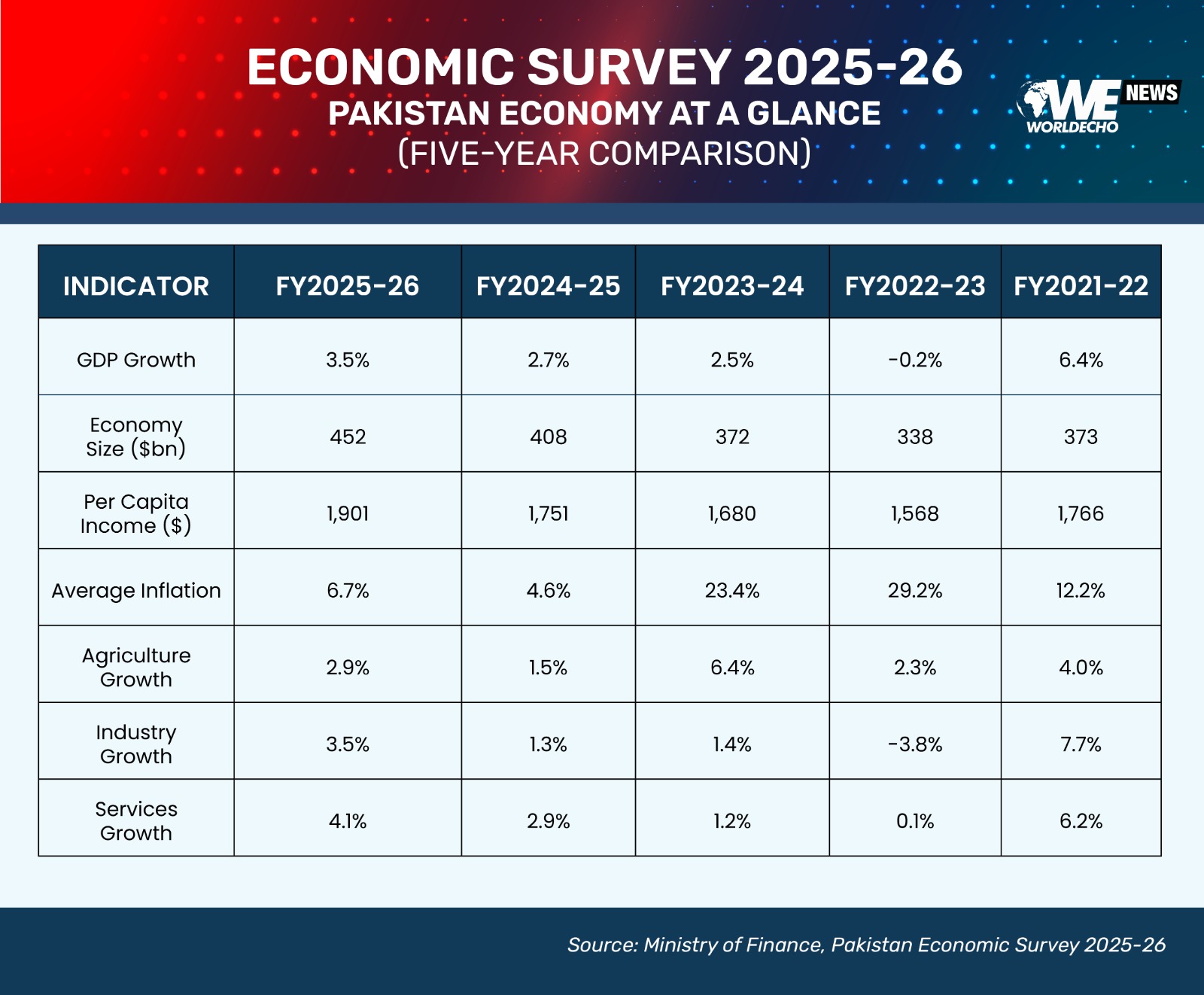
GDP growth rose to 3.7 per cent, compared with 2.7 per cent in the previous fiscal year. The economy expanded to $452 billion, while per capita income increased to $1,901.
The minister said the performance signals a continuation of recovery following a period of macroeconomic stabilisation.
Agriculture sector
Agriculture expanded by 2.89 per cent, supported mainly by livestock and allied activities. Despite climate-related pressures, the sector maintained positive growth through improved productivity in key areas. Agriculture credit also grew to Rs 2.46 trillion.
Industry and manufacturing
Industrial output grew by 3.51%, reflecting recovery across manufacturing and construction-linked activity.
Large-scale manufacturing recorded 6.1% growth, the highest in four years, with 16 of 22 subsectors posting expansion.
Services sector
The services sector remained the main driver of growth, expanding 4.09 per cent. Finance, trade, transport, and digital services contributed strongly, reflecting a continued structural shift toward services-led expansion.
Inflation trends
Inflation eased sharply to an average of 6.7 per cent, compared with 23.4 per cent, in FY2023–24. The decline was driven by tighter monetary policy, improved supply conditions, and relative global price stability.
Fiscal Performance
Fiscal indicators strengthened, with the fiscal deficit narrowing to 0.7 per cent of GDP during July–March and a primary surplus of 3.2 per cent of GDP.
Officials attributed the improvement to stronger revenue mobilisation and controlled public spending.
External sector and remittances
External stability improved significantly during the year. Foreign exchange reserves rose to $17.2 billion by end-May 2026, up 49 per cent year-on-year, with import cover improving to 2.75 months.
Remittances remained a key pillar of external stability, reaching $38.9 billion during July–May, reflecting sustained inflows from overseas Pakistanis. The Finance Minister projected the full-year remittances to $42 billion to $45 billion
IT and digital services exports
IT and digital services exports continued their upward trajectory, supported by expanding freelance activity, software services, and outsourcing demand.
Officials highlighted the sector as one of the fastest-growing export segments, contributing to improved foreign exchange earnings and strengthening Pakistan’s digital economy footprint.
Investment and capital markets
Private sector credit rose to Rs 934 billion during July–March, while agricultural lending reached Rs 2.16 trillion, supporting productive activity in both urban and rural sectors.
Capital market participation expanded significantly, with more than 563,000 equity investors, up 45% year-on-year, reflecting growing confidence in financial markets.
Structural reforms and business activity
Structural reforms continued across taxation, energy, and digital payment systems. More than 39,000 new companies were registered during the year, raising the total to over 297,000, indicating increasing formalisation of the economy.
Social protection
Social protection spending increased, with allocations for the Benazir Income Support Programme raised to Rs 722.5 billion to support vulnerable households.
Private sector credit
Private sector credit rose to Rs 934 billion during July–March, while agricultural lending reached Rs 2.16 trillion, reflecting improved access to finance.
Investor participation in capital markets expanded sharply, with more than 563,000 equity investors, up 45 per cent year-on-year.
Structural reforms continued across taxation, energy, and digital payments. The number of registered companies rose by more than 39,000, taking the total to over 297,000, indicating increasing formalisation of the economy.
Outlook
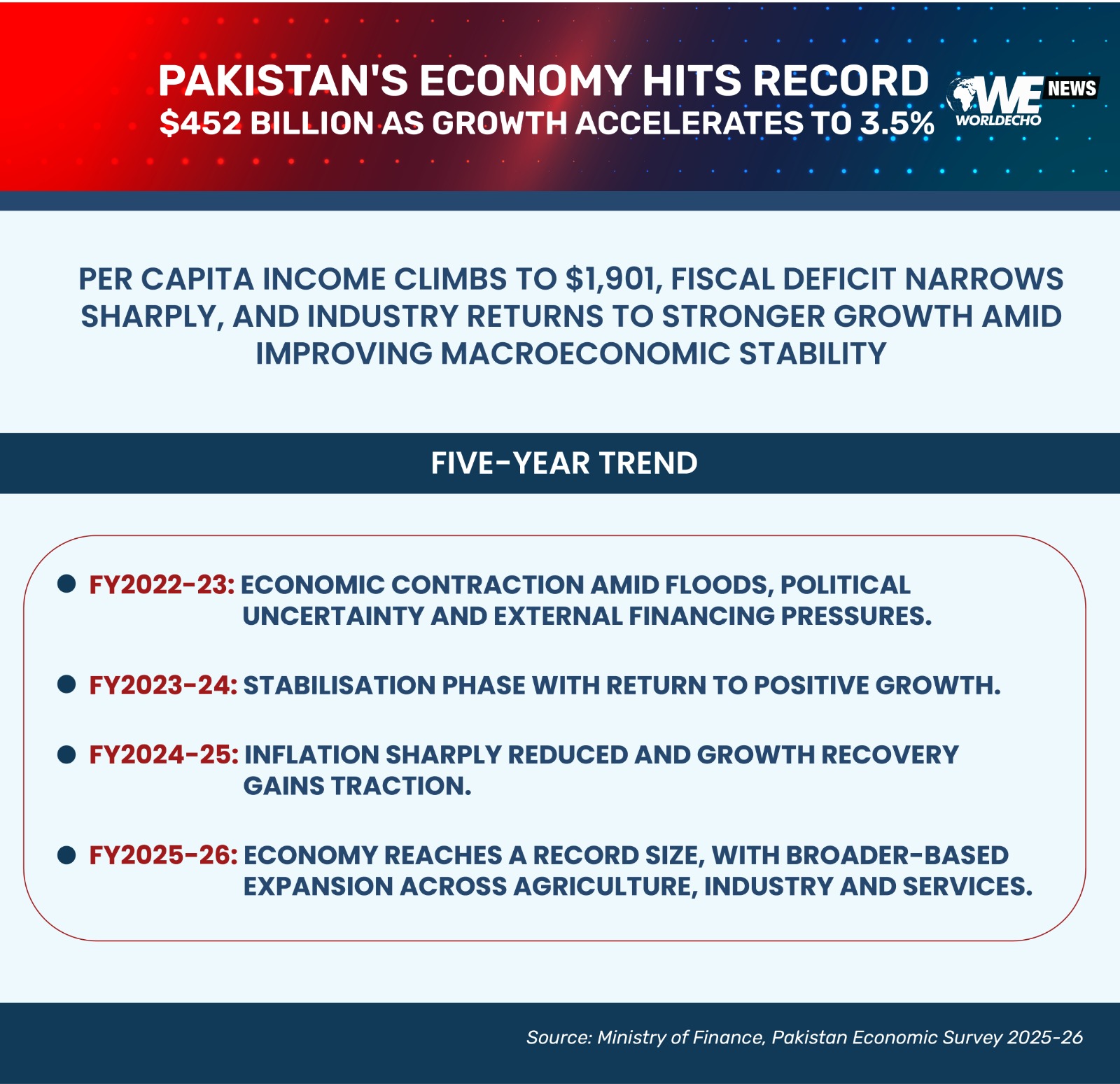
According to the survey document and the official briefings, the economy is on a steady path of recovery supported by improving macroeconomic stability and moving to a growth trajectory.
However, the officials stressed that sustaining growth will depend on continued reforms in taxation, energy efficiency, and state-owned enterprises.
They added that current gains are encouraging but require consistent policy momentum to ensure durable and inclusive long-term growth.
From the horse’s mouth
Finance Minister Muhammad Aurangzeb said the economy had moved beyond crisis management, describing the current phase as a transition toward stability and gradual expansion.
“The direction of the economy is now clearly toward stability and gradual expansion,” Aurangzeb said at the launch in Islamabad.
“We are seeing recovery across agriculture, industry, and services, supported by improved fiscal discipline and external account management.”
He, however, admitted the increase in unemployment despite the economy registering a reasonable growth rate.
Acknowledging a visible downside of the long-term foreign direct investment, the minister highlighted local investment mobilised through privatisation and massive growth in the short-term capital investment
He added that the latest figures reflected “a turning point from crisis management to sustainable growth,” but stressed that continued reforms were necessary to preserve momentum.
“The gains are encouraging, but they are not irreversible,” he said. “Sustained reform momentum is essential for durable economic stability and higher long-term growth.”