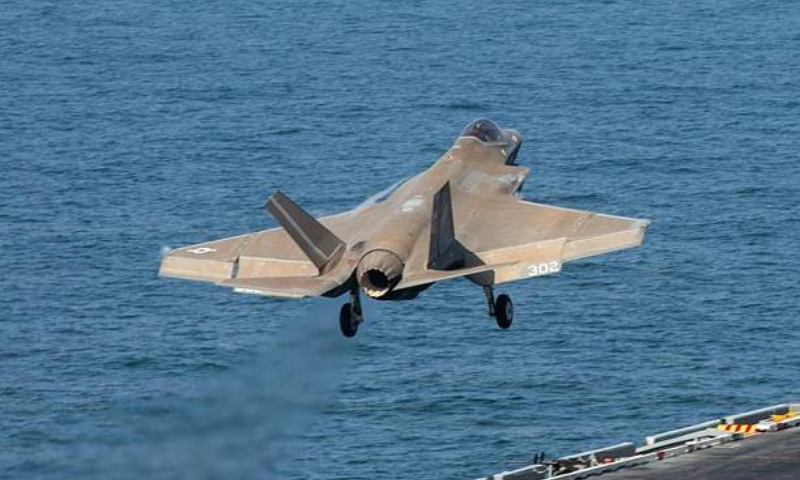



WASHINGTON: The United States military said on Tuesday it had completed a series of strikes against Iranian military facilities near the Strait of Hormuz, in what Washington described as retaliation for the downing of a US Army Apache helicopter.
The operation was carried out under the direction of President Donald Trump in response to what the US military described as Iran’s downing of a US Army Apache attack helicopter a day earlier.
In a statement, CENTCOM said American forces conducted what it characterised as self-defence strikes against Iranian military infrastructure using precision-guided munitions launched from US Air Force and Navy fighter aircraft.
— U.S. Central Command (@CENTCOM) June 10, 2026
The strikes focused on facilities that CENTCOM said were linked to Iran’s military capabilities in the strategically important Strait of Hormuz region, one of the world’s most vital maritime routes for global energy supplies.
“CENTCOM forces struck Iranian air defence, ground control stations, and surveillance radar sites near the Strait of Hormuz with precision munitions from US Air Force and Navy fighter jets,” the command said.
US officials described the military action as a proportionate response to what they called recent attacks against American forces and international commercial shipping operating in regional waters.
The latest operation marks a significant escalation in tensions between Washington and Tehran.
The incident has heightened concerns over the security of maritime traffic through the Gulf and the Strait of Hormuz, a critical chokepoint through which a substantial portion of the world’s oil exports passes.
The US Army Apache helicopter is the second crewed aircraft that Washington has confirmed was shot down by Iran during the war, following the loss of an F-15 fighter plane in April.
CENTCOM said the two crew members were rescued after their helicopter went down near the coast of Oman.
The US strikes came just hours after Trump had said negotiations to end the Middle East war were in their final stages — a claim he has made repeatedly in the past few weeks.
A shaky ceasefire between the warring parties has been in place since April 8, but it faced a major test when Iran and Israel renewed attacks over the weekend, before each side announced a halt.