


KYIV: Ukraine’s sustained drone campaign against Russian-controlled territories is disrupting Moscow’s military supply routes and deepening fuel shortages in occupied Crimea, according to analysts and local authorities.
The campaign has focused on key transport corridors linking southern Russia with occupied Ukrainian territories, including Crimea, which Russia annexed in 2014 and uses as a strategic military hub for operations against Ukraine, reports BBC.
Analysts say recent Ukrainian strikes have targeted roads and infrastructure connecting the Russian city of Rostov with Crimea through the occupied port city of Mariupol, placing growing pressure on Russian logistics networks.
Fuel shortages hit Crimea
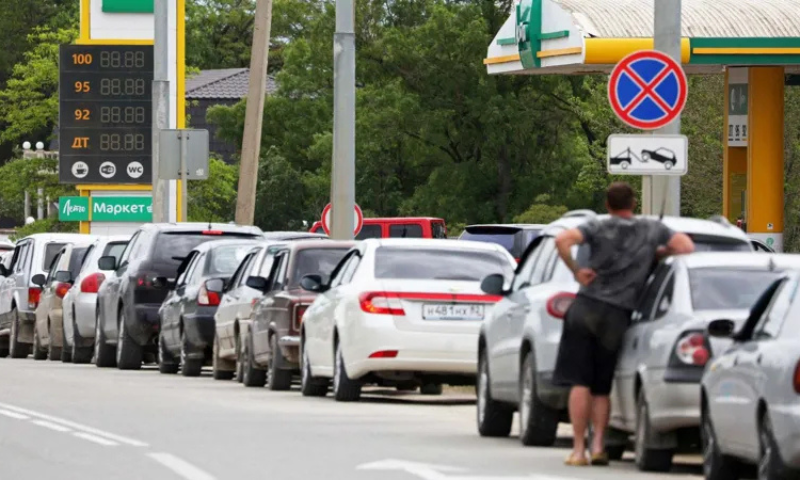
The disruption has contributed to fuel shortages across Crimea, where residents and tourists have reported long queues at petrol stations and restrictions on fuel purchases.
Videos shared on social media showed vehicles lining up for fuel, while local residents reported waiting several hours to fill their tanks. Authorities have introduced limits on fuel sales at many stations as supplies remain constrained.
Sergei Aksyonov, the Kremlin-appointed head of Crimea, acknowledged the shortages earlier this month, saying demand could not be fully met under current conditions.
The shortages have also affected public transport services, with local officials warning that some buses may be unable to operate due to limited fuel supplies.
Logistics routes under pressure
Military analysts say Ukraine has intensified attacks on trucks and fuel tankers travelling along routes supplying Russian-controlled territories in southern Ukraine.
According to French analyst Clément Molin, hundreds of drone strikes have targeted logistics vehicles in recent weeks, including fuel tankers carrying supplies to occupied areas.
A key bridge in northern Crimea was also damaged in a Ukrainian strike, forcing authorities to suspend traffic and further complicating transport links.
The attacks have increased reliance on overland routes after previous Ukrainian operations made maritime transport to Crimea increasingly difficult and raised security concerns around the Kerch Bridge linking the peninsula to mainland Russia.
Energy infrastructure targeted
The pressure on supply lines comes alongside Ukraine’s long-range strikes on Russian oil refineries and fuel depots.
Ukrainian President Volodymyr Zelensky has claimed that a significant portion of Russia’s oil-refining capacity was disabled in recent attacks, although those figures could not be independently verified.
Experts say Ukraine’s strategy has evolved from targeting large refineries to striking local fuel distribution networks, increasing pressure on both military operations and civilian supplies in occupied territories.
Impact on military operations
Some Russian military commentators have suggested the logistical disruptions are affecting military as well as civilian operations.
Analysts note that fuel shortages and transport restrictions could complicate Russia’s ability to move troops and equipment across occupied regions, particularly in southern Ukraine.
Ukraine says disrupting Russian logistics remains a central objective of its drone campaign, which has expanded in recent months and increasingly targeted infrastructure supporting Moscow’s war effort.