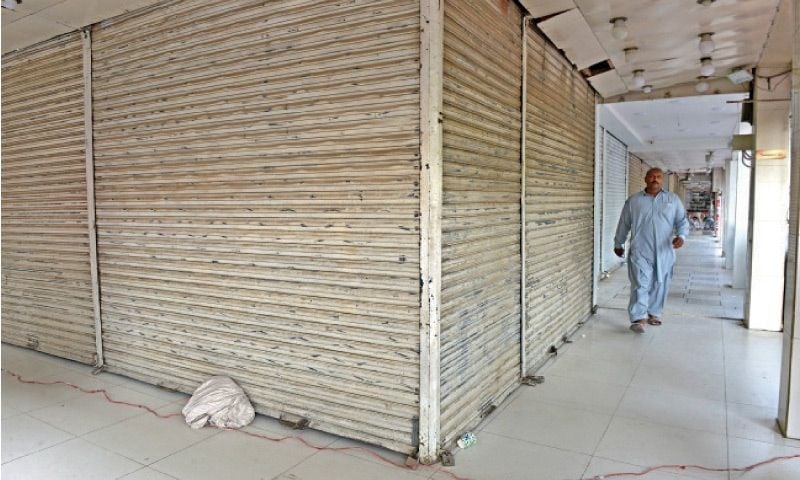
MUZAFFARABAD: Kashmiri traders, retailers, daily wage earners and residents have rejected a fresh protest call by the Jammu Kashmir Joint Awami Action Committee, arguing that repeated shutdowns and demonstrations disrupt business activity, affect livelihoods and create difficulties for ordinary citizens.
The reaction comes ahead of the committee’s planned protest on June 9, with many residents pointing to the implementation of a significant number of demands agreed between the government and the committee in October 2025. According to official implementation records, 24 demands have been completed, while 16 are partially implemented and only a small number remain subject to legal, technical or financial constraints.
Members of the business community and labourers said remaining issues should be resolved through dialogue and institutional mechanisms rather than actions that could affect trade, tourism and daily life across Azad Jammu and Kashmir.
Officials noted that the Joint Awami Action Committee was originally constituted in September 2023 around three core demands: subsidised flour, reduction in electricity tariffs and curtailment of elite privileges.
Officials said the government had shown seriousness in implementing the agreement reached with the committee in October 2025.
The completed measures include withdrawal of 177 FIRs except 15 cases related to deaths, reduction of the cabinet to 20 ministers, reinstatement of suspended employees, review of transport policy, payment of compensation to families of deceased and injured persons, implementation of open merit in educational institutions, health card rollout, wheat subsidy measures, wheat supply initiatives and dues of Mangla Dam affectees.
The government has also abolished the 5-kilowatt load condition for schools and colleges, released protesters detained in Rawalpindi and Islamabad, approved the Local Government Act through the Azad Jammu and Kashmir Legislative Assembly and completed the merger of the Ehtesab Bureau and Anti-Corruption Establishment.
Officials said several other demands were already in process, including water supply schemes, construction of bridges, property rights of Mendor Colony, Mirpur Airport feasibility, improvement of the electricity system, MRI and CT scan facilities and hydel project-related matters.
Government sources noted that despite substantial progress on its original demands, the committee expanded its agenda to a 38-point charter in 2025 and subsequently added eight more demands in May 2026.
According to officials, several of the newer demands relate to constitutional, political, electoral and governance matters that go beyond the movement’s original economic and public service objectives.
Local residents and traders said repeated protest calls and shutdowns create difficulties for ordinary people.
A shopkeeper in Muzaffarabad said markets suffer the most whenever strike calls are issued. “Small businesses cannot survive repeated closures. If most demands have been accepted, then public life should not be disturbed again,” he said.
A daily wage worker said political agitation directly affects labourers who earn only when they work. “When roads and markets are closed, we lose our daily income. Our families suffer,” he said.
A local businessman said the government had already taken several practical steps and remaining matters should be resolved through dialogue rather than street agitation. “Development projects, trade and tourism are affected by uncertainty. Azad Jammu and Kashmir needs stability, not more shutdowns,” he said.
Residents also said public issues should be resolved through institutions instead of confrontation.
Government circles maintain that the committee’s fresh protest call, despite major implementation of agreed demands, raises serious questions about its current direction. Officials argue that the continued addition of new demands and repeated protest calls suggest that the committee’s focus now extends beyond its original three public welfare demands.