


Key Points
- Iranian assets reportedly under review for both future reconstruction and past damages
- US Treasury directs assessment of costs linked to attacks on Gulf allies
- Proposal could further complicate US-Iran diplomatic negotiations
- Pakistani Interior Minister visits Tehran carrying a special message from Pakistan’s leadership amid ongoing regional mediation efforts
WASHINGTON: The United States is considering making Iranian assets available to Gulf allies to support reconstruction and repair efforts following damage attributed to Iran, according to a Reuters report citing a source familiar with the matter.
The report said Washington intends not only to consider Iranian assets for future rebuilding needs but also to examine whether such assets could be used to cover costs arising from previous attacks and destruction.
As part of that effort, US Treasury Secretary Scott Bessent has reportedly directed officials to assess the financial impact of damage already sustained by Gulf partners.
The development comes amid renewed military exchanges between Washington and Tehran, despite ongoing efforts to preserve the ceasefire following months of conflict across the region.
According to the report citing source, the Treasury Department is evaluating options for redirecting Iranian assets towards reconstruction and compensation projects.
It remains unclear which specific assets are under review, and the source did not indicate whether the proposal would be limited to Iranian funds frozen by the United States or extend to other categories of assets.
The proposal emerged one day after Mohsen Rezaei, an adviser to Iran’s supreme leader, stated that any comprehensive peace agreement would require the release of approximately $24 billion in Iranian assets currently held by the United States.
Analysts suggest that any move to redirect Iranian assets could further complicate already delicate negotiations between the two countries. While both sides have been engaged in indirect talks aimed at reducing tensions and ending hostilities, progress has been uneven and punctuated by military confrontations.
Regional tensions escalated again over the weekend. The United States carried out strikes against Iranian coastal radar facilities in Goruk and on Qeshm Island in the strategically important Strait of Hormuz. The action followed the interception of Iranian drones that, according to the US military, posed a threat to international maritime traffic.
The US military later announced that its forces had shot down two additional Iranian one-way attack drones near the Strait of Hormuz after determining that they threatened commercial shipping routes.
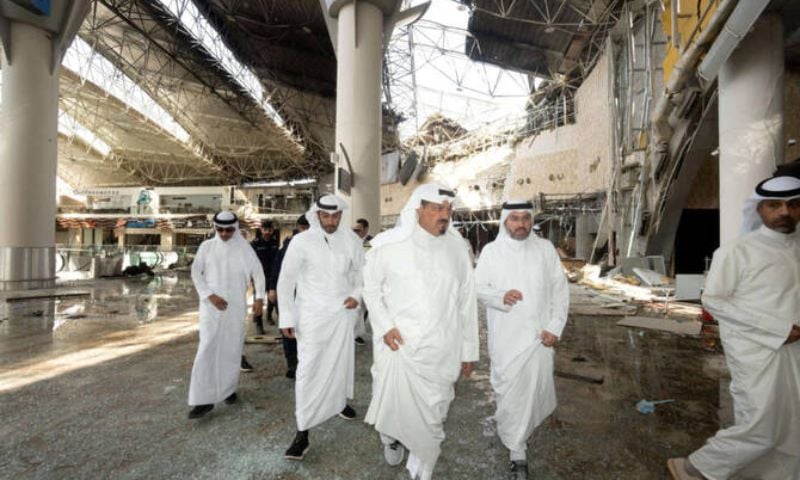
Iran, meanwhile, said it responded by targeting US military facilities in Kuwait and Bahrain. Kuwaiti authorities reported that seven ballistic missiles crossed over populated areas, causing material damage but resulting in no casualties. In Bahrain, emergency sirens were activated and residents were advised to seek shelter.
Iran’s Islamic Revolutionary Guard Corps stated that missile strikes had been launched against American bases in both countries. However, the US military said six missiles were intercepted, while a seventh failed to reach its intended target.
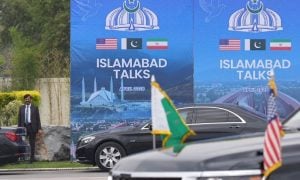
Despite continued military incidents, Washington and Tehran remain engaged in indirect negotiations over a possible interim arrangement that could halt the three-month conflict. More contentious issues, including Iran’s nuclear programme, are expected to be addressed in subsequent talks if a temporary agreement can be secured.
Negotiations have nevertheless encountered significant obstacles. Tehran has sought access to billions of dollars in oil revenues, sanctions relief for crude exports, the lifting of restrictions affecting its ports, and greater leverage over maritime routes through the Strait of Hormuz.
The waterway remains a focal point of international concern. Before the conflict, roughly one-fifth of global oil shipments passed through the strait, making any disruption a matter of global economic significance.
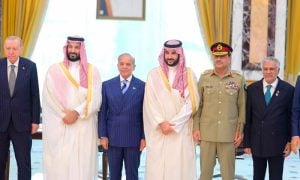
In a parallel diplomatic effort, Pakistani Interior Minister Mohsin Naqvi arrived in Tehran on Saturday carrying what Iranian media described as a special letter from Pakistan’s Prime Minister Shehbaz Sharif and military leadership for Iran’s Supreme Leader, Mojtaba Khamenei.
Iran’s semi-official ISNA news agency reported that Mohsin Naqvi will hold discussions with senior Iranian officials, including Foreign Minister Abbas Araqchi, as regional powers continue diplomatic efforts to reduce tensions.
Meanwhile, US President Donald Trump is facing growing domestic pressure over the economic impact of the conflict, particularly rising fuel prices. Speaking to media, Trump said that while a substantial portion of Iran’s missile and drone production capacity had been destroyed, Tehran retained a significant arsenal.
According to Trump, Iran still possesses roughly one-fifth of its original missile inventory, maintaining the capability to continue military operations despite sustained attacks on its weapons infrastructure.
The broader conflict has contributed to higher oil prices, disrupted international supply chains and complicated the delivery of humanitarian assistance across affected areas.
Elsewhere in the region, violence continued in Lebanon despite ceasefire efforts. The Lebanese military reported that two officers and a soldier were killed in an Israeli strike on a military vehicle in southern Lebanon. The Israeli military said it was examining the circumstances surrounding the incident.
Iran has linked progress in its negotiations with Washington to developments in Lebanon, insisting that a ceasefire between Israel and the Iran-backed group Hezbollah remains an essential component of any broader peace arrangement.
The Lebanese army also announced that its commander, Rudolf Haykal, had departed for Pakistan at the invitation of his Pakistani counterpart, underscoring Islamabad’s increasingly visible diplomatic role in regional mediation efforts.