MAKKAH: Saudi Arabia’s Holy Quran Museum has put on display a rare Quran manuscript dating back to 1843, offering visitors a unique glimpse into the rich Islamic heritage.
The museum, located within the Hira Cultural District in Makkah, houses an exceptional collection of rare Quranic artefacts and manuscripts that reflect the enduring care and reverence Muslims have shown towards the Holy Quran throughout history, the Saudi Press Agency (SPA) reported on Thursday.
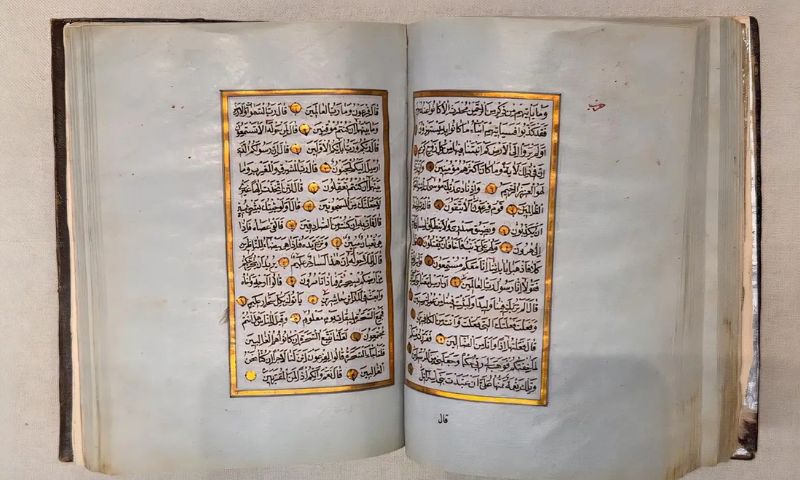
Among its most remarkable exhibits is a rare Quran manuscript dating back to 1259 AH (1843 AD). The manuscript stands as a testament to the artistic excellence and meticulous craftsmanship of Quranic manuscript production during the 19th century.
Written in elegant black ink with complete diacritical markings, the manuscript features beautifully gilded borders, golden verse markers, and intricate floral motifs.
These decorative elements highlight the sophisticated techniques employed in the illumination and ornamentation of Quran manuscripts during that era.
According to information displayed alongside the manuscript, it underwent careful restoration and rebinding to safeguard it from deterioration.
These preservation efforts have helped protect this rare Quranic treasure, ensuring its survival as a valuable cultural and civilisational legacy for future generations.
The display of this Quran is part of the educational and cultural content presented by the Holy Quran Museum, which enables visitors and pilgrims to explore diverse examples of historical Qurans and rare manuscripts and to learn about the various stages of writing, copying, and decorating Quranic manuscripts across different Islamic eras.
The museum stands as a leading cultural and educational landmark in Makkah, showcasing the centuries-long efforts of Muslims to preserve, protect and honour the Holy Quran.
Through its modern exhibitions, rare artefacts and interactive learning experiences, the museum offers visitors valuable insights into the history of the Holy Quran and the rich Islamic heritage associated with it.
The institution also plays an important role in raising awareness of this legacy, fostering a deeper appreciation of the Quran’s historical and cultural significance among visitors from around the world.